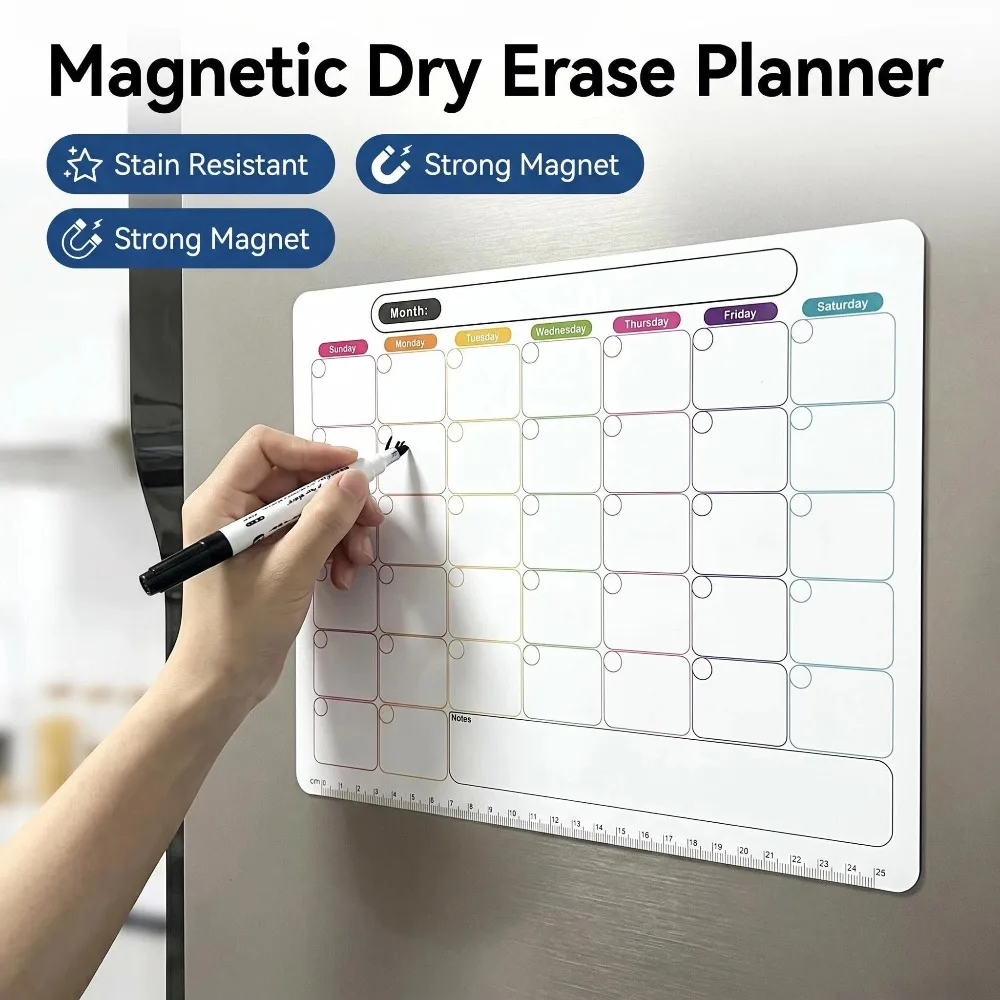
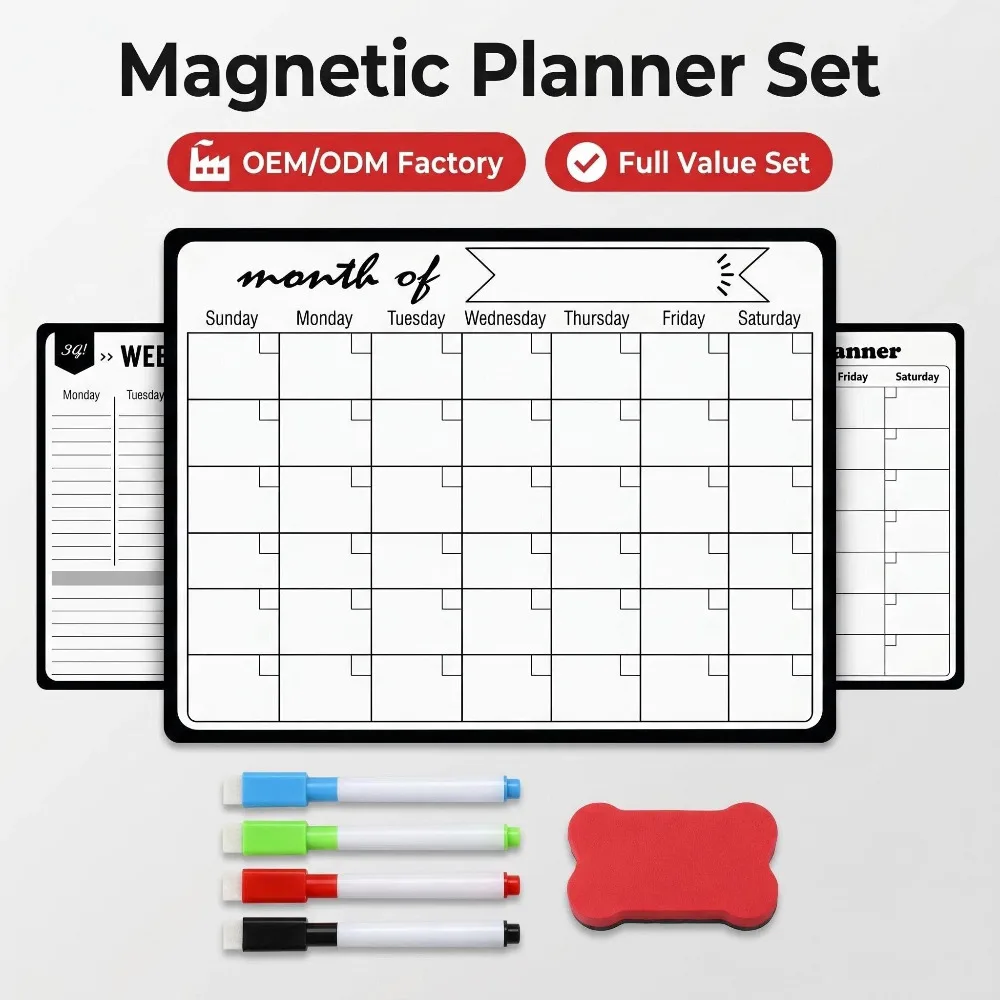
What Is a Magnetic Planner Board?
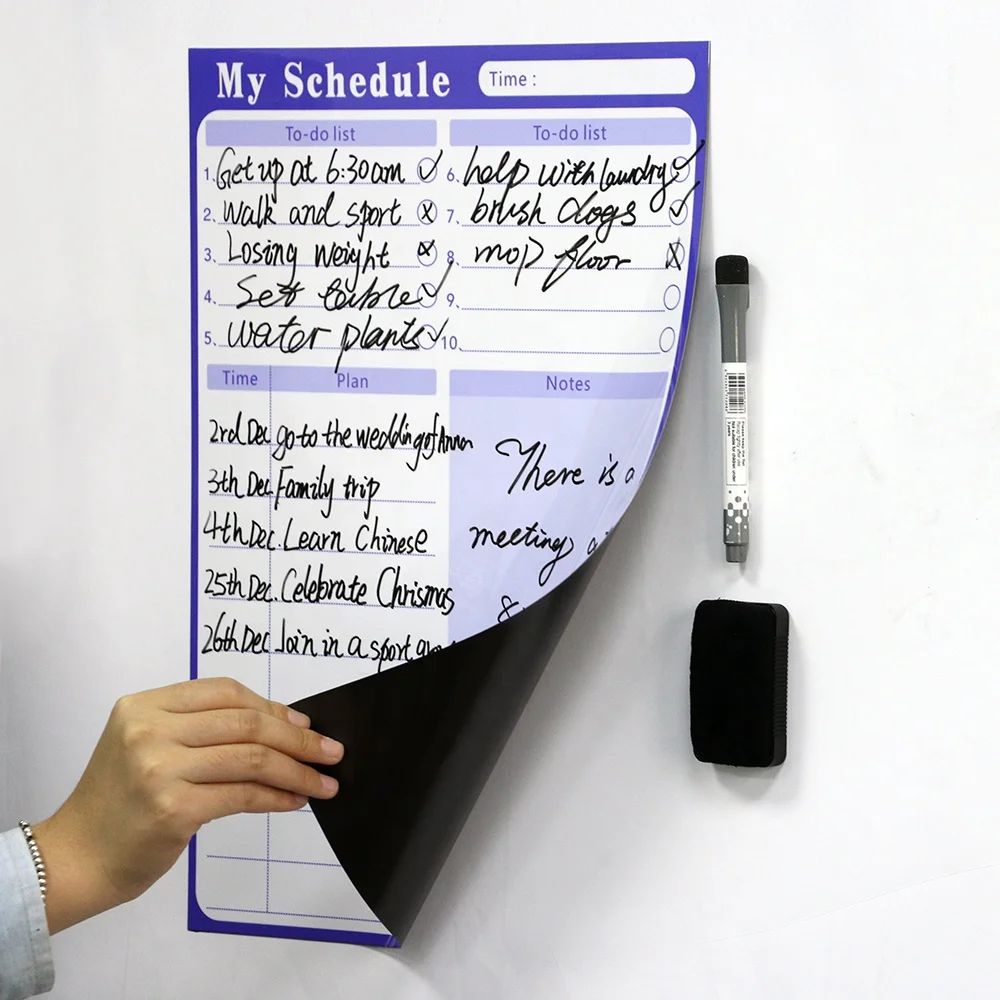
A magnetic planner board is a reusable writing and scheduling tool that combines a dry-erase surface with a flexible magnetic backing, allowing it to attach to refrigerators, metal filing cabinets, and other metal surfaces without drilling or adhesive damage. The format spans a broad product range: from A3 daily memo pads and monthly planner fridge magnets to large-format acrylic monthly wall calendars and magnetic white board large configurations sized for office walls and classroom displays.
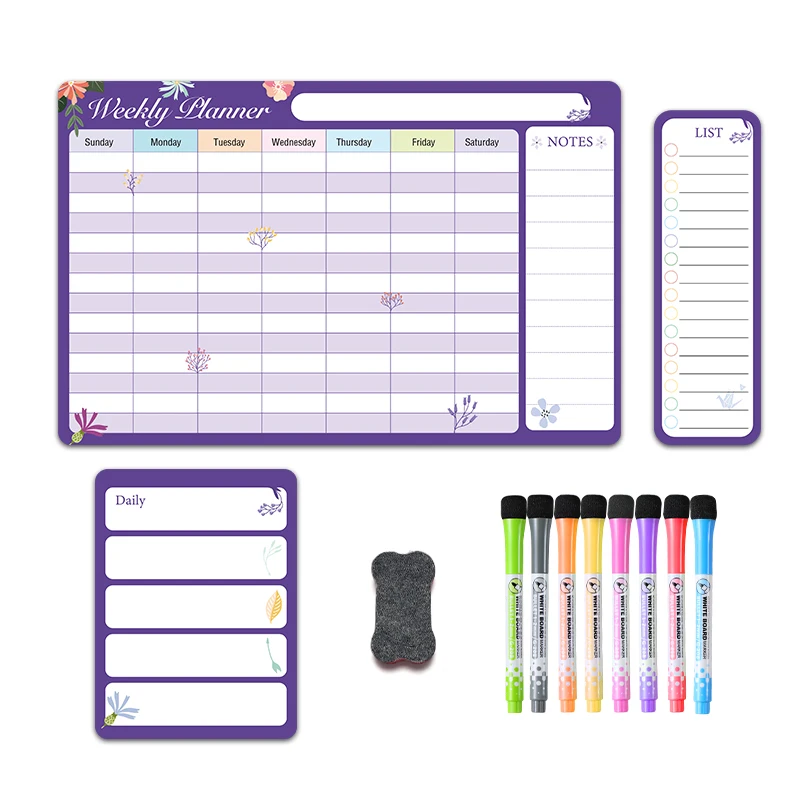
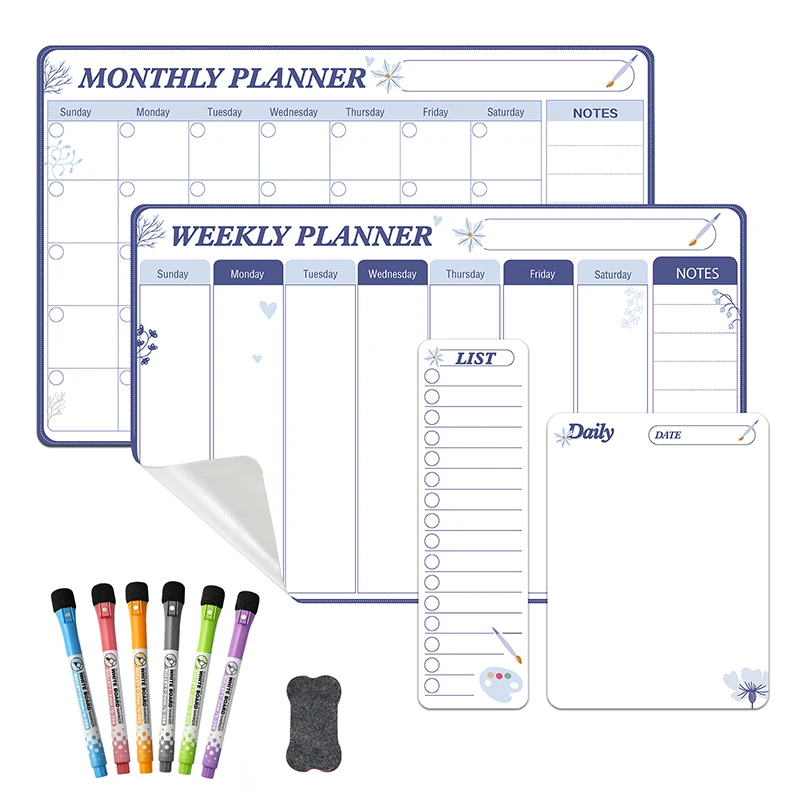
Common layout types across this magnetic planner category include weekly planners, monthly calendar grids, meal-planning boards, shopping list organizers, classroom schedule boards, and to-do list panels. All share the same core construction: a permanently printed layout on a dry-erase writing film backed by a flexible magnetic rubber sheet. Most kits also include a bundle of dry-erase markers, a felt eraser, and occasionally a magnetic marker holder for convenient access during daily use.
Key Product Characteristics
Dry-erase writing surface: PET film and nano-coated surfaces are the two most common options in this magnetic planner range. PET film offers reliable durability and cost efficiency for high-frequency weekly and monthly planning; nano-coated surfaces provide a smoother write-erase experience and are often preferred in office settings where a clean presentation matters.
Flexible magnetic backing: The magnetic rubber layer provides the attachment force that makes this format convenient. Backing strength varies by product thickness and rubber compound. A standard-gauge magnetic backing holds securely on typical refrigerator doors and steel filing cabinets. For lighter sheet metal surfaces or painted steel panels, it is worth confirming minimum surface thickness with the supplier before placing a bulk order.
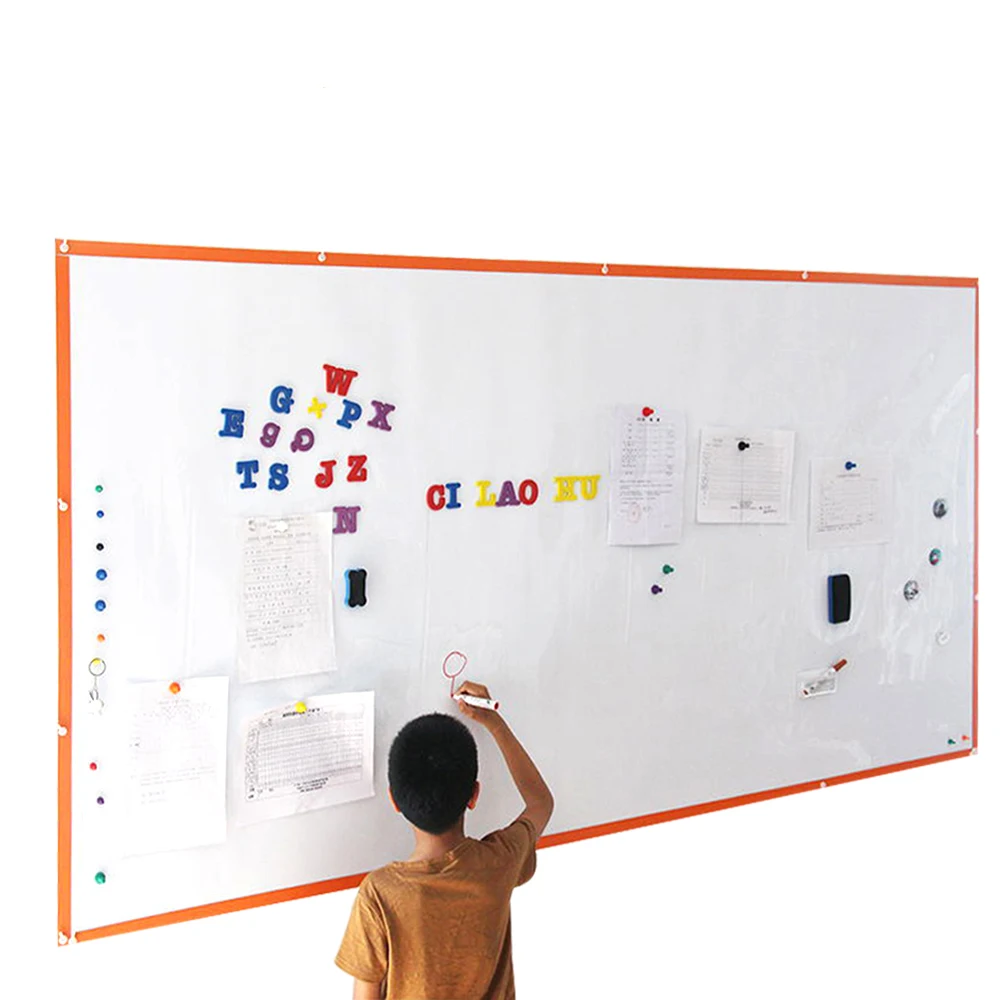
Size range and format options: Retail-ready magnetic planner sizes range from A5 to A3 for fridge-mounted formats. Magnetic white board large configurations — commonly 40 × 30 cm to 60 × 45 cm or larger — suit kitchen family calendars and office project boards. A 48 x 48 whiteboard-scale custom format is available for institutional and classroom projects, with no minimum order quantity from CE/BSCI certified manufacturers in this category.
Silicone calendar variant: A reusable silicone calendar whiteboard offers a different material experience — lighter, fully removable without surface residue, and adaptable to rental properties and temporary workspaces. This variant is particularly relevant for retail buyers sourcing home-organization products for markets where renters represent a significant portion of the end-user base.
Accessory bundles: Standard kits include 8-color marker sets and a felt eraser. For e-commerce channels including Amazon and Shopify, the accessory count and visual appeal of the bundle directly influence listing conversion. Buyers sourcing for retail should confirm bundle contents and packaging presentation before finalizing SKU configuration.
Common Applications
Magnetic planners serve three overlapping use contexts, each with different buyer requirements and selection priorities:
Home and kitchen organization: The monthly planner fridge magnet segment is the highest-volume consumer application. Families use these boards for meal planning, grocery list management, and weekly household scheduling — mounted directly on the refrigerator door, a surface that receives multiple daily interactions. From a retail sourcing perspective, this application drives consistent year-round demand with peaks around back-to-school season and January. Home-use magnetic planners are well-suited to B2C retail channels including Amazon and Shopify independent stores.
Office and team productivity: Larger formats — including acrylic monthly wall calendar configurations and magnetic white board large panels — are used by administrative teams for sprint planning, project timelines, and shared task tracking. Dry-erase surface compatibility with standard whiteboard markers is a baseline requirement for this segment; buyers should confirm marker compatibility during sample evaluation, as surface finish variations can affect erasability with specific marker brands.
Classroom and institutional management: Teachers and school administrators use magnetic planner boards for lesson plan displays, classroom schedule boards, and chore chart organizers. The magnetic surface also functions as a teaching aid, supporting magnetic accessories, alphabet tiles, and number cards on the same board surface. Institutional buyers typically evaluate layout flexibility, custom size availability, and CE/BSCI certification before committing to batch quantities.
How to Choose the Right Magnetic Planner
Most sourcing decisions for this category start with layout type and size — which is the right instinct. In practice, though, a few secondary factors account for a disproportionate share of post-delivery issues and returns.
Layout type and user workflow: A monthly planner fridge magnet with a four-week or five-week grid suits household kitchen scheduling; a weekly layout with time-block columns is more effective for office task tracking. Combination boards with more than three distinct layout sections tend to feel visually crowded at A3 format — for retail listings, clean layouts with one or two clear functions consistently receive better reviews than overly complex multi-function panels.
Size and mounting surface verification: Confirm the target mounting surface before finalizing product dimensions. The recommendation here is straightforward: measure the available space first and add a 2–3 cm margin before selecting a product size. Magnetic white board large formats intended for office walls or classroom installations require a ferromagnetic base surface — flexible magnetic boards will not adhere to standard painted concrete or drywall, regardless of magnet backing strength.
Surface durability in daily use: In high-frequency write-erase scenarios — daily kitchen planning or active classroom boards — the dry-erase surface experiences the most wear at corner areas where marker paths concentrate. PET film surfaces typically maintain consistent erase performance through 30-day use cycles before residue buildup becomes noticeable; nano-coated boards generally hold up better in intermittent office use. For institutional buyers prioritizing long-term value, boards with slightly textured surfaces tend to outperform high-gloss alternatives in the field, even if they are less visually striking at the point of sale.
Aesthetics versus durability trade-off: White matte surfaces photograph well and appeal visually in retail listings, but in daily-use environments, mid-tone or colored surface finishes typically show fewer marks and maintain a cleaner appearance over time. For Amazon and Shopify listings where product photography drives initial conversion, a white surface may perform better on the listing page — but buyers sourcing for institutional use cases should prioritize surface durability over visual impact.
Certification requirements by market: For EU and North American retail and institutional channels, CE and BSCI certification is a standard expectation. School districts and government procurement frameworks typically require documentation during the evaluation stage. Request certification records when ordering samples — confirming compliance after a bulk order has been placed creates unnecessary delays and risk.
Why This Category Matters for E-Commerce and Retail Buyers
E-commerce channels have become the primary route to market for magnetic planners in North America and Western Europe, with Amazon and Shopify independent stores driving the majority of B2C volume. This means the product must meet two parallel standards: physical performance and platform-compatible packaging.
For Amazon FBA fulfillment, packaging requirements include correct barcode placement, polybag or box protection sufficient for transit compression, and accurate dimension and weight data to prevent fulfillment fee miscalculations. Suppliers with e-commerce packaging experience can provide FBA-compliant units directly, eliminating the need for third-party repackaging. For buyers building a private-label magnetic planner range or branded educational supply assortment, OEM customization — logo printing, layout adjustments, and color modifications — is available with no minimum order quantity from CE/BSCI certified manufacturers.
Demand in this magnetic planner category has also extended beyond traditional seasonal windows. Growing adoption of home study setups has driven year-round replenishment for small dry-erase magnetic planners as functional household coordination tools — not just seasonal purchases. This has positive implications for inventory planning at the distributor and retail buyer level, reducing exposure to single-season stock risk.
Sourcing Checklist
Confirm target mounting surface type: refrigerator door, steel filing cabinet, painted steel panel, or classroom wall board
Measure available mounting area and confirm product dimensions with 2–3 cm margin before ordering
Specify layout format: weekly planner, monthly calendar, meal plan grid, or classroom schedule
Confirm dry-erase surface type (PET film or nano-coated) based on expected use frequency and environment
Review accessory bundle contents against target channel price-point and listing requirements
Request CE/BSCI certification documentation for EU, North American, and institutional procurement channels
For e-commerce fulfillment: confirm packaging dimensions, weight, barcode placement, and FBA compliance before committing to bulk quantity
 EN


 Inquiry