What Is a Magnetic Whiteboard?
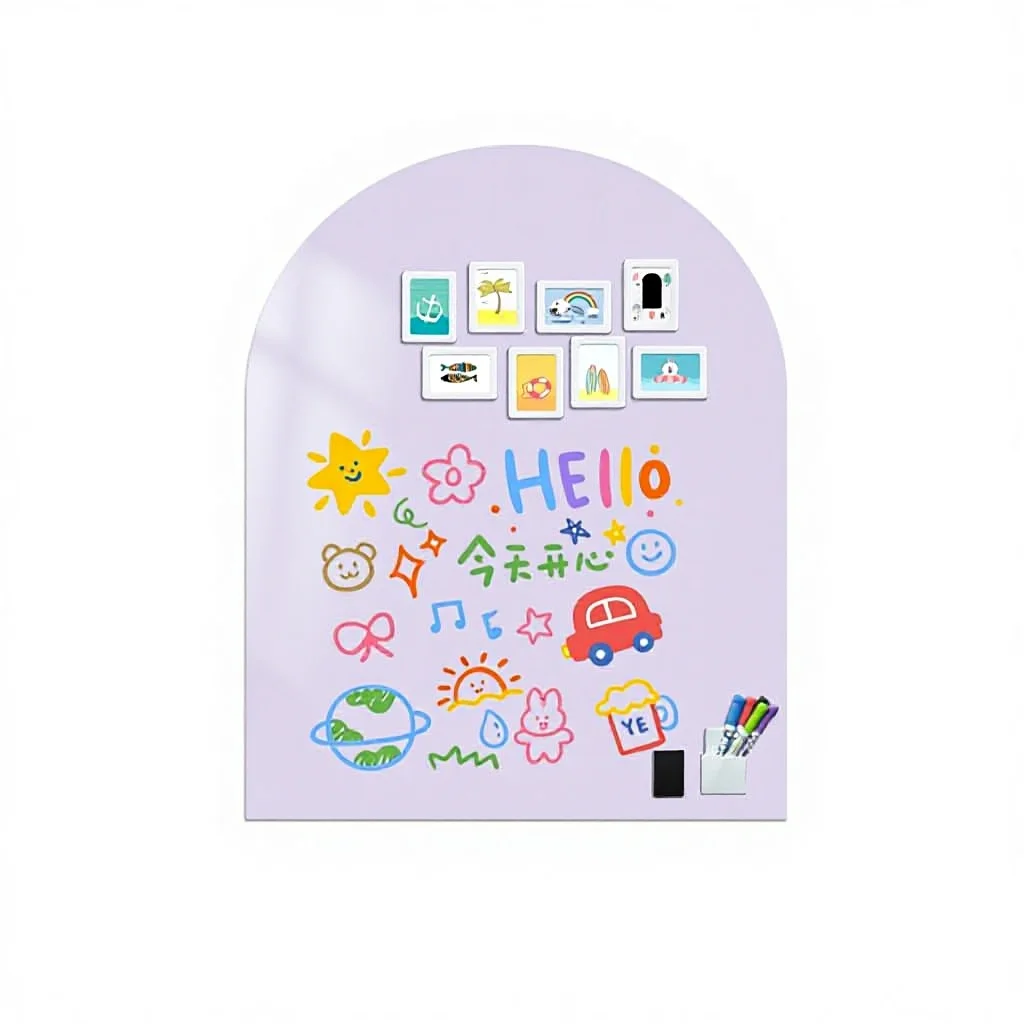
A magnetic whiteboard is a dual-function display surface that combines dry-erase writing with full-face magnet compatibility. You can write, erase and reuse the surface with standard dry-erase markers, while simultaneously holding magnetic accessories — cards, notes, printouts — across the entire board area. This dual function is why the magnetic whiteboard has displaced traditional chalkboards and corkboards as the standard classroom and office display tool across North American and European markets. Within this product category, you will find flexible wall-sticker magnetic whiteboard panels, fridge-mounted magnetic calendar formats, rigid wall-mounted magnetic whiteboard boards for corporate settings, and arch-shaped magnetic color boards designed for early childhood learning environments.
Key Features of a Magnetic Whiteboard
Most buyers start a magnetic whiteboard search by comparing prices. Then they compare magnet strength. In our experience across school and office procurement sourcing, surface coating quality is what actually determines long-term satisfaction — and it is the factor most consistently overlooked before the order is placed.
Dry-Erase PET Surface: Polyester-coated surfaces write cleanly with standard markers and wipe residue-free for up to 30 days of repeated use. The magnetic whiteboard surface remains smooth and ghost-resistant under normal cleaning routines, making it reliable for high-frequency classroom and meeting room environments.
Rubber Magnet or Self-Adhesive Backing: Flexible rubber magnet backing allows direct adhesion to metal surfaces — refrigerators, filing cabinets, vehicle doors — without drilling or mounting hardware. For plaster and drywall walls, a self-adhesive backing option eliminates the need for installation tools entirely.
Simultaneous Write-and-Hold Functionality: A magnetic whiteboard surface accepts marker writing and holds magnets across the full face at the same time. This reduces the need for separate writing and display panels in one room, a practical consideration when space and equipment budget are both limited.
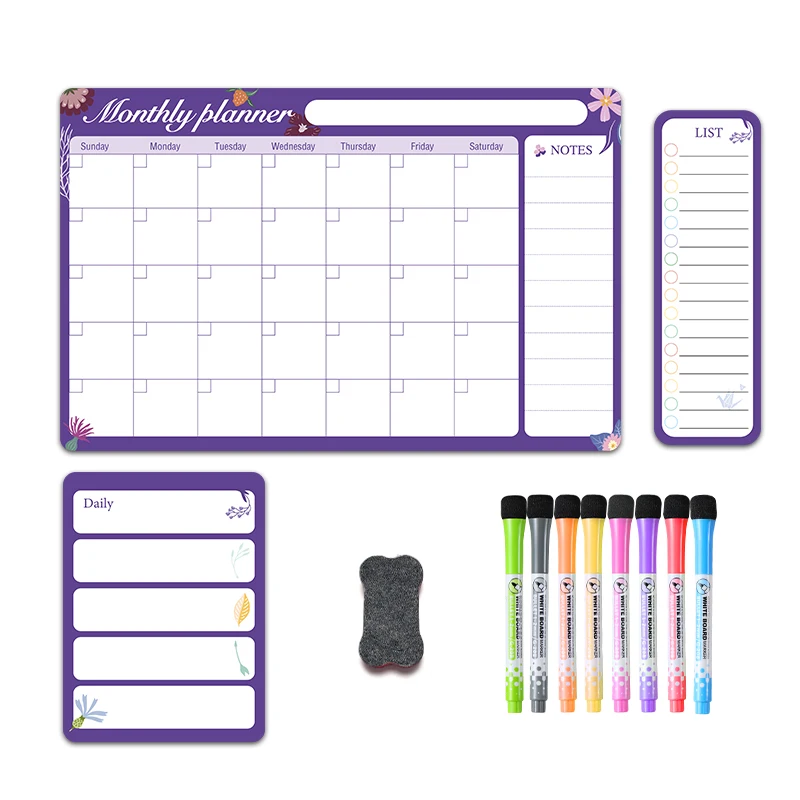
Custom Sizes and Pre-Printed Layouts: Standard magnetic whiteboard sizes are available for immediate sourcing. Custom widths and pre-printed formats — monthly calendar grids, annual planners, KPI tracking templates, to-do structures — can be specified with no minimum order quantity for institutional buyers. Screen-printing and OEM branding are supported for educational distributors and retail channel partners.
Compliance Documentation: CE and BSCI certification is available across the standard product line to support import clearance for European and North American procurement. Buyers with formal audit requirements should confirm the specific certification scope required before issuing a purchase order.
Where Is a Magnetic Whiteboard Used?
The application overlap between educational and office environments for a magnetic whiteboard is considerably wider than most procurement teams initially expect. A single magnetic whiteboard format can serve a kindergarten classroom in the morning and a corporate planning wall in the afternoon. Recognizing this overlap allows multi-site procurement managers to consolidate supplier relationships rather than maintaining separate vendor lists for classroom display and office planning tools.
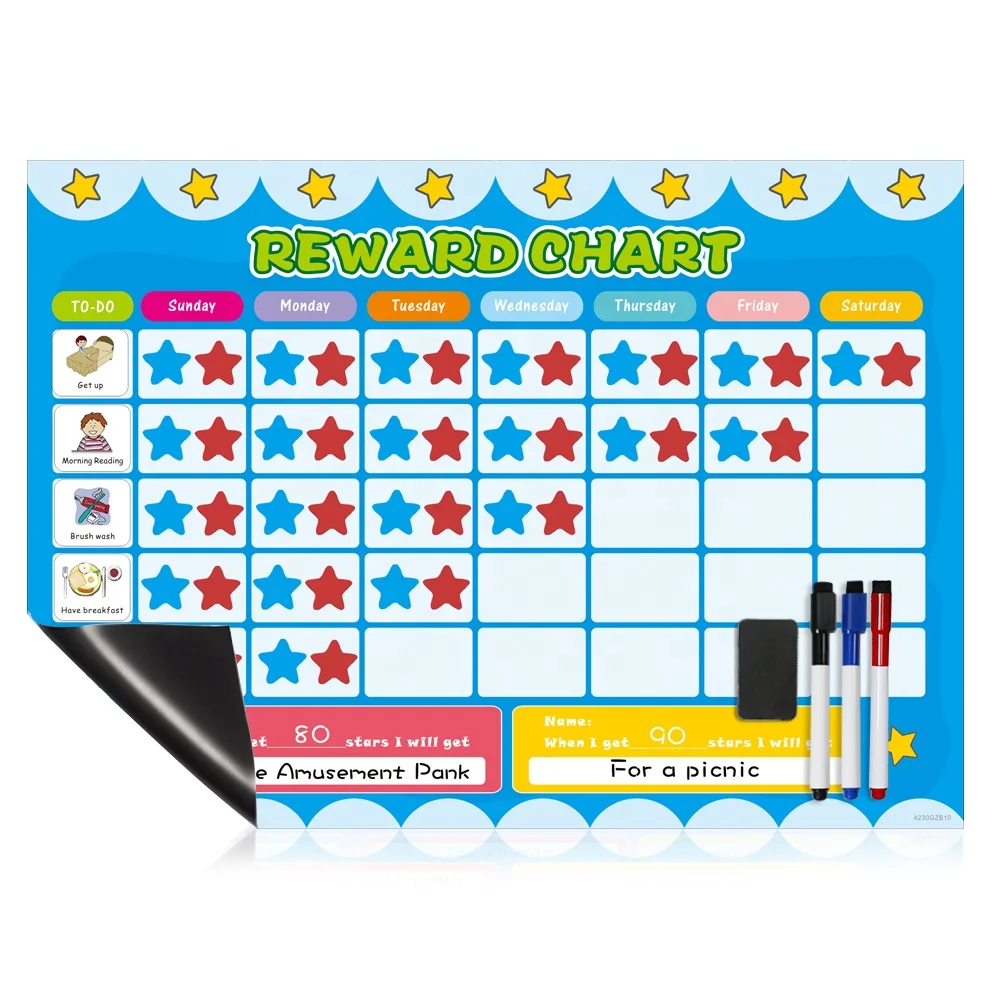
Classrooms and Educational Institutions: A magnetic whiteboard supports daily lesson display, interactive card exercises, reward chart tracking and student task boards. Arch-shaped color board formats are popular in kindergartens and early primary grades. Full-panel magnetic whiteboard installations are common in secondary schools and tutoring centers for subject-specific class zones and visible scheduling displays.
Home and Family Organization: Flexible magnetic whiteboard sheets mounted on refrigerators replace printed planners and calendar inserts with a reusable write-erase surface. Buyers who want an acrylic monthly wall calendar alternative that erases and resets without replacement inserts will find a dry-erase magnetic whiteboard format covers the same planning function at lower ongoing cost. If you need to create your own monthly planner with custom grid sections and color coding, a pre-printed custom layout magnetic whiteboard eliminates manual redrawing.
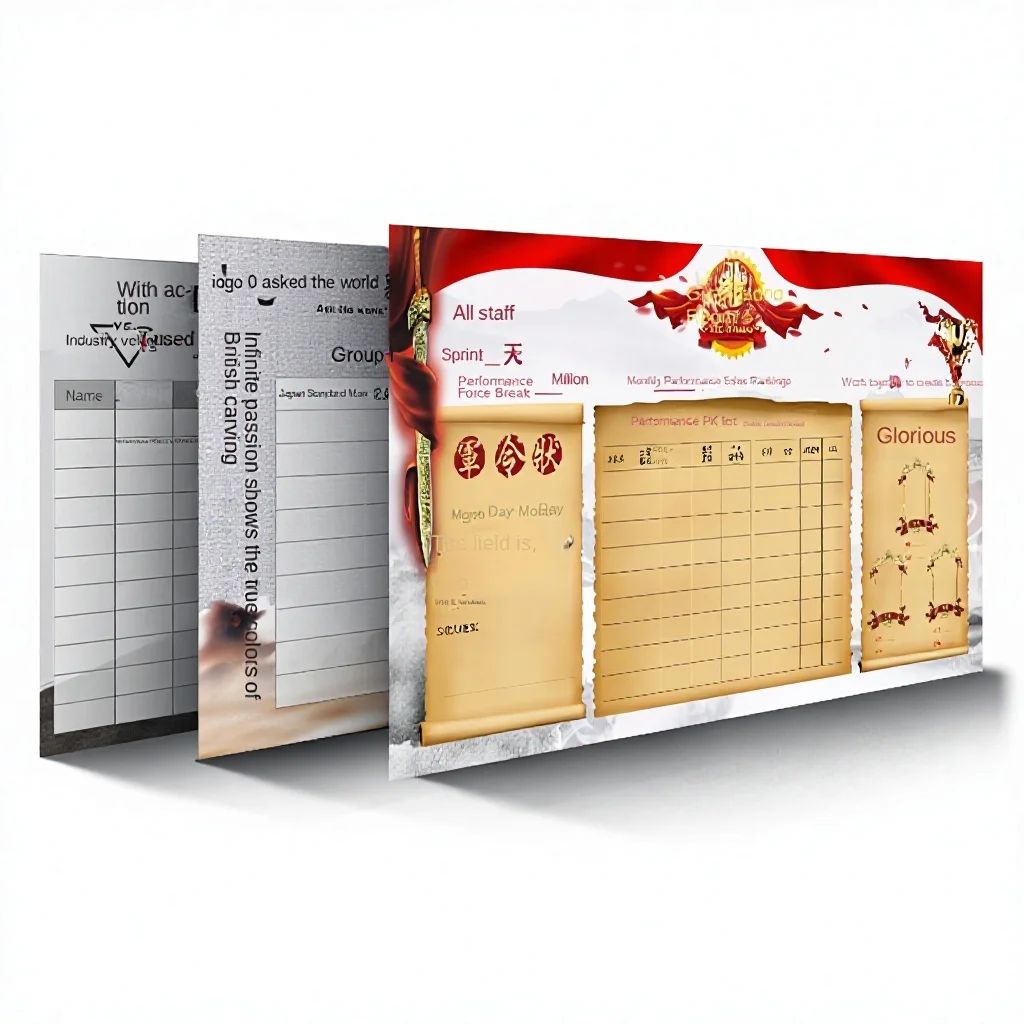
Corporate Offices and Government Settings: Rigid magnetic whiteboard panels for culture walls support KPI tracking boards, company bulletin displays, performance zones and project planning walls. For teams that need a whiteboard year calendar for wall display — showing all twelve months in one panel — a pre-printed annual magnetic whiteboard format maintains visual consistency across departments and branch locations without daily redrawing.
Advertising and High-Turnover Display Environments: Trade show booths, retail display walls and advertising agency presentation spaces benefit from magnetic whiteboard surfaces that allow rapid content swaps without adhesive residue or surface damage. Custom pre-printed magnetic whiteboard formats support consistent branded visuals across event cycles.
How to Choose a Magnetic Whiteboard
Before committing to a specific magnetic whiteboard format, work through these decisions in order. Most procurement errors in this category happen at the earliest step, not the last.
Measure the installation space precisely. This is the most common cause of post-delivery complications in bulk magnetic whiteboard orders. Measure net wall width, check clearance near fixtures, and account for mounting hardware margins. A few centimeters of mismatch between available wall space and board width can require renegotiating the order or accepting a custom-size adjustment charge after delivery.
Match the backing type to your mounting surface. If the installation target is a metal refrigerator, steel cabinet or metal-backed wall panel, a rubber-magnet-backed flexible magnetic whiteboard requires no additional hardware. For standard plaster or drywall walls, specify self-adhesive backing or wall-mount hardware at order time to avoid on-site complications.
Choose between a pre-printed layout and a blank write-erase surface. Buyers who need structured planning formats should specify a pre-printed magnetic whiteboard rather than attempting to draw grids manually on a blank surface. An acrylic monthly wall calendar alternative in magnetic whiteboard format, for example, provides durable pre-printed month sections that erase cleanly — eliminating the need to purchase replacement calendar inserts each month.
Confirm dry-erase marker compatibility before placing a volume order. A recurring issue in corporate procurement is receiving a magnetic whiteboard surface that does not erase cleanly with the markers already in use. PET-coated surfaces are compatible with standard water-based dry-erase markers. Testing a sample with your existing markers before authorizing a large institutional order is a step that most experienced procurement teams now build into the approval process.
Size the magnetic whiteboard relative to viewing distance, not room size. A common assumption is that a larger magnetic whiteboard always improves display results. In practice, when seating extends to wide angles from the board or the room width is limited, an oversized surface creates unreadable edge zones without increasing effective information display. Size selection should balance display area against the actual viewing angles and distances in your specific installation space.
Why Source a Magnetic Whiteboard From a Specialist Manufacturer
Procurement teams managing multi-site rollouts — school districts, tutoring chains, corporate branch networks — benefit from working with a magnetic whiteboard manufacturer that supports both standard and custom formats under one supplier relationship. A single product family can cover classroom display panels, office planning surfaces and home organization boards, reducing the complexity of managing separate vendors for each application category.
Custom OEM manufacturing extends this further. When an institution requires consistent branding across locations — a school logo in the corner of each magnetic whiteboard, a company color-coded planning zone layout, or a government agency identification panel — screen-printed pre-production samples allow layout review and approval before full production begins. No minimum order quantity requirements on institutional first orders reduce commitment risk on custom magnetic whiteboard specifications that may need adjustment after initial deployment feedback.
For buyers importing into markets with formal compliance requirements — European CE marking programs, BSCI factory audit documentation, or material safety certification for children's product categories — confirming the required certification scope early in the supplier evaluation process prevents delays at customs clearance. Standard magnetic whiteboard product lines carry CE and BSCI certification; buyers with additional market-specific requirements should request documentation confirmation before issuing a purchase order.
 EN


 Inquiry