 EN

Magnetic Whiteboards for Offices
Please tell us about your company's advantages and characteristics.
2026/08/27
Most procurement staff we meet are not comparing brands for the logo. They compare how the board behaves after the warranty sticker fades. While a quartet magnetic whiteboard is often treated as the industry benchmark, the underlying surface material decides long-term performance far more than the brand name printed on the frame. If you are sourcing writing surfaces for a corporate project or school district, looking beyond a traditional quartet magnetic whiteboard can reveal alternatives that deliver equal or superior durability at a better price point.
The common failure in dry-erase products is ghosting: ink bonds to a porous surface and survives wiping. Cheap melamine and some low-grade painted steel boards ghost within months in busy rooms. Another risk is weak magnetic pull. A board can be described as magnetic receptive yet fail to hold a standard ceramic magnet. While a premium quartet magnetic whiteboard typically provides reliable steel backing, cheaper white-label alternatives often place the steel layer too far behind a thick resin surface, causing documents to slide down.
Buyers also risk over-paying for glass boards when looking for a quartet magnetic whiteboard upgrade. Glass panels look sleek but require expensive rare-earth magnets, carry higher freight costs, and risk chipping. For a training room that changes layouts weekly, that tradeoff is rarely practical. A quieter risk in supply chain management is import quality drift: a showroom sample erases well, but the mass-produced batch uses a thinner coating and ghosts sooner. That gap is why we always send a pre-shipment sample from the actual production line when clients seek a direct quartet magnetic whiteboard equivalent.
Three primary surfaces dominate the category when evaluating a quartet magnetic whiteboard against OEM options. Lacquered steel uses a painted sheet-steel skin; it is magnetic receptive, highly affordable, and erases cleanly for one to three years under normal office use. Porcelain-enameled steel fuses a ceramic layer to steel at high temperatures; it resists ghosting for decades and stays strongly magnetic because steel sits directly beneath the enamel. Melamine is a resin-faced fiber panel—the cheapest option, but it ghosts fastest and provides poor magnetic retention.
Magnet strength depends on two factors: the steel substrate behind the writing face and the overall panel thickness. A high-end quartet magnetic whiteboard and most porcelain-enameled boards keep the steel layer close to the surface, allowing a standard 10 mm neodymium disc to hold firm. A thick melamine board pushes the steel back, requiring heavy-duty magnets. Surface hardness matters just as much: porcelain rates near 7 on the Mohs scale, lacquer near 3, and melamine near 2. Harder surfaces naturally resist scratches from keys, rings, and worn marker nibs.
Cost should always be calculated per service year, not per unit. A commercial porcelain board priced at double a entry-level quartet magnetic whiteboard or melamine unit may cost significantly less over five years because it never needs replacement. For an enterprise client outfitting fifty meeting rooms, that lifetime calculation completely shifts the purchasing decision.
European buyers evaluating a quartet magnetic whiteboard or custom factory alternative should check two essential environmental compliance standards before importing:
RoHS Directive (2011/65/EU): Limits lead, cadmium, and mercury in frame coatings and board assemblies.
REACH Regulation (EC 1907/2006): Controls harmful chemical substances in surface paints and frame adhesives.
EN 71-3 Safety Standard: Mandates migration limits for elements on painted surfaces used in educational environments.
A responsible whiteboard manufacturer provides verifiable test lab reports rather than just digital badges. CE marking also applies where boards are classified under construction or furnishing guidelines. Our production facility operates under ISO 9001:2015 for quality control and ISO 14001 for environmental management, providing full compliance audit files for every bulk order.
Match surface to usage: High-traffic training centers require porcelain or high-grade lacquered steel. Low-use home offices do fine with melamine.
Test magnetic hold: Verify retention using your team's exact magnetic accessories before committing to a bulk order.
Verify ghosting resistance: Request lab proof showing a 500-cycle wipe test result from the supplier.
Use proper cleaning protocols: Clean with low-odor, alcohol-based solutions; avoid abrasive pads that scratch protective lacquers.
Confirm wall fixings: Ensure masonry anchors are used for brick walls and heavy-duty toggle bolts for plasterboard.
Require batch samples: Always inspect a pre-shipment sample from the current production run rather than relying on trade show demos.
Evaluate lifecycle value: Compare cost per service year rather than initial unit price when replacing an existing quartet magnetic whiteboard.
Maintain buffer stock: Keep a spare panel per floor so a damaged board does not disrupt daily operations.
In 2022, our manufacturing plant shipped 1,200 magnetic boards to a facilities manager at a logistics hub in Rotterdam. He had been sourcing a standard quartet magnetic whiteboard model and needed a cost-effective alternative that could withstand heavy daily use by shift managers. We supplied three test surfaces: lacquered steel, porcelain-enameled steel, and melamine. After six weeks of site testing, his team confirmed the lacquered steel board erased cleanly and held neodymium magnets without slipping, while the melamine surface exhibited visible ghosting by week four.
A second case involved a secondary school in Bristol replacing older quartet magnetic whiteboard inventory that had ghosted after years of heavy classroom instruction. We supplied porcelain-enameled steel replacement panels. Re-evaluating the installation eighteen months later, the science faculty reported zero marker staining and perfect magnetic retention across all lab rooms, proving that surface specification dictates long-term performance.
Every batch undergoes rigorous quality assurance before leaving our factory floor:
Dry-Erase Cycle Test: A automated 500-cycle wipe test is run on the writing face, followed by a 24-hour ink residence test to measure ghosting resistance.
Magnetic Pull Gauge: Hold strength is measured using a standard 10 mm neodymium disc across top, center, and bottom grid positions.
Coating Thickness Gauge: Surface lacquer or porcelain layer depth is digitally measured to guarantee uniform wear.
Compliance Documentation: Full RoHS, REACH, and EN 71-3 documentation is attached to each export bill of lading.
By requesting batch test proof, you ensure your writing surfaces deliver reliable performance year after year.
A standard quartet magnetic whiteboard typically features a lacquered steel or porcelain-enameled face bonded to a rigid backing board, giving both a smooth dry-erase surface and magnetic pull. The internal steel sheet sits directly underneath the top coating so standard office magnets stick securely. Lower-grade non-branded alternatives may use thin melamine over fiberboard, which drastically reduces magnetic strength and durability.
Ghosting occurs when dry-erase marker ink penetrates microscopic pores on a soft or degraded writing surface. While a high-quality quartet magnetic whiteboard or OEM porcelain board uses a non-porous top layer to prevent ink absorption, cheaper melamine boards ghost rapidly as the surface wears down. Using proper dry-erase cleaning sprays and avoiding abrasive erasers helps maintain surface integrity.
Test your team’s standard magnets on a sample board at multiple points. If lightweight ceramic magnets slide down the face, the internal steel substrate is either too thin or placed too far beneath the surface layer. Whether buying a name-brand quartet magnetic whiteboard or sourcing directly from a board manufacturer, always verify panel construction specs beforehand.
Porcelain-enameled steel is the longest-lasting surface available, routinely exceeding 10–15 years of continuous use. The fired ceramic glass coating resists scratches, chemical wear, and ghosting. For moderate use, lacquered steel offers a cost-effective 3-to-5-year service life, making it a popular alternative to a standard quartet magnetic whiteboard.
Yes, provided they comply with chemical safety and heavy-metal migration limits such as EN 71-3, REACH, and RoHS. For classroom safety, choose boards with rounded plastic corner caps, concealed mounting brackets, and shatterproof construction rather than unframed glass boards.
Clean the board using a microfiber cloth and a dedicated alcohol-based whiteboard cleaner. Avoid aggressive solvents like acetone or bleach, as well as rough scrubbing sponges, which strip the protective shine off lacquered steel surfaces and accelerate ghosting.

2026/08/20
Unlock flexible, repositionable whiteboarding for education, agile offices, retail, healthcare & more. Cuttable, magnetic, certified — request your free B2B sample today.
2026/10/10
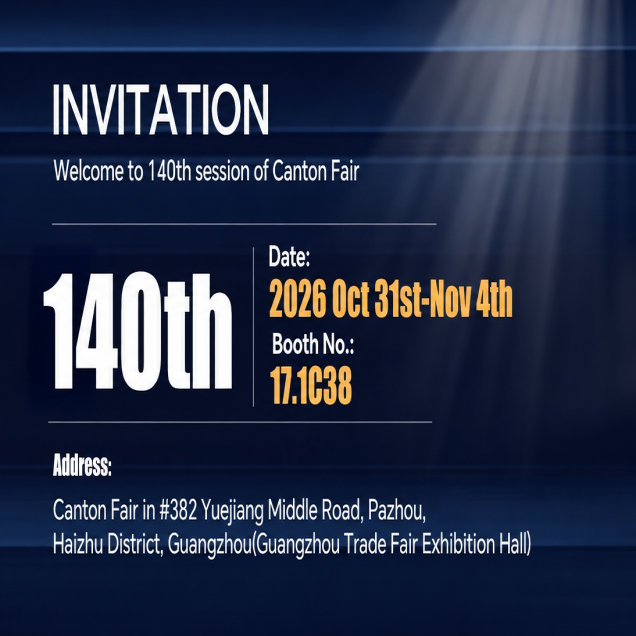
Discover the 2027 Texture Magnetic Collection & Exclusive Exhibition Promotions Dear Global Partners and Valued Clients, We are thrilled to announce that Shenzhen U&U Magnetic Technology Co., Ltd. (Brand: UCMD) will be officially exhibiting...
2026/08/19
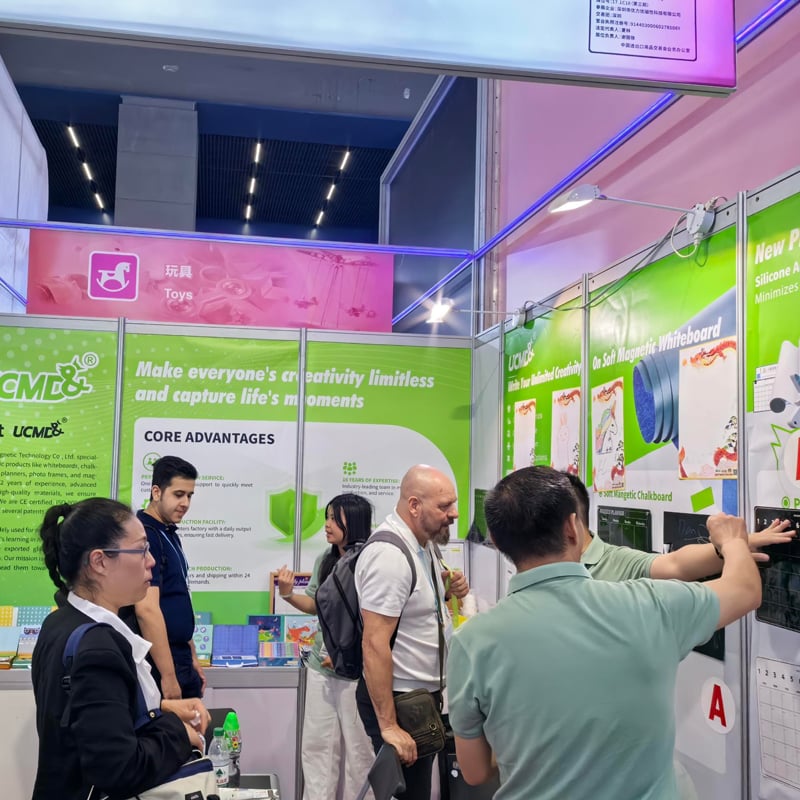
Discover how UCMD® leverages the Canton Fair to showcase magnetic educational & lifestyle products, build global buyer trust, and drive OEM/ODM partnerships. Explore our certified, customizable solutions today.

2026/08/28
Our Commitment to People, Planet & IntegrityAt ShenZhen U&U Magnetic Technology Co., Ltd. (UCMD®), we believe that how we make our products matters as much as what we make. From our factory floor in Shenzhen's Bao An District to the hands...

Please tell us about your company's advantages and characteristics.

Please tell us about your company's advantages and characteristics.

Please tell us about your company's advantages and characteristics.

Please tell us about your company's advantages and characteristics.

Please tell us about your company's advantages and characteristics.

Please tell us about your company's advantages and characteristics.

