 EN

Magnetic Whiteboards for Offices
Please tell us about your company's advantages and characteristics.
2026/10/02
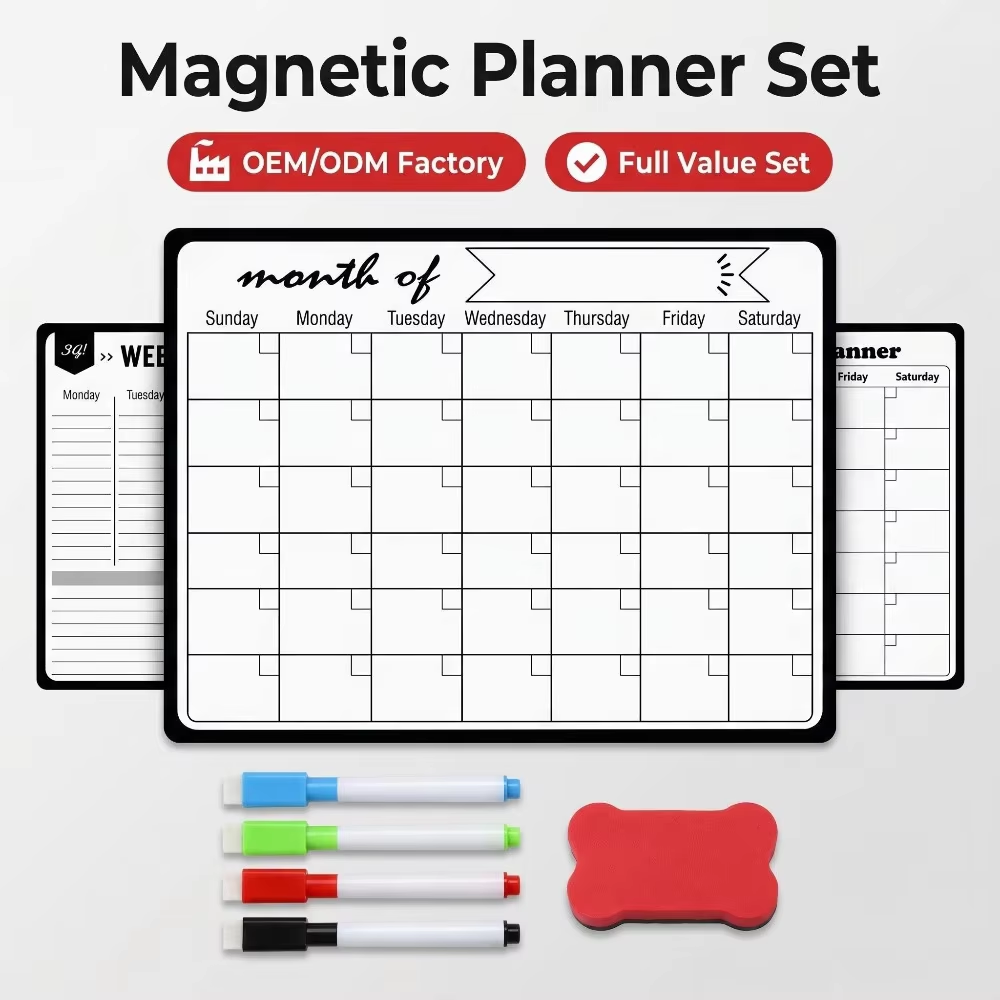
A weekly monthly planner is most useful when the two views do different jobs. The monthly view protects the bigger picture: deadlines, launches, appointments, school dates, and capacity constraints. The weekly view turns that picture into a realistic sequence of next actions. Put together, they reduce the familiar gap between a well-intentioned monthly goal and a Friday afternoon scramble.
For a planner buyer, office manager, or distributor, this is also a useful way to explain the value of a reusable planning surface. A magnetic planner is not simply a calendar with more boxes. It is a shared visual system that can be revised as priorities move.
Monthly planning answers, “What must be true by the end of this month?” Weekly planning asks, “What can this team or household actually complete in the next seven days?” Neither question replaces the other. A month is long enough to show collisions between projects and commitments; a week is short enough to assign time, owners, and follow-up.
There is some useful support for keeping a weekly ritual. A field experiment involving 208 participants and 947 weekly entries found that a brief weekly planning intervention was associated with fewer unfinished tasks and weekly rumination, along with greater cognitive flexibility. That does not make any one planner a productivity cure. It does suggest that a small, recurring review can help people reset their priorities before work accumulates.
Use the monthly section to reserve immovable dates and outcomes. Use the weekly section to choose the few actions that advance those outcomes. If a task cannot fit into a real week, it is not yet a weekly commitment; leave it on the monthly view or break it down.
To use a weekly monthly planner without overloading it, let the monthly section carry dates and the weekly section carry decisions. This distinction is especially helpful when several people share one board: everyone can see the month’s constraints before adding this week’s work.
Start at the beginning of the month, not on Monday morning. On the monthly grid, add fixed commitments first: travel, payroll, campaigns, exams, recurring meetings, and delivery windows. Then add no more than three priorities that matter if the month gets busy. A weekly monthly planner becomes clearer when the monthly area is reserved for timing and outcomes rather than a long to-do list.
For shared areas, color cues can help, but keep the key simple. One color for deadlines, one for meetings, and one for personal or team priorities is normally enough. Too many colors turn a planning board into decoration.
Think of the weekly monthly planner as a handoff between horizons. The monthly plan identifies what matters; the weekly plan records the next commitments that protect it. Review both views at the same time so the weekly list does not become detached from upcoming dates.
During a weekly review, look at the next seven days alongside the monthly commitments. Pick the next physical action for each active priority, estimate the time it needs, and decide where it belongs. This is where the weekly view earns its space: it makes trade-offs visible. A launch week may have room for two important tasks, not eight.
A good rule is to write commitments at the level at which they can be completed. “Prepare client presentation” may be too broad; “draft the slide outline before Wednesday” gives the week a usable instruction. This weekly-to-monthly loop is what makes a weekly monthly planner practical rather than merely comprehensive.
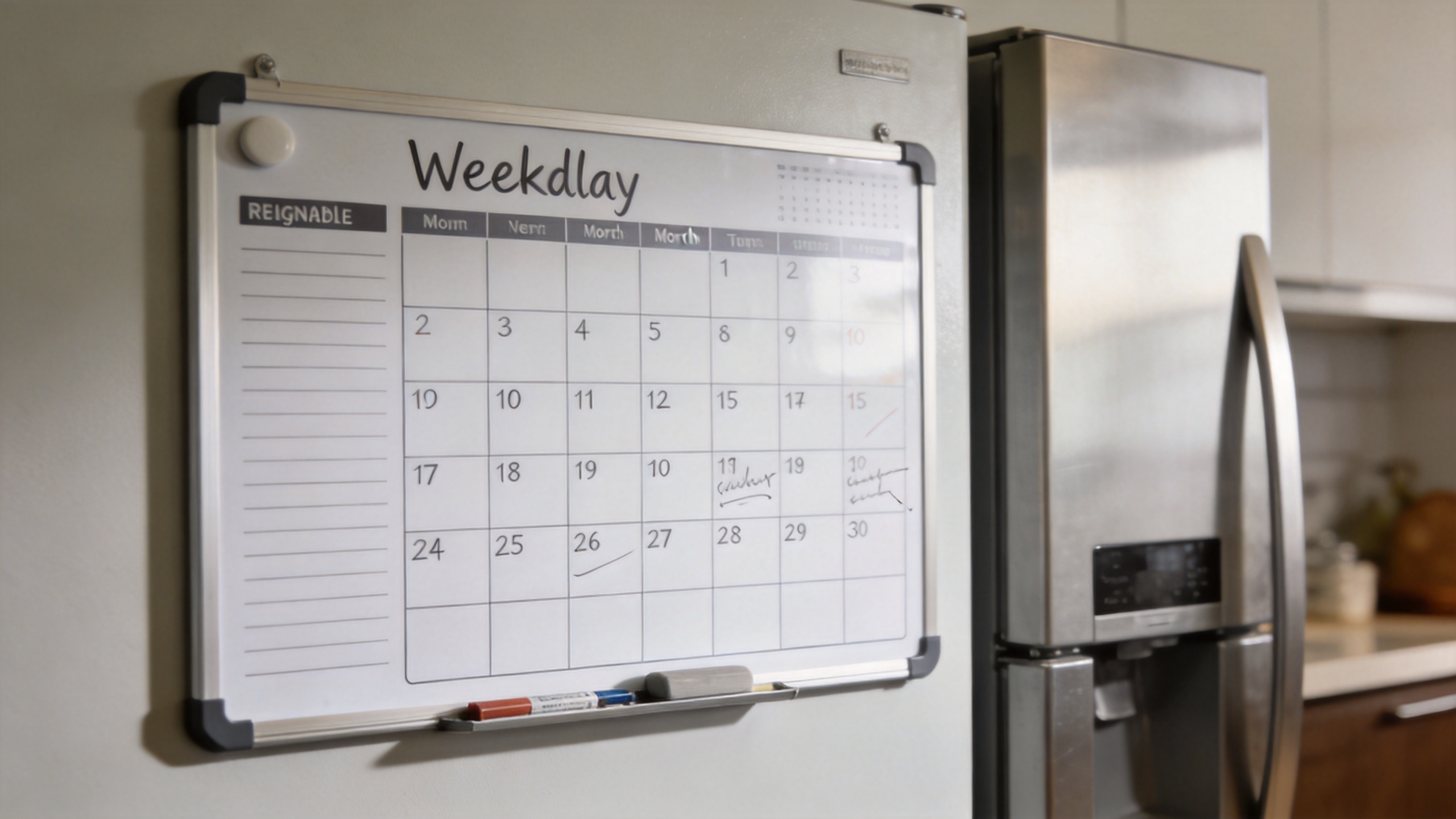
A shared weekly monthly planner is most useful when people can read it at a glance, update it quickly, and understand which information belongs in each section. That is why layout and usable writing space deserve more attention than decorative features.
The physical format should match where planning happens. A compact fridge calendar can keep household schedules visible. A larger wall-mounted board may suit a reception area, classroom, project room, or shared office. When comparing a magnetic display board, look first at the intended viewing distance, the number of contributors, and how often dates will change. A board that looks generous in a product photo can feel crowded once several people add commitments.
For example, the CMS-confirmed Weekly Planner Magnetic Board Dry Erase Monthly Planner Whiteboard for Fridge is relevant to a visible, reusable weekly-and-monthly layout. The Reusable Magnetic Fridge Calendar Monthly & Weekly Planner with Dry Erase Markers for Kitchen Organization offers another confirmed internal option for kitchen organization. Evaluate the actual page details and intended installation surface before purchasing; the product titles alone do not establish every material or performance characteristic.
A metal magnet board can be considered when the workflow relies on movable notes or magnets as well as dry-erase entries. If visual style matters in a customer-facing setting, magnetic glass may be part of a broader display assortment, but it should be assessed separately for writing feel, readability, mounting requirements, and the planning accessories it supports.
When selecting a weekly monthly planner for resale or procurement, start with the planning behavior the product must support. A family, a classroom, and an operations team may all need a visible calendar, but their update frequency and number of contributors differ.
Distributors and procurement teams often need to translate a planning habit into a repeatable SKU decision. Begin with the end user instead of the finish or color. A shared office schedule, a school activity calendar, and a household meal plan have different space, cleaning, and replenishment needs.
For an OEM program, the planning format itself can create sensible SKU extensions: a household refrigerator format, a compact desk format, and a larger shared-workspace format. Standardizing the layout logic across those options helps customers recognize the system while allowing buyers to serve different channels.
A weekly monthly planner stays valuable only when its information is current. The reset is short: confirm the next month, clear completed items, and decide what deserves a place in the next seven days.
The most common failure is not choosing the wrong planner; it is letting old entries stay visible after their meaning has changed. Schedule a ten-minute weekly reset. Erase completed items, move delayed work deliberately, and check the next month before adding new commitments. With frequent use, cleaning and routine maintenance also matter because they affect legibility over time.
Use the monthly view to protect direction, and use the weekly view to protect attention. That simple division makes a weekly monthly planner easier to maintain for individuals and easier to position for organizations that need a clear, adjustable planning tool.

2026/08/20
Unlock flexible, repositionable whiteboarding for education, agile offices, retail, healthcare & more. Cuttable, magnetic, certified — request your free B2B sample today.

2026/10/10
Discover the 2027 Texture Magnetic Collection & Exclusive Exhibition Promotions Dear Global Partners and Valued Clients, We are thrilled to announce that Shenzhen U&U Magnetic Technology Co., Ltd. (Brand: UCMD) will be officially exhibiting...

2026/08/19
Discover how UCMD® leverages the Canton Fair to showcase magnetic educational & lifestyle products, build global buyer trust, and drive OEM/ODM partnerships. Explore our certified, customizable solutions today.

2026/08/28
Our Commitment to People, Planet & IntegrityAt ShenZhen U&U Magnetic Technology Co., Ltd. (UCMD®), we believe that how we make our products matters as much as what we make. From our factory floor in Shenzhen's Bao An District to the hands...

Please tell us about your company's advantages and characteristics.

Please tell us about your company's advantages and characteristics.

Please tell us about your company's advantages and characteristics.

Please tell us about your company's advantages and characteristics.

Please tell us about your company's advantages and characteristics.

Please tell us about your company's advantages and characteristics.

