 EN

Magnetic Whiteboards for Offices
Please tell us about your company's advantages and characteristics.
2026/09/22
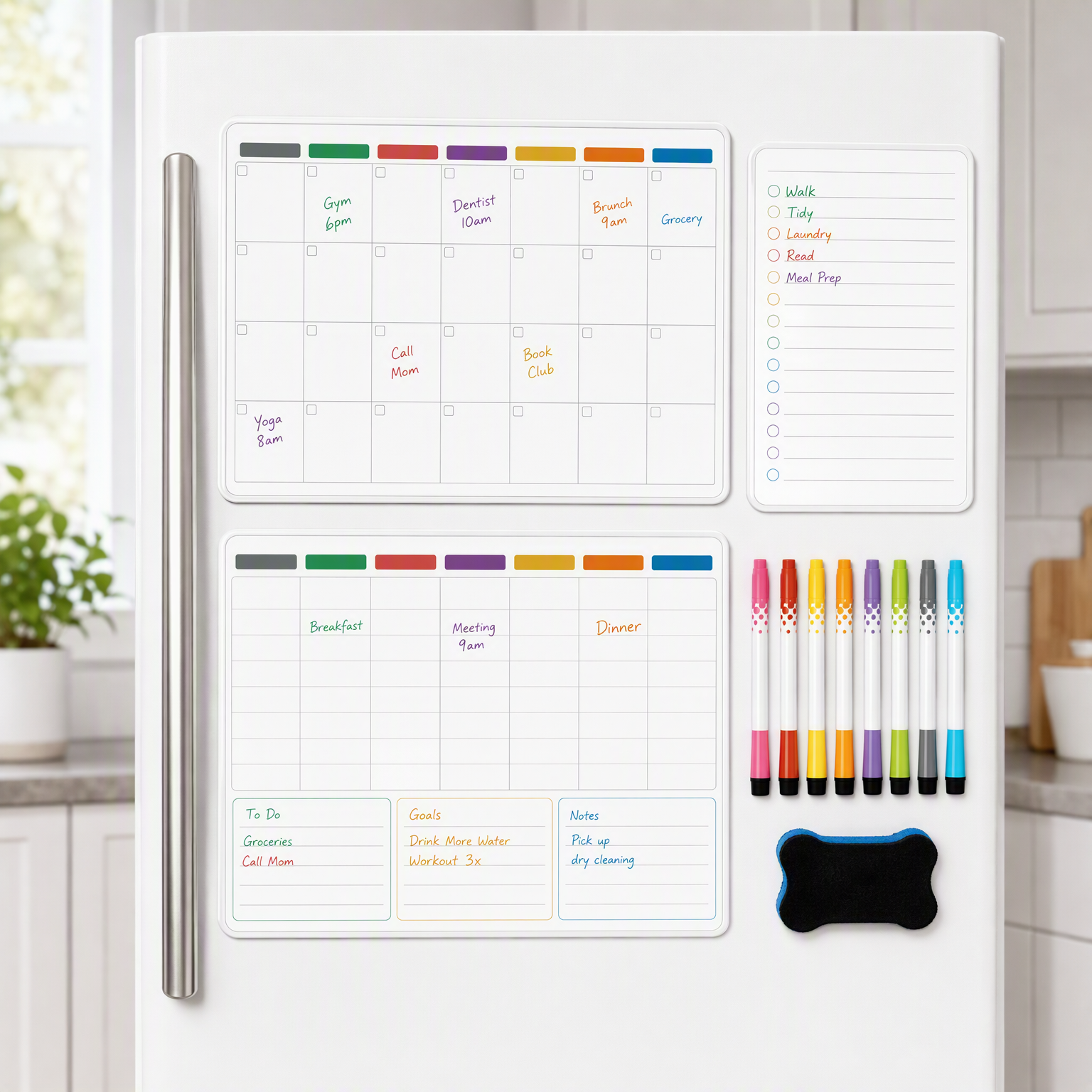
Selecting effective time management planners is an essential first step when aligning personal routine with long-term ambition. Individuals often struggle to maintain consistency because they choose a layout that conflicts with their operational rhythm. According to cognitive psychology research on cognitive load theory, breaking complex ambitions into manageable structured schedules reduces executive fatigue and significantly boosts execution rates. Time management planners serve as the bridge between abstract intentions and physical execution. At UNU, we manufacture high-quality physical planning tools, including magnetic planners, custom whiteboard calendars, and dry-erase flexible scheduling sheets engineered for homes, offices, and commercial workspaces. When comparing daily vs monthly planners, understanding how each format controls cognitive focus helps users select the best tool to improve daily productivity planning and turn strategic milestones into achievable daily tasks.
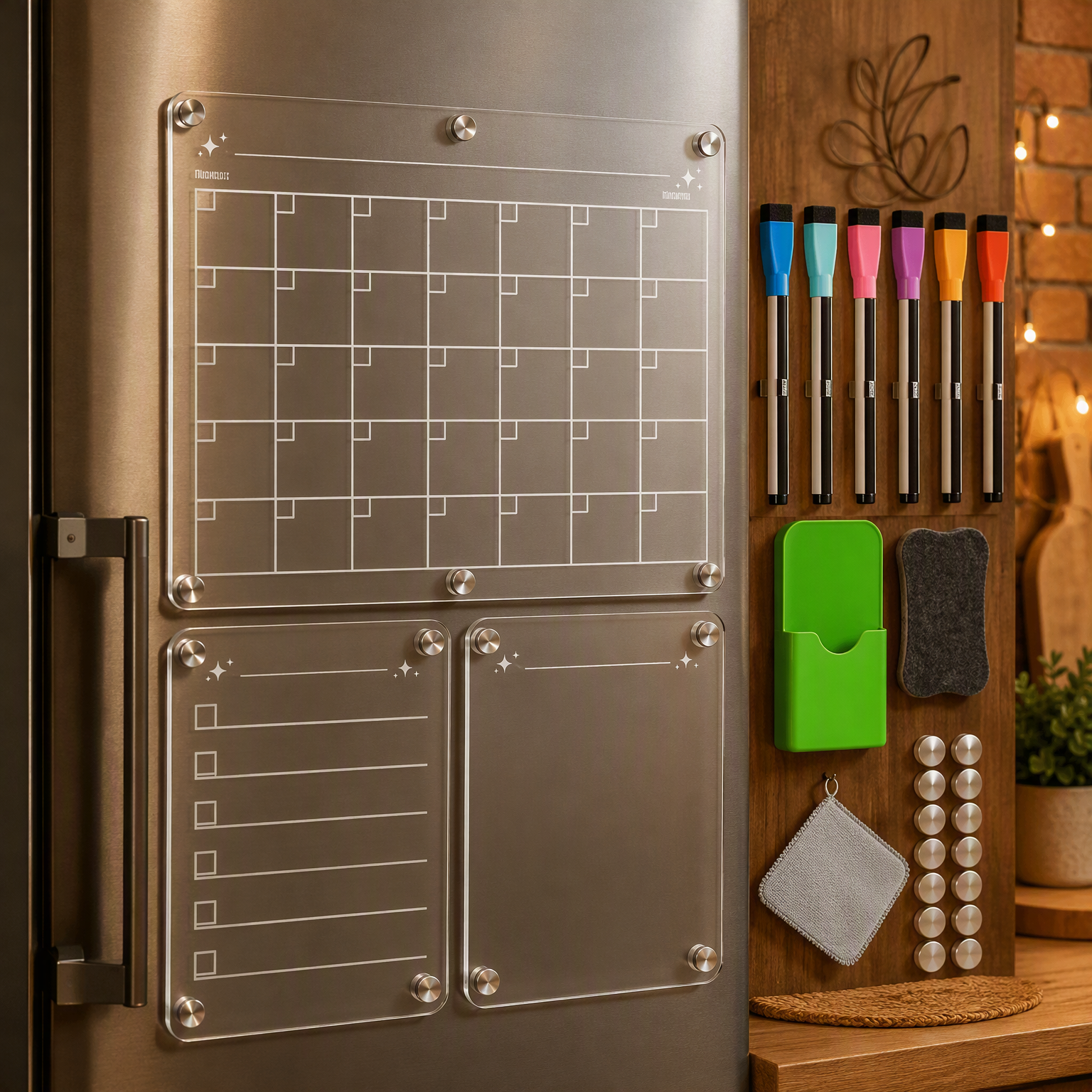
When analyzing daily vs monthly planners for micro-execution, daily formats offer an unmatched level of detail for granular schedule control. A daily layout allows users to map out hourly appointments, track micro-tasks, record immediate phone call notes, and prioritize urgent daily responsibilities. This high-density goal planning tools approach works exceptionally well for professionals with meeting-heavy schedules, project managers, and students managing dense assignment deadlines. According to organizational management studies published in the Harvard Business Review, structured daily logging improves short-term task completion rates by keeping immediate deadlines constantly visible. However, micro-focused daily layouts can occasionally cause users to lose sight of broader strategic deadlines if used in isolation. Utilizing flexible magnetic daily boards manufactured by UNU ensures that daily action items remain visible on metal filing cabinets or refrigerator doors, allowing seamless erased modifications while maintaining clean visual organization.
In contrast to micro-focused tools, monthly formats excel as strategic goal planning tools designed for long-term vision and macro-scheduling. A monthly calendar provides a comprehensive bird's-eye view of an entire month across a single unified layout, making it easy to identify project milestones, track travel schedules, remember anniversaries, and monitor quarterly deliverables. By evaluating daily vs monthly planners through a macro lens, users can spot schedule conflicts weeks in advance, preventing double-booking and ensuring balanced workload distribution over thirty-day cycles. Behavioral research in goal setting shows that visual tracking over multi-week intervals strengthens commitment to long-term habits and project outcomes. UNU produces durable, reusable magnetic monthly planners coated with premium dry-erase laminate films, offering B2B distributors and retail consumers clear visual surfaces that resist ghosting and ink staining over repetitive monthly erasing cycles.
During a workplace efficiency consultation with a medium-sized logistics firm, UNU analyzed the operational friction between field operations and administrative leadership. The company suffered frequent scheduling misalignments because team members relied exclusively on individual paper daily planners without a shared macro-overview. UNU implemented a hybrid tracking framework utilizing large-scale magnetic monthly planners mounted in central breakrooms alongside customized daily whiteboard boards at individual workstations. Within ninety days of deployment, internal communication errors dropped by 28%, and project milestone delivery improved by 40%. The department head noted that combining monthly macro-visibility with daily tactical task tracking created clear accountability across all staff levels. This case demonstrates how integrating both daily vs monthly planners within a unified system optimizes productivity planning across complex organizational environments.
For most professionals, the debate between daily vs monthly planners is not about choosing one over the other, but rather learning how to integrate both into a cohesive productivity framework. Using monthly layouts for strategic vision and daily layouts for tactical execution creates a balanced time management system. Strategic goals identified on a monthly board—such as product launches, tax filings, or fitness milestones—can be broken down into daily actionable steps written on daily schedule pads or magnetic task boards. Incorporating high-quality goal planning tools from UNU allows teams and individuals to maintain high contrast visual clarity, utilizing color-coded dry-erase markers on smooth magnetic surfaces. By systematically translating monthly objectives into daily habits, users eliminate decision fatigue, streamline time management planners usage, and establish sustainable workflows that support continuous progress toward ambitious personal and corporate goals.
The physical quality and material durability of your planning surface directly impact long-term usage habits and organizational productivity. Low-quality dry-erase sheets or flimsy paper planning pads often deteriorate quickly, developing ink ghosting, curling edges, or weakened magnetic hold that disrupts daily workflow. UNU manufactures premium flexible magnetic goal planning tools utilizing high-grade magnetic compound substrates, anti-curl PET film layers, and smooth dry-erase coatings that withstand thousands of write-and-wipe cycles. Whether deploying customized time management planners for corporate promotions, educational environments, or retail distribution, choosing well-engineered magnetic surfaces ensures reliable adhesion to refrigerators, steel whiteboards, and metal office furniture. Investing in durable productivity planning tools from UNU provides users with dependable surface performance, helping individuals and teams stay focused, organized, and aligned with their primary operational objectives year after year.

2026/08/20
Unlock flexible, repositionable whiteboarding for education, agile offices, retail, healthcare & more. Cuttable, magnetic, certified — request your free B2B sample today.

2026/10/10
Discover the 2027 Texture Magnetic Collection & Exclusive Exhibition Promotions Dear Global Partners and Valued Clients, We are thrilled to announce that Shenzhen U&U Magnetic Technology Co., Ltd. (Brand: UCMD) will be officially exhibiting...

2026/08/19
Discover how UCMD® leverages the Canton Fair to showcase magnetic educational & lifestyle products, build global buyer trust, and drive OEM/ODM partnerships. Explore our certified, customizable solutions today.

2026/08/28
Our Commitment to People, Planet & IntegrityAt ShenZhen U&U Magnetic Technology Co., Ltd. (UCMD®), we believe that how we make our products matters as much as what we make. From our factory floor in Shenzhen's Bao An District to the hands...

Please tell us about your company's advantages and characteristics.

Please tell us about your company's advantages and characteristics.

Please tell us about your company's advantages and characteristics.

Please tell us about your company's advantages and characteristics.

Please tell us about your company's advantages and characteristics.

Please tell us about your company's advantages and characteristics.

