Widespread User Misunderstandings Regarding Soft Whiteboard Magnetism
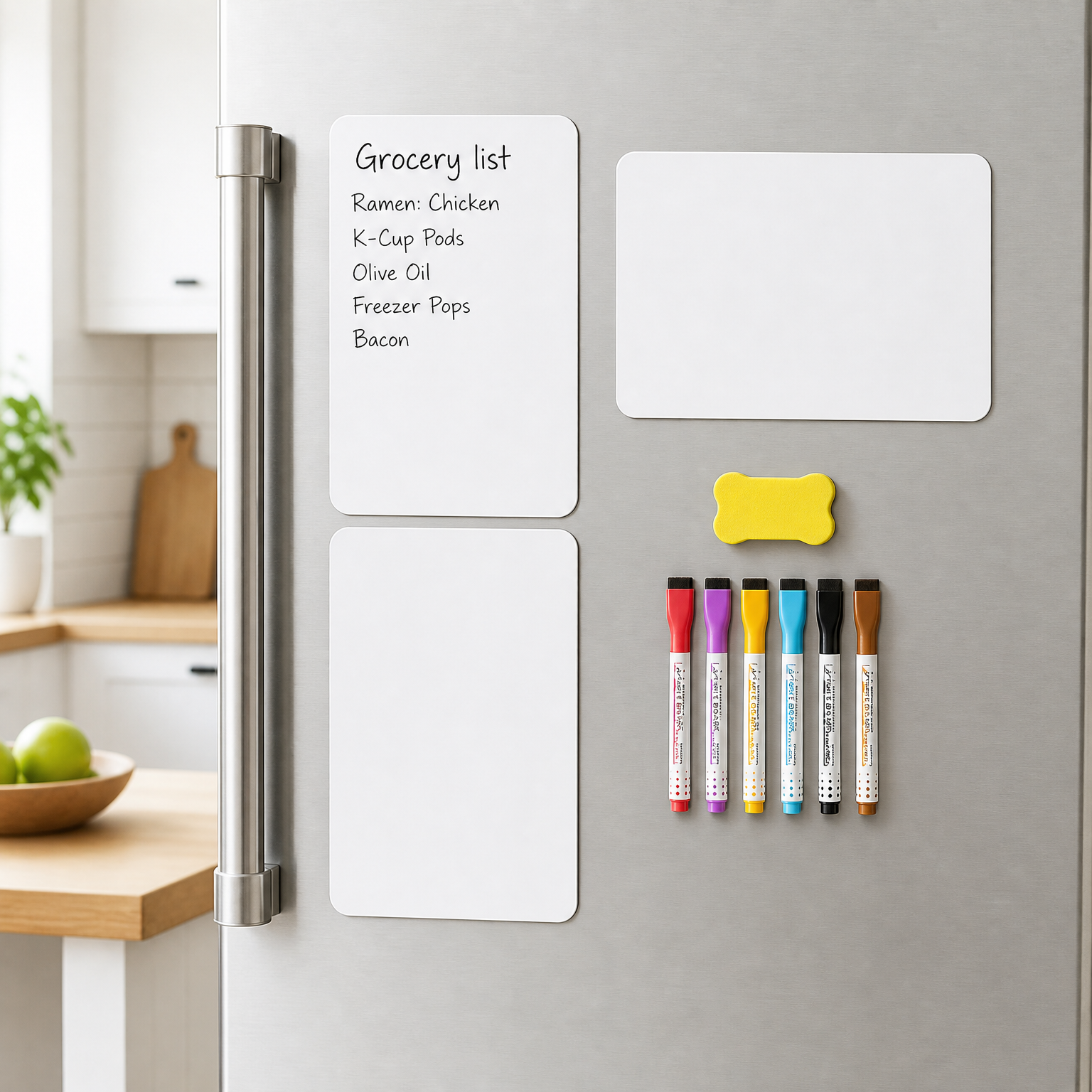
Many global users develop incorrect assumptions about the magnetic stability of a soft whiteboard after encountering low-quality products on the consumer market. Across long-term household product observation and user behavior tracking, complaints about fading magnetic strength rarely come from genuine material demagnetization. Most perceived magnetism loss issues tie back to inconsistent material quality, poor surface fitting, and external environmental damage that commonly affect generic soft whiteboard alternatives. Casual online discussions often generalize flaws from budget-grade products to all soft whiteboard units, creating unnecessary doubt for ordinary families planning to adopt this popular household decorative product. Distinguishing actual material limitations from preventable usage problems helps users form objective judgments about the long-term performance of a standard soft whiteboard.
Core Material Science Behind Soft Whiteboard Magnetic Stability
To fully understand magnetic durability, it is vital to clarify the inherent physical properties that define every standard soft whiteboard. Unlike permanent magnetic items that actively generate magnetic fields, a regular soft whiteboard functions as a magnetically receptive medium built with iron powder composite substrates. This fundamental design means the soft whiteboard itself never holds independent magnetism, so natural demagnetization cannot occur over time. High-quality soft whiteboard structures feature evenly distributed iron particle layers fully sealed under premium PET film, protecting internal functional components from external air contact and physical abrasion. Inferior soft whiteboard options cut material costs with diluted iron powder content and incomplete surface sealing, resulting in weak magnetic grip that feels unstable from first use. This technical difference explains why only unoptimized soft whiteboard versions display degraded adsorption performance after regular use.
Authoritative Global Standards for Magnetic Material Durability
International material safety and product performance organizations have established unified evaluation benchmarks for flexible magnetic household products, delivering authoritative references for judging soft whiteboard reliability. Compliant household-grade products follow CE, ROHS and global environmental material standards, requiring stable physical functionality under normal indoor atmospheric conditions over extended time frames. Material science experts confirm that properly manufactured soft whiteboard maintains consistent receptive magnetic properties without natural functional attenuation. Independent third-party testing simulates years of indoor placement, repeated surface contact, and regular magnetic accessory adhesion to verify long-term stability. These standardized testing protocols separate structurally sound soft whiteboard products from unregulated low-grade versions with inconsistent material composition.
Genuine Factors That Weaken Soft Whiteboard Magnetic Performance
Any reduction in magnetic grip observed on a soft whiteboard stems from external environmental impact or physical damage, rather than inherent material failure. Prolonged exposure to excessive humidity and fluctuating high temperatures gradually weakens the tight bonding between the soft whiteboard’s surface film and inner substrate, causing partial separation across panel areas. Once the soft whiteboard loses full flat contact with wall surfaces, magnetic accessories fail to stay securely attached. Unregulated physical contact such as continuous surface scratching, repeated bending, and harsh surface friction also disrupts the internal uniform structure of the soft whiteboard, creating uneven receptive performance. Basic preventive habits effectively preserve the original structural integrity of any standard soft whiteboard and sustain steady magnetic adsorption capabilities.
Simple Daily Inspection Methods for Soft Whiteboard Performance
Most subtle magnetic weakening issues on a soft whiteboard can be quickly identified through simple, non-destructive inspection methods suitable for ordinary users. Systematic surface checks help distinguish temporary fitting issues from permanent structural problems of the soft whiteboard. Users can test magnetic adsorption at multiple positions across the soft whiteboard, including edges, corners and central areas, to check for uniform holding performance. Minor slipping that only occurs at unsealed edges usually results from slow air infiltration instead of overall soft whiteboard performance decline. Regular visual checks for surface warping, peeling or scratches allow users to maintain intact structural conditions for the soft whiteboard. These easy inspection habits help users accurately grasp the real status of their soft whiteboard and avoid unnecessary misunderstandings about magnetic stability.
Long-Term Household Value of Quality Soft Whiteboard Products
A well-constructed soft whiteboard delivers consistent daily usability and reliable functional stability for general household environments. The reusable writing surface and stable magnetic compatibility support regular daily interaction, creative expression, and casual indoor organization without frequent functional degradation. Thanks to flexible structural design and stable material composition, the soft whiteboard adapts well to diverse indoor living environments and maintains neat surface conditions with simple routine upkeep. Its reusable features reduce unnecessary household waste and deliver consistent daily usability, making the soft whiteboard a practical and user-friendly option for modern home interior arrangements worldwide.
Rigorous Manufacturing Standards Support Reliable Soft Whiteboard Quality
Stable structural performance and consistent magnetic receptive capability depend entirely on standardized material selection and strict production protocols. U&U Magnetic Technology focuses on the development and production of flexible magnetic household products, maintaining strict material screening and standardized production workflows for every soft whiteboard unit. All finished soft whiteboard products undergo comprehensive structural stability testing and material aging verification to ensure consistent performance in regular indoor environments. With accumulated material optimization experience and stable production systems, U&U Magnetic Technology consistently delivers well-structured, high-reliability soft whiteboard products that fit universal household usage needs across global markets.
 EN