 EN

Magnetic Whiteboards for Offices
Please tell us about your company's advantages and characteristics.
2026/10/13
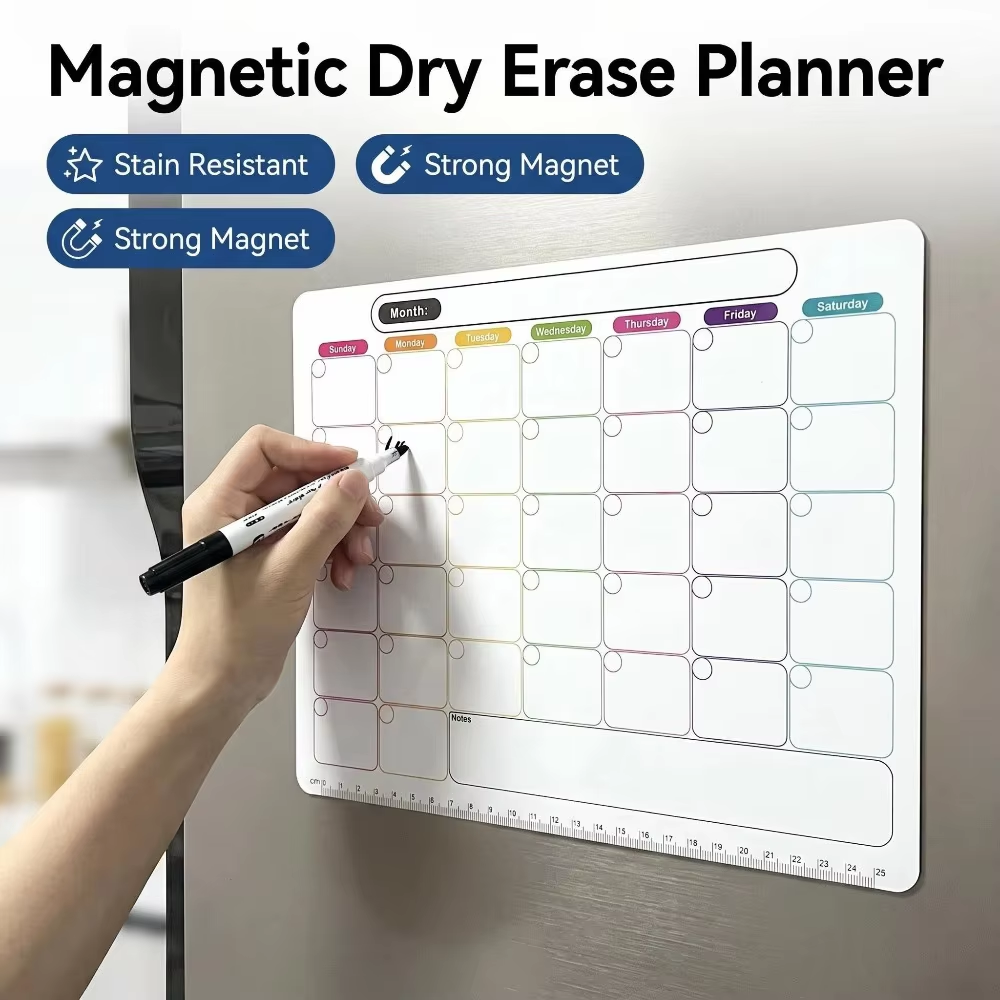
A magnetic calendar dry erase board is a simple planning tool, but its day-to-day usefulness depends on details that are easy to miss in a product listing. As a distributor or buyer choosing planners for several customers, classrooms, offices, or retail channels, it helps to look beyond the printed grid. The working surface, magnetic backing, layout, marker behavior, and packaging plan all affect whether the calendar stays useful after the first few weeks.
This guide focuses on the questions to ask before buying or sourcing a magnetic calendar dry erase product. It also shows how a large magnetic dry erase calendar, a compact planner, and a more decorative option can each fit a different buying brief.
Monthly and weekly layouts solve different problems. A monthly magnetic calendar dry erase board gives a household, classroom, or office a high-level view of dates, deadlines, and recurring events. A weekly layout is better when tasks need more writing space or when a team wants to reset priorities every few days. Some buyers combine both: a monthly board for visibility and a weekly board for action items.
Before comparing styles, define where the planner will sit and who will update it. A family refrigerator calendar may need enough room for several handwriting styles. A school coordinator may prioritize repeated erasing and clear visual zones. A small office may prefer a restrained layout that can carry meeting notes, deliveries, and visitor schedules. That context should determine the size, grid format, and accessory set.
Size should be chosen by information density, not by appearance alone. If the board will track only a few appointments, a compact magnetic calendar dry erase format may be sufficient. If it needs to organize children’s activities, staff shifts, lesson topics, or retail tasks, more writing area usually reduces clutter. Measure the intended refrigerator door, cabinet, or metal panel before committing to a size range.
A white board calendar magnetic format is often a flexible option when the buyer wants a clean, neutral design that can work across home and office settings. By contrast, a cute dry erase calendar may suit gift, school, family, or lifestyle retail programs where color, illustration, or themed formatting is part of the appeal. Neither choice is universally better. In practice, match the visual style to the sales channel while preserving enough blank space for real handwriting.
For buyers reviewing catalog options, the CMS-confirmed product range includes a magnetic dry erase calendar whiteboard for refrigerator, a magnetic dry erase whiteboard fridge calendar, and a reusable monthly and weekly magnetic fridge planner. Review the individual product pages for the current specifications and configuration details before placing an order.
Pre-printed month grids speed up adoption because the user immediately sees where to write. Blank magnetic whiteboard planners offer more freedom for rotating schedules, meal plans, class activities, or project tracking. For a buyer selling to multiple audiences, it can be useful to carry both: a familiar monthly grid for straightforward planning and a blank or lightly structured board for flexible workflows.
OEM or ODM programs add another decision layer. A supplier may be able to discuss custom dimensions, colors, printed layouts, branded packaging, or bundled accessories, but buyers should request a written specification before comparing quotations. The most useful specification includes the finished size, active writing area, backing construction, surface type, artwork files, marker requirements, packaging, inspection expectations, target quantity, and delivery destination. Avoid treating a photo or a sample title as a complete technical specification.
Price still matters, of course, but it is rarely the only cost. A lower unit price may not save money if weak packaging, hard-to-clean surfaces, or inconsistent layouts generate replacements and support questions. For repeat orders, standardized dimensions and artwork approvals make quality checks and replenishment much easier.
Use dry-erase markers only when the product instructions call for them, erase notes before they sit for an extended period when possible, and test a cleaning method in a small area if residue appears. Avoid abrasive tools unless the manufacturer explicitly approves them. Keep the board on a clean, dry magnetic surface so debris does not create uneven contact or scratch the finish. These habits will not substitute for a suitable surface, but they help a well-chosen magnetic calendar dry erase board remain readable and presentable.
A suitable magnetic calendar dry erase option is one that makes scheduling easier in its real setting. Choose the layout based on planning habits, size it for the amount of information people actually write, verify the magnetic backing and dry-erase surface, and document the specification before a bulk or custom order. When those fundamentals are clear, design choices—from a simple white board calendar magnetic look to a cute dry erase calendar—become useful ways to serve distinct customer groups rather than distractions from performance.

2026/08/20
Unlock flexible, repositionable whiteboarding for education, agile offices, retail, healthcare & more. Cuttable, magnetic, certified — request your free B2B sample today.

2026/10/10
Discover the 2027 Texture Magnetic Collection & Exclusive Exhibition Promotions Dear Global Partners and Valued Clients, We are thrilled to announce that Shenzhen U&U Magnetic Technology Co., Ltd. (Brand: UCMD) will be officially exhibiting...
2026/08/19
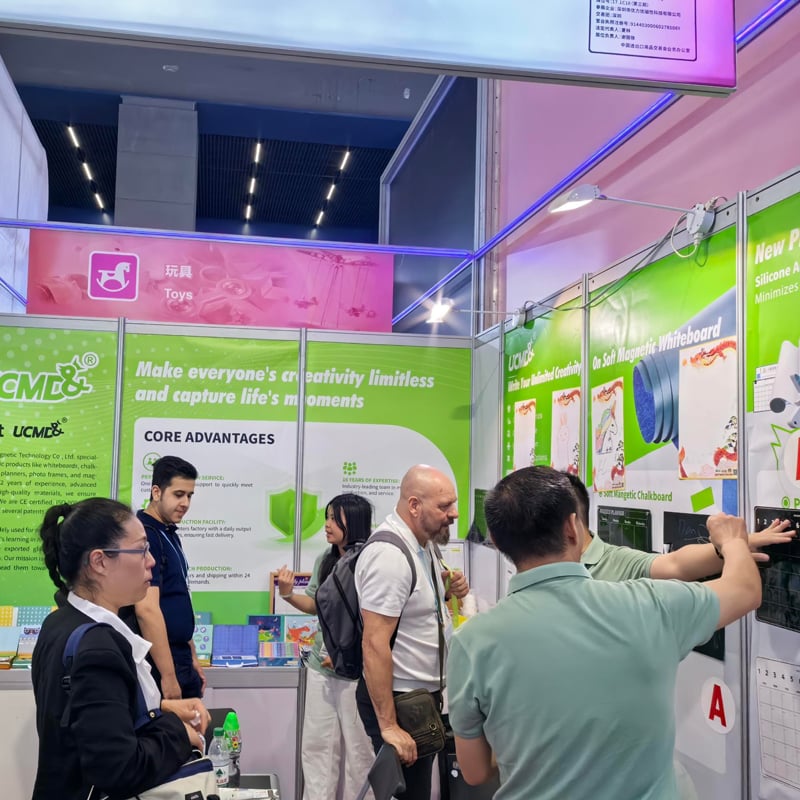
Discover how UCMD® leverages the Canton Fair to showcase magnetic educational & lifestyle products, build global buyer trust, and drive OEM/ODM partnerships. Explore our certified, customizable solutions today.

2026/08/28
Our Commitment to People, Planet & IntegrityAt ShenZhen U&U Magnetic Technology Co., Ltd. (UCMD®), we believe that how we make our products matters as much as what we make. From our factory floor in Shenzhen's Bao An District to the hands...

Please tell us about your company's advantages and characteristics.

Please tell us about your company's advantages and characteristics.

Please tell us about your company's advantages and characteristics.

Please tell us about your company's advantages and characteristics.

Please tell us about your company's advantages and characteristics.

Please tell us about your company's advantages and characteristics.

