 EN

Magnetic Whiteboards for Offices
Please tell us about your company's advantages and characteristics.
2026/09/30
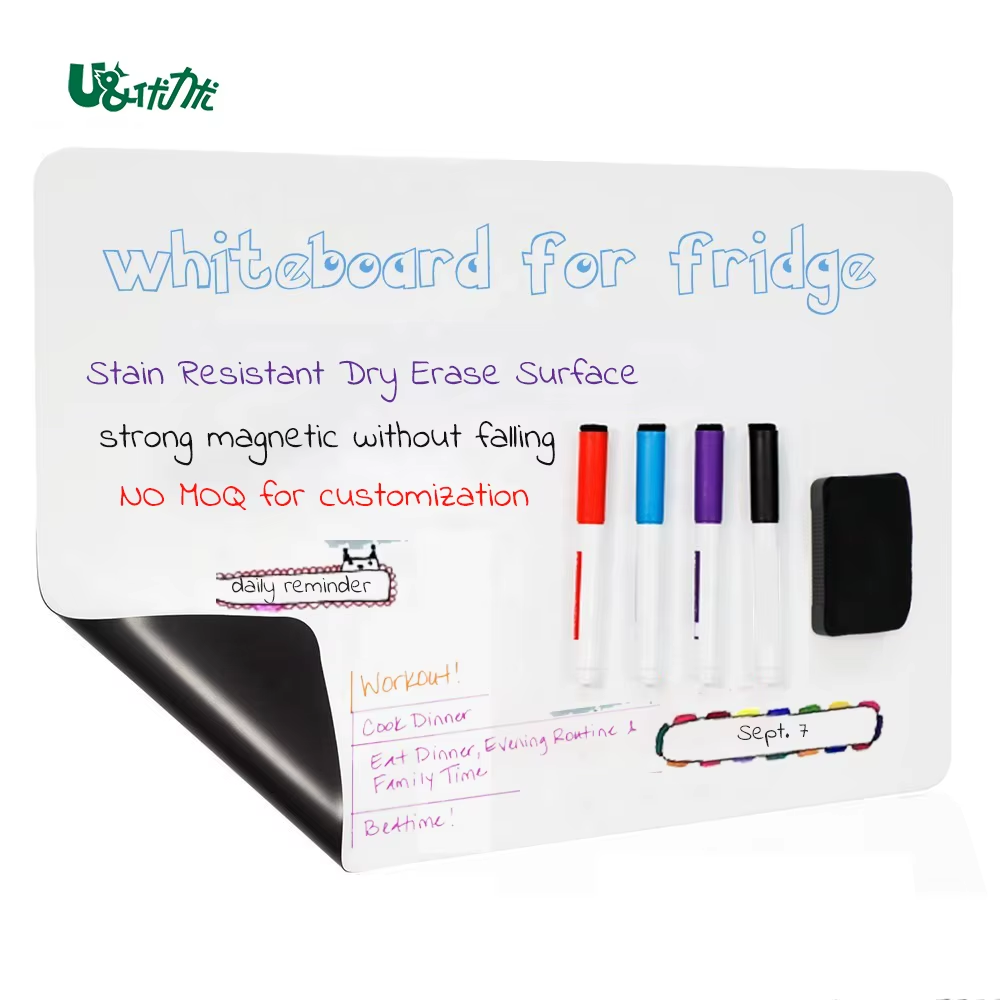
Good fridge magnet designs do more than decorate a refrigerator. They give a souvenir shop a compact story to sell, help a gift buyer choose something personal, and give a retailer an easy add-on near the checkout. For importers, distributors, and private-label teams, the most dependable approach is to pair a clear visual idea with the right production method, a sensible price tier, and packaging that makes the item easy to browse.
In practice, the most practical fridge magnet designs balance three questions: will a shopper notice the shape or artwork quickly, will the format suit the intended price point, and can the collection be replenished consistently? Those questions matter whether the range is aimed at tourist retail, home décor, promotional gifts, or a magnetic organiser for fridge program.
Current demand is broad rather than tied to one look. Food, animals, flowers, local landmarks, short messages, and photo-led artwork all have a place, but they sell for different reasons. A souvenir range benefits from a recognizable local cue. A gift range often benefits from tactile detail or a playful message. Brand and promotional magnets need a logo, message, or contact detail that remains legible at a small size.
That is why visual hierarchy matters. Build the concept around one focal image, one short line of text if needed, and a silhouette that still reads from a short distance. Highly detailed artwork can work on a larger format, but a small magnet normally needs stronger color blocking and cleaner outlines. The same principle helps a magnetic refrigerator organizer assortment: shoppers should understand its intended use without having to decode the package.
A design should be developed alongside the production route, not handed over at the end. Different materials create different visual and commercial opportunities.
| Format | Best visual role | Typical buying conversation |
|---|---|---|
| Flexible rubber or PVC-style magnet | Bold flat color, simple outlines, logo or message-led art | Promotions, low-to-mid price souvenir sets, frequent replenishment |
| Resin-look or raised 3D format | Depth, texture, character, landmark, food, or novelty subjects | Gift and souvenir ranges seeking stronger shelf presence |
| 3D molded magnet | Recognizable forms and tactile detail | Private-label collections where the silhouette is part of the appeal |
| Sublimation or printed blank | Photo, illustration, seasonal artwork, or variable graphics | Personalized programs and artwork-led collections |
Search results for customization formats commonly distinguish rubber-backed blanks and sublimation blanks made in materials such as glass, MDF, or ceramic. That does not make one route universally better. It means buyers should match the substrate to the artwork, handling expectations, and intended retail position before approving a sample.
Design refrigerator magnets differently for a five-dollar impulse purchase than for a premium boxed gift. At entry price points, shoppers respond to readable artwork, easy-to-understand themes, and multi-piece sets. Mid-tier collections can justify more dimensional detail, coordinated series, or a stronger packaging story. Higher-value magnets need a reason to be kept or gifted: a tactile finish, a collectible theme, a place-specific illustration, or a personalized message.
Retail and wholesale buyers also ask different questions. A retailer may focus on assortment balance, hooks or counter display, and how the item photographs online. A wholesaler may care more about carton consistency, SKU breadth, reorder planning, and whether a theme can work across several accounts. A useful OEM brief identifies the channel first, then specifies the target retail tier, artwork count, size range, backing requirement, and packaging format.
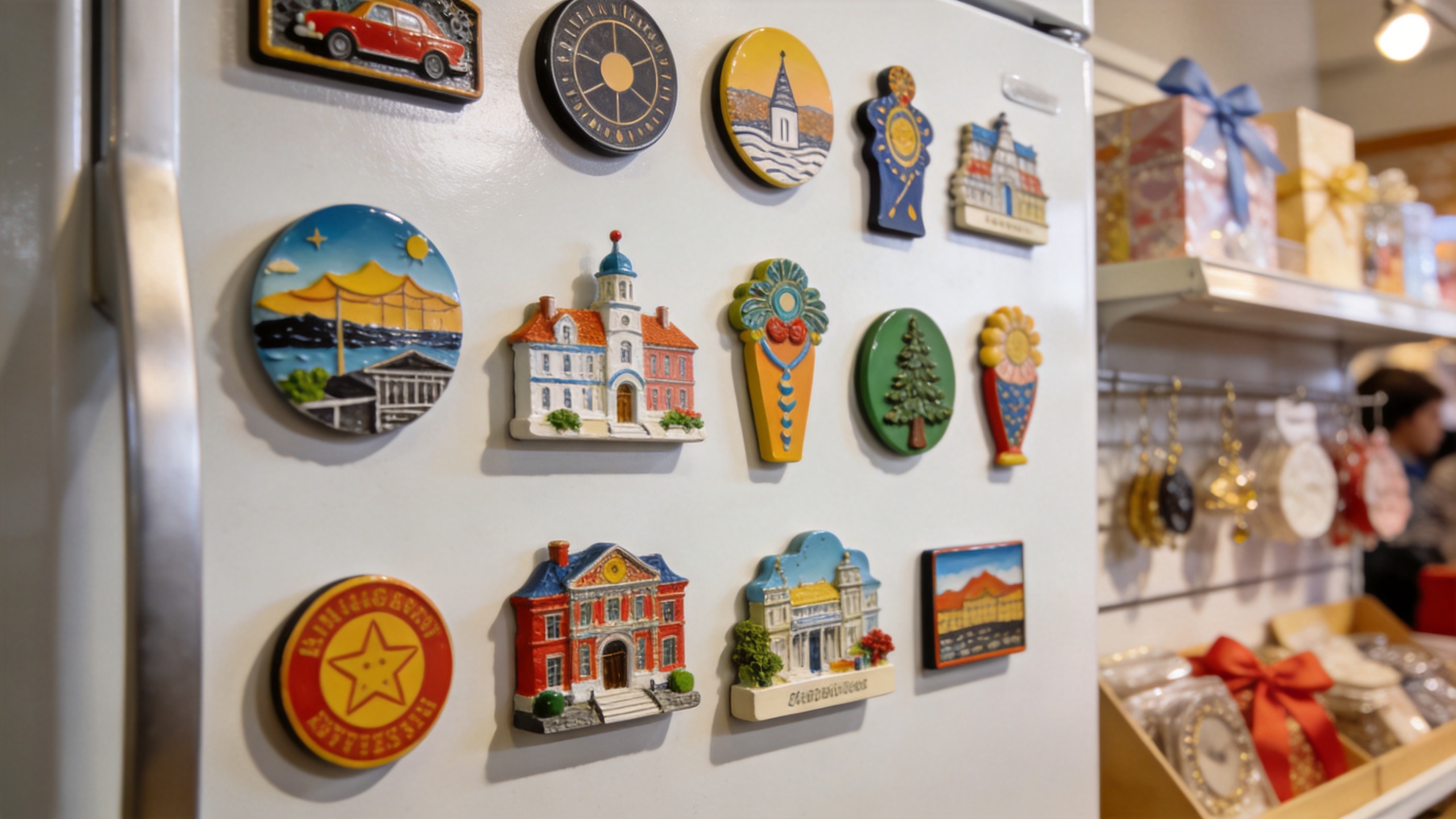
OEM customization is most useful when it protects a collection concept rather than adding decoration at random. Start with a defined visual system: a limited palette, shared type treatment, recurring border or base shape, and a small group of hero motifs. From there, make variations that are meaningful to shoppers—different cities, flowers, foods, animals, dates, or messages—while retaining a family resemblance.
Magnetic components deserve the same attention as the artwork. The magnet should suit the planned object size and intended display surface, while the front material and finish should match the visual effect. Confirm those choices during sampling rather than assuming a render will translate directly to a finished item. If the collection includes useful accessories, adjacent formats can provide cross-selling ideas, such as a colorful magnetic paper clip for fridge, whiteboard & locker or a round, square, or irregular high-strength magnetic sticker.
For buyers sourcing fridge magnet designs in volume, the first order should validate the commercial decisions that cannot be fixed later: approved artwork, material route, finish, magnet configuration, pack count, barcode placement, and outer-carton expectations. Ask the supplier to quote against the same specification for each comparable design, then compare the options at the collection level rather than only by unit price.
Minimum order quantities and lead times vary with the format, quantity, customization level, packaging, and current production schedule. Instead of relying on a generic number, provide an expected order quantity, the number of artwork variants, the destination market, and your required delivery window. This lets the supplier propose a practical sampling and production sequence. For a magnetic organiser for fridge or magnetic refrigerator organizer line, clarify the functional layout and pack contents early, because they affect both the design and the package dimensions.
Magnets are small, so packaging has an outsized role. A simple backing card can communicate the theme, show the full set, and create a hangable retail unit. A window box or printed carton may suit a giftable, dimensional item. For souvenir collections, a card that identifies the place or story can add context without crowding the magnet face.
Display planning should happen before production. Consider whether the collection will sit at a counter, on peg hooks, on a magnetic display board, or in an online thumbnail grid. Keep product titles and key claims consistent across the card, outer carton, and ecommerce listing. Floral or seasonal accessories can reinforce a coordinated presentation; for example, a floral magnetic clip set can help illustrate a broader gift-and-organization assortment without claiming it is a fridge magnet.
The strongest fridge magnet designs are not simply attractive. They are easy for a shopper to understand, appropriate for the selling channel, and feasible to reproduce as a consistent collection. When design, material, packaging, and sourcing decisions are made together, buyers can build magnets that feel distinctive on the shelf and manageable in the supply chain.

2026/08/20
Unlock flexible, repositionable whiteboarding for education, agile offices, retail, healthcare & more. Cuttable, magnetic, certified — request your free B2B sample today.

2026/10/10
Discover the 2027 Texture Magnetic Collection & Exclusive Exhibition Promotions Dear Global Partners and Valued Clients, We are thrilled to announce that Shenzhen U&U Magnetic Technology Co., Ltd. (Brand: UCMD) will be officially exhibiting...

2026/08/19
Discover how UCMD® leverages the Canton Fair to showcase magnetic educational & lifestyle products, build global buyer trust, and drive OEM/ODM partnerships. Explore our certified, customizable solutions today.

2026/08/28
Our Commitment to People, Planet & IntegrityAt ShenZhen U&U Magnetic Technology Co., Ltd. (UCMD®), we believe that how we make our products matters as much as what we make. From our factory floor in Shenzhen's Bao An District to the hands...

Please tell us about your company's advantages and characteristics.

Please tell us about your company's advantages and characteristics.

Please tell us about your company's advantages and characteristics.

Please tell us about your company's advantages and characteristics.

Please tell us about your company's advantages and characteristics.

Please tell us about your company's advantages and characteristics.

