 EN

Magnetic Whiteboards for Offices
Please tell us about your company's advantages and characteristics.
2026/09/30
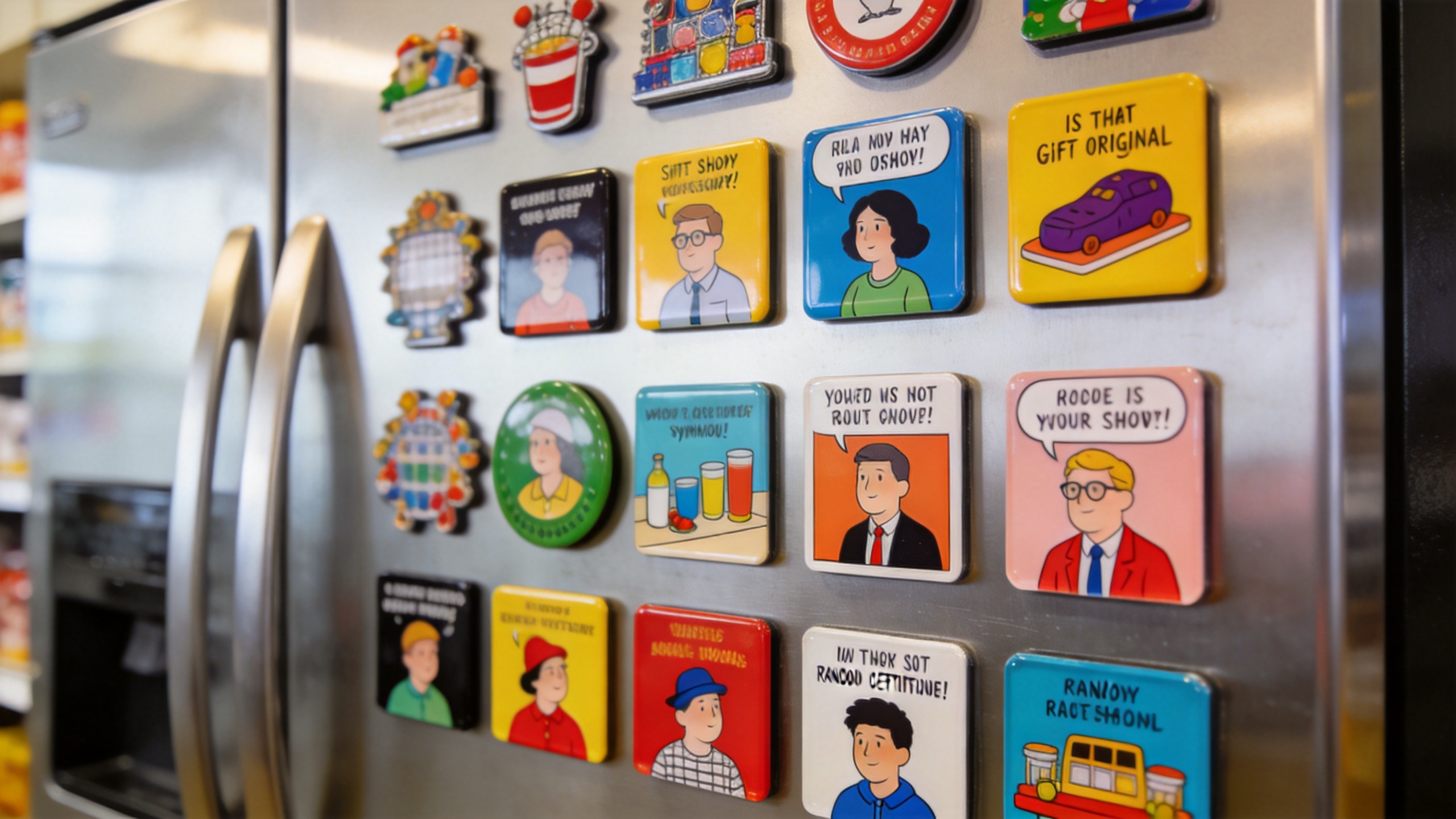
Funny fridge magnets do more than hold a takeaway menu in place. For a gift buyer, souvenir distributor, or independent retailer, they turn a familiar appliance into a tiny display surface with personality. The strongest ranges make someone smile at first glance, but they also give a shopper a clear reason to pick up a set, remember a trip, or add one more item to a gift basket.
That is why a good assortment is rarely just “a joke printed on a magnet.” It is a mix of theme, material, shape, finish, packaging, and sensible merchandising. If you are sourcing funny fridge magnets for resale, the useful question is not which style is most suitable overall. It is which combination fits your audience, price point, and channel.
Search results around this category consistently lean toward witty sayings, playful food, animals, memes, illustrated characters, and nostalgic kitchen humor. That broad mix is helpful for buyers: a collection can be coherent without repeating the same gag. A gift shop may build a lighthearted food-and-travel wall, while an online seller may prefer compact phrase magnets that are easy to photograph and ship.
Three design directions are especially practical for assortment planning:
A design can be visually loud without being retail-ready. First impressions matter, but the practical test is whether the message reads cleanly, the silhouette is recognizable, and the magnet sits neatly with neighboring products. That is especially important for a fridge magnet organiser display, where several items compete in a small space.
Material is part of the product’s personality. Flexible printed magnet formats are often a natural fit for flat artwork, calendars, photographic souvenirs, and colorful graphic jokes. Rubber-like PVC formats can suit shaped artwork and raised 2D or 3D details. Resin-style pieces are usually chosen when the concept needs sculpted texture, such as a miniature food item, landmark, or novelty character. Sublimation printing is worth discussing when artwork depends on full-color images or detailed photographic-style graphics.
These are design choices, not automatic quality rankings. A thin, flat printed magnet may be right for a postcard-style souvenir; a dimensional format may feel more giftable for a themed collection. Ask the supplier to explain the proposed backing, print method, finish, edge treatment, and sample appearance for your artwork rather than relying on a material name alone.
| Format | Often works well for | Buyer checks |
|---|---|---|
| Printed flexible magnet | Flat illustrations, wording, photo-style designs, promotional sets | Text clarity, color proof, coating choice, cut accuracy |
| Soft PVC or rubber-style magnet | Bold outlines, mascot art, raised color areas, playful shapes | Detail definition, color separation, edge finish, backing placement |
| Resin-style 3D magnet | Souvenir scenes, food miniatures, tactile novelty designs | Weight, breakage resistance, paint detail, packaging protection |
| Sublimation-printed magnet | Artwork with gradients, photos, or detailed color composition | Image proof, consistency across a run, surface protection |
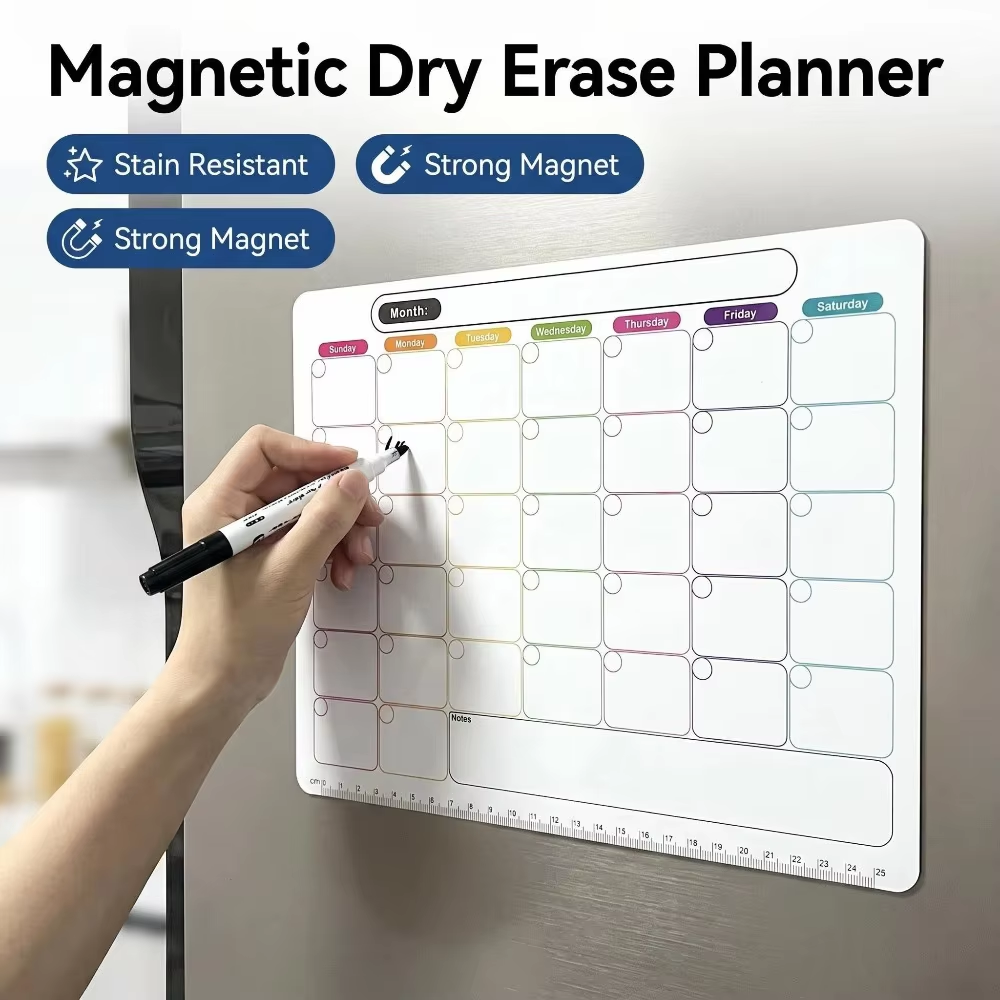
For buyers who also sell dry-erase accessories, a magnetic writing board or a coordinated set of magnetic dry erase markers can make a sensible adjacent category. Keep the product stories distinct, though: a novelty magnet should not be presented as a writing surface unless its construction is confirmed for that use.
Souvenir distributors can use humor as a way to make local imagery feel less generic. Pair a recognizable place, food, phrase, or cultural reference with a simple joke, then review the artwork carefully for audience fit and rights clearance. A resin-like dimensional treatment can add shelf presence, but it should be quoted and sampled separately because the packaging needs may differ from flat magnetic pieces.
Online listings need designs that explain themselves in one image. Prioritize strong contrast, a clear focal point, and groups that photograph well together. Product dimensions, pack count, and packaging should be confirmed before a listing goes live. If your range includes a colorful magnetic paper clip for fridge, whiteboard, and locker organisation, position it as a functional companion item rather than implying it is a novelty fridge magnet.
Custom funny fridge magnets should be briefed as a complete product, not just an illustration. The same applies if a buyer wants a coordinated magnetic writing board or magnetic dry erase markers: confirm that each item is designed, specified, and marketed for its own intended use.
OEM work is where a pleasant idea becomes a commercially usable collection. Before requesting a quote, prepare the artwork files, intended size range, material preference, finish, backing placement, pack configuration, and destination market. Then ask for a pre-production sample or a clear visual proof. It is tempting to start with the most elaborate 3D concept, but a simple flat design with excellent artwork can be the better first test for a new range.
When comparing suppliers, assess design freedom and communication quality alongside price. A supplier that can clarify artwork limits, color matching, mold implications, and pack-out options can reduce surprises later. U&U Magnetic’s merchant profile identifies OEM/ODM magnetic products, whiteboards, planners, photo frames, and educational toys among its product categories; confirm the fit of any specific funny-magnet concept directly during quotation rather than assuming availability.
Wholesale buyers often need a range that feels fresh without creating an unmanageable number of small stock lines. Start with a compact core: a few proven themes, two or three material treatments, and a clear price ladder. Then add limited seasonal or destination-specific designs after the core range has been tested.
Do not treat a stated minimum order quantity or lead time as a universal benchmark. Both can change with artwork complexity, mold needs, pack configuration, order mix, and factory scheduling. The better buying practice is to share a realistic forecast and ask the supplier to quote the exact assortment. That conversation should also cover replacement handling, inspection expectations, and carton labeling for your channel.
A functional magnetic accessory can broaden an order without confusing the main theme. For example, the confirmed product catalogue also includes a floral magnetic clip set and reusable neodymium running magnets for event bib clips. They serve different use cases, so they belong in cross-category merchandising rather than in a funny fridge magnet claim.
Use the checklist to compare funny fridge magnets by audience fit, not only by artwork. If magnetic writing board or magnetic dry erase markers accessories are included in a broader order, treat them as verified adjacent products with separate specifications and packaging needs.
Well-chosen funny fridge magnets are not necessarily the loudest or most complicated. They are the ones that match a clear audience, reproduce reliably, and arrive in a format that a retailer can display with confidence. Before approving a range, check the artwork proof, material and finish, magnetic backing, pack-out, product dimensions, order quantity, production schedule, and channel-specific labeling.
Start with a small, coherent mix and let sell-through guide the next design wave. That approach gives gift and souvenir buyers room to be playful while keeping sourcing decisions grounded in samples, clear specifications, and real retail use.

2026/08/20
Unlock flexible, repositionable whiteboarding for education, agile offices, retail, healthcare & more. Cuttable, magnetic, certified — request your free B2B sample today.

2026/10/10
Discover the 2027 Texture Magnetic Collection & Exclusive Exhibition Promotions Dear Global Partners and Valued Clients, We are thrilled to announce that Shenzhen U&U Magnetic Technology Co., Ltd. (Brand: UCMD) will be officially exhibiting...
2026/08/19
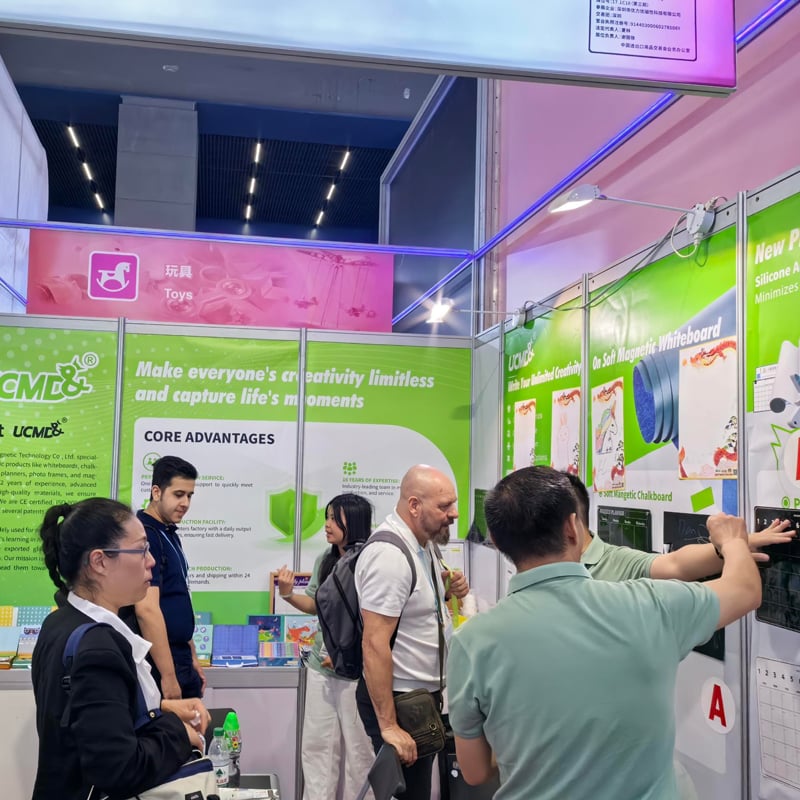
Discover how UCMD® leverages the Canton Fair to showcase magnetic educational & lifestyle products, build global buyer trust, and drive OEM/ODM partnerships. Explore our certified, customizable solutions today.

2026/08/28
Our Commitment to People, Planet & IntegrityAt ShenZhen U&U Magnetic Technology Co., Ltd. (UCMD®), we believe that how we make our products matters as much as what we make. From our factory floor in Shenzhen's Bao An District to the hands...

Please tell us about your company's advantages and characteristics.

Please tell us about your company's advantages and characteristics.

Please tell us about your company's advantages and characteristics.

Please tell us about your company's advantages and characteristics.

Please tell us about your company's advantages and characteristics.

Please tell us about your company's advantages and characteristics.

