 EN

Magnetic Whiteboards for Offices
Please tell us about your company's advantages and characteristics.
2026/10/16
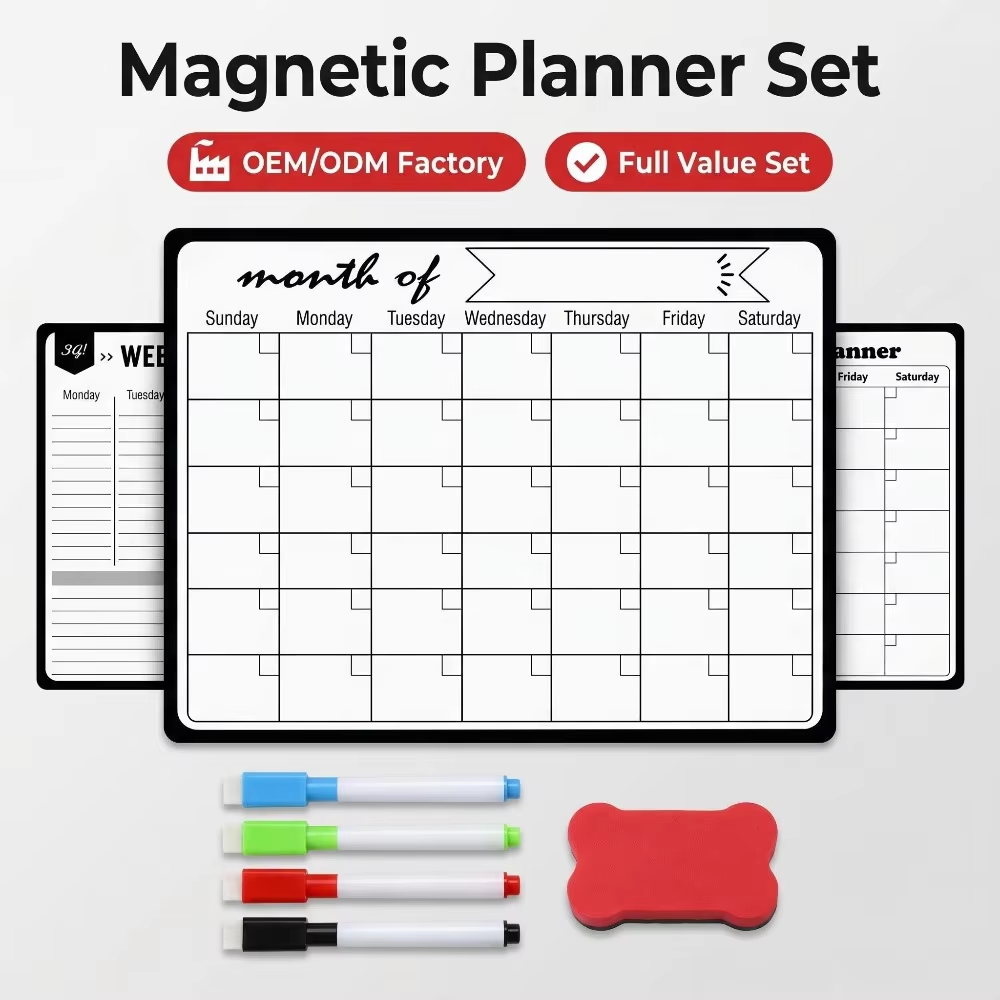
A hobonichi weekly planner and a magnetic board planner solve different planning problems. A Hobonichi-style paper planner is designed for personal reflection, portable scheduling, and detailed notes. A magnetic board is designed to make a schedule visible to more than one person. The better choice is not about which format looks more organized; it is about where the plan needs to live and who needs to act on it.
If you manage your own appointments, projects, and notes, a hobonichi weekly planner can keep the week close at hand. If a household, classroom, or office needs a plan that everyone can see and update, a reusable board may reduce the friction of asking, reminding, and rewriting. This comparison helps individual users and sourcing teams decide which format fits the job.
The useful distinction is personal recordkeeping versus shared coordination. A hobonichi weekly planner is typically carried in a bag, opened during focused planning time, and filled with personal detail. Its weekly layout and memo space support appointments, task lists, notes, and retrospective tracking in one private place. Paper also creates a durable record: a completed week remains available without being erased for the next one.
A magnetic board planner is usually placed where activity happens: on a refrigerator, in a break room, by a classroom door, or near a shared desk. Its value comes from visibility. A weekly whiteboard planner for fridge can show meals, pickups, practices, deadlines, and household tasks at a glance. That makes it less suitable for private journaling but more useful when several people need the same current information.
A hobonichi weekly planner makes sense when the schedule must travel. You can review a meeting while commuting, write notes during a call, and plan the next week away from the kitchen or office wall. The compact personal format encourages a planning routine that is deliberate rather than constantly visible.
Paper also handles detail well. A user can pair time blocks with notes, sketches, habits, expenses, or reflections without negotiating space with anyone else. This matters for students, freelancers, and people who prefer one archive for both commitments and context. The trade-off is that other people cannot see updates unless you show them the page or copy the information elsewhere.
For some users, the strongest argument for a hobonichi weekly planner is continuity. Old pages can reveal recurring workload patterns, completed projects, or the practical reasons a week felt crowded. A board is intentionally temporary; a notebook is intentionally cumulative. Neither is automatically better, but they support different habits.
A magnetic family planner for fridge is built for coordination. Instead of relying on one person to relay changes, family members can check the same weekly view while making breakfast or leaving the house. In an office or classroom, a visible board can make rotating responsibilities, room use, and near-term deadlines easier to scan.
Consider the Weekly Planner Magnetic Board Dry Erase Monthly Planner Whiteboard for Fridge. Its catalog title confirms the intended fridge-based weekly and monthly planning context. That is a different use case from a personal notebook: the board is there to be noticed by the next person who walks by.
A magnetic board makes changes easy to see. Move a task, erase a completed item, or rewrite a pickup time without starting a new page. That flexibility is valuable for households with shifting schedules and teams with short planning cycles. Still, the board should be photographed or transferred to a permanent record if historical detail matters; once the surface is cleared, the previous week is gone.
For education-oriented coordination, the Teacher Planner and Student Schedule Organizer Magnetic Schedule Board for Classroom is a relevant catalog option. Its confirmed title points to a shared schedule-board use case, not a claim about specific materials or performance.
| Decision factor | Hobonichi weekly planner | Magnetic board planner |
|---|---|---|
| Primary use | One person’s detailed schedule, notes, and records | A household, team, classroom, or office’s current shared plan |
| Visibility | Private until opened or shared | Visible where it is installed |
| Portability | Designed to travel with the user | Designed for a fixed, visible location |
| Revision | Edits remain on the page | Fast erasing and rewriting support changing schedules |
| History | Pages create an ongoing archive | Requires a photo or separate record before erasing |
| Collaboration | Usually depends on sharing the notebook or copying details | Designed for multiple people to check the same schedule |
Many people do not need to choose only one. Use a hobonichi weekly planner for private commitments, notes, and personal priorities, then put the few shared commitments on a board. For example, a parent might keep work tasks in a paper planner while transferring school events, meal plans, and rides to a weekly schedule planner online or a magnetic fridge board that the family can check without opening an app.
The same idea applies at work. A project lead may maintain detailed work in a personal system while the team board shows deadlines, handoffs, and coverage. The board should not duplicate every private note. It should show only the information that benefits from being visible.
Try a short two-part experiment before replacing an established routine. For one week, keep detailed appointments, work notes, and personal priorities in the hobonichi weekly planner. At the same time, post only shared commitments on the board: departures, meals, classes, deliveries, and people-dependent tasks. At the end of the week, ask which updates were missed and which information people asked for repeatedly. That shows whether the issue is planning detail or schedule visibility.
A weekly whiteboard planner for fridge earns its space when people consult it without a prompt. If it stays blank while the notebook contains everything, the household may need a simpler shared layout, clearer ownership, or a different location. If the board becomes crowded with private notes, move those details back to the hobonichi weekly planner and reserve the visible surface for decisions that affect others.
Digital tools can support this split as well. A weekly schedule planner online may send reminders or hold links and attachments, while the paper and board formats make the next action tangible. The goal is not to maintain three identical calendars. It is to give each format one clear purpose: record, notify, or coordinate.
For distributors, private-label teams, schools, and corporate buyers, the choice is also a sourcing question. The goal is to match the format to the buyer’s installation point and update behavior. A reusable board intended for a refrigerator needs a clear planning layout that works at a glance; a classroom board needs enough room for the schedule people are expected to read. Before committing to a bulk order, review dimensions, writable area, mounting or magnetic compatibility, print layout, and the intended audience with the supplier.
Customization can matter more than a generic comparison. A family-oriented layout may need columns for names and routines. A school or office layout may need rotating assignments or event blocks. The Reusable Silicone Calendar Removable Weekly and Monthly Planner with To-Do List for Office and Home Use is a catalog example of a weekly/monthly and to-do-list format for office and home contexts. Request a sample and validate the actual layout against the end user’s workflow rather than assuming one grid suits every setting.
A hobonichi weekly planner suits portable, detailed, individual planning. A magnetic board planner suits weeks where visibility, reuse, and shared accountability matter more than a permanent written archive. If your week includes both personal detail and collective logistics, use each tool for the part of the schedule it handles most naturally. That division keeps the personal plan useful without hiding the commitments everyone needs to know.

2026/08/20
Unlock flexible, repositionable whiteboarding for education, agile offices, retail, healthcare & more. Cuttable, magnetic, certified — request your free B2B sample today.

2026/10/10
Discover the 2027 Texture Magnetic Collection & Exclusive Exhibition Promotions Dear Global Partners and Valued Clients, We are thrilled to announce that Shenzhen U&U Magnetic Technology Co., Ltd. (Brand: UCMD) will be officially exhibiting...

2026/08/19
Discover how UCMD® leverages the Canton Fair to showcase magnetic educational & lifestyle products, build global buyer trust, and drive OEM/ODM partnerships. Explore our certified, customizable solutions today.

2026/08/28
Our Commitment to People, Planet & IntegrityAt ShenZhen U&U Magnetic Technology Co., Ltd. (UCMD®), we believe that how we make our products matters as much as what we make. From our factory floor in Shenzhen's Bao An District to the hands...

Please tell us about your company's advantages and characteristics.

Please tell us about your company's advantages and characteristics.

Please tell us about your company's advantages and characteristics.

Please tell us about your company's advantages and characteristics.

Please tell us about your company's advantages and characteristics.

Please tell us about your company's advantages and characteristics.

