 EN

Magnetic Whiteboards for Offices
Please tell us about your company's advantages and characteristics.
2026/08/31
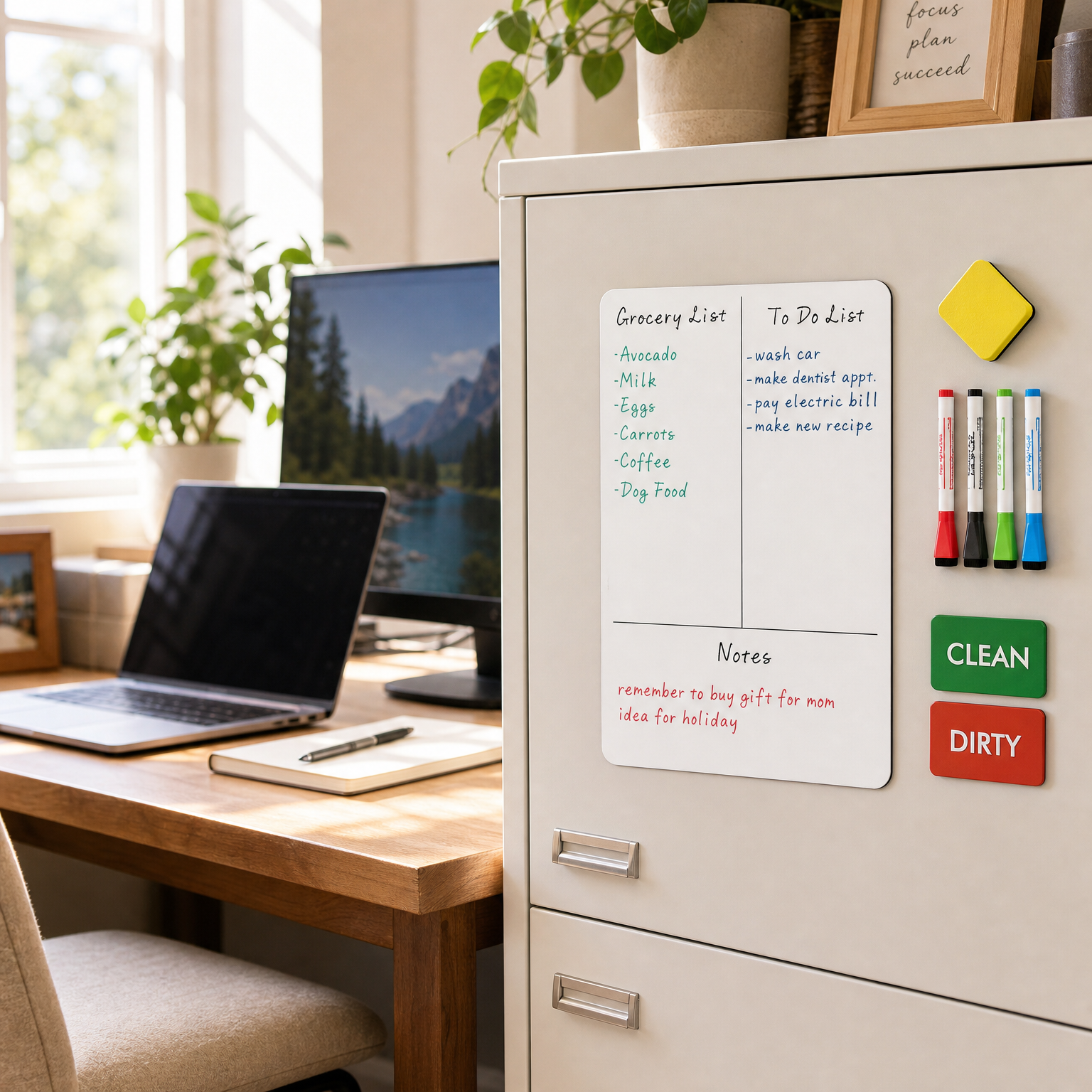
Why the Refrigerator Remains the Smartest Place for a Family Planner
Digital planning apps collapse at the household level because of screen fatigue, forgotten passwords, and the absence of shared visibility. A heavy-duty magnetic calendar mounted on the refrigerator puts meal plans, chores, and key dates directly in the busiest traffic lane of the home. In a 240-unit rental portfolio managed across Rotterdam, switching from app-based notices to a physical magnetic calendar on every steel door cut missed maintenance appointments by roughly a third within two lease cycles. Property managers report that a magnetic calendar on the door outlasts any pinned paper sheet by months, because a magnetic calendar needs no login, no battery, and no subscription. Every household member sees the same information at the same moment.
Kitchens concentrate the hardest conditions any dry-erase product will face. Overhead task lighting, low-angle window sun, steam, and grease splatter attack a cheap board within weeks. Specifying the right magnetic calendar means treating the refrigerator surface as a small industrial environment rather than a casual memo spot.
The kitchen creates optical and chemical stress that office whiteboards never meet. A magnetic calendar meant for a fridge must survive glare, steam, and repeated erasing without losing its grid.
High-gloss films throw harsh reflection spots from ceiling fixtures and windows, hiding marker text at an angle. A micro-textured matte PET surface on a magnetic calendar scatters light instead of mirroring it, preserving contrast even when read from across the room. Low-cost PVC sheets absorb marker solvent and stain within weeks; a high-density polymer or enamel layer lets notes stay legible for 30-plus days and still wipe away with a soft dry cloth. The magnetic calendar that resists ghosting saves the household from buying replacements every season.
Calendar lines must be printed beneath the protective top laminate, not on top of it. A magnetic calendar with sub-surface grid artwork keeps its layout intact through months of erasing, while top-printed grids fade to uselessness after a single school term.
The most common failure of a generic board is weak holding force: the magnetic calendar panel slides down the steel door every time the refrigerator is opened. A reliable magnetic calendar depends on backing material and thickness.
A full-sheet isotropic rubber magnet at 0.5 mm to 0.75 mm delivers moderate attraction of 40 to 50 g/cm², giving a flexible, lightweight magnetic calendar that lies flat on standard flat-front steel fridges. An anisotropic high-grip variant at 0.75 mm to 1.0 mm reaches 70 to 90 g/cm²; a heavy-duty magnetic calendar using this backing holds on curved doors and high-vibration appliances without creeping downward. For rental properties where drilling is forbidden, a full-sheet magnetic backing gives a damage-free install that never scratches the appliance finish.
A 0.3 mm steel base offers a rigid panel with aluminum or plastic trim. This magnetic calendar style suits clinics and offices more than rental kitchens, where a waiting room in Lyon used the rigid format to post appointment slots without drilling.
Correct dimensions follow appliance geometry and intended use. A magnetic calendar that is too small forces cramped writing; a magnetic calendar that is too large overhangs the door edge.
Single-door refrigerators accept a 30 x 40 cm magnetic calendar with a focused 35-day monthly grid and minimal side columns, ideal for studios and break rooms. Larger French-door units accommodate a 40 x 60 cm magnetic calendar with a monthly main grid, a weekly meal planner column, and an open notes section. Families with two working parents use this magnetic calendar format to coordinate shifts without a shared phone.
A complete kit pairs the magnetic calendar with fine-point markers and a magnetic eraser that attach beside the panel. Clipped accessories stay exactly where the next writer expects them, which is why a magnetic calendar with onboard storage outlasts a bare magnetic calendar by years.
Residential kitchens must meet chemical safety rules, especially where toddlers roam. A magnetic calendar sold into the EU retail channel cannot skip these tests without risking a recall.
REACH (EC 1907/2006) verifies that PVC/PET films, rubber sheets, and ink coatings contain no SVHC plasticizers or phthalates. RoHS (2011/65/EU) confirms lead, cadmium, and hexavalent chromium are absent from frame trims and dry-erase surfaces. A compliant magnetic calendar carries batch-level documentation that clears customs audits without hold and speeds retail onboarding.
EN 71-3 limits heavy-metal migration on painted surfaces and child-handled accessories, so a magnetic calendar aimed at family buyers should meet it as a baseline. For toddler homes, small loose magnets must be avoided or built as large solid parts exceeding choke-hazard templates. The magnetic calendar designed with enclosed accessories protects the youngest users by construction. Batch-level certification guarantees that a commercial magnetic calendar shipment complies with retail safety mandates and clears border inspection.
A matte surface on a magnetic calendar diffuses glare from ceiling lights and windows, so family members read handwritten schedules from across the room without hot-spots washing out ink. Glossy film mirrors those light sources and hides text at an angle, which is why a matte PET magnetic calendar performs better in real kitchens than a shiny office magnetic calendar never built for steam.
Not every stainless appliance is magnetic. Austenitic stainless steel with high nickel content shows almost no attraction, while ferritic doors hold magnetic sheets firmly. Testing the door with a simple fridge magnet before ordering a magnetic calendar prevents the disappointment of a panel that will not stick. Specify anisotropic backing when the door metal is uncertain.
If dry-erase ink sits on a magnetic calendar for several months, spray the area lightly with mild isopropyl alcohol or dedicated whiteboard cleaner, then wipe with a microfiber cloth. Avoid abrasive pads, which scratch the top PET layer. Regular weekly cleaning keeps a magnetic calendar ghost-free far longer than a seasonal scrub that lets solvent bond to the film.
A magnetic calendar for family use should meet EN 71-3 to ensure painted surfaces and inks are free from heavy-metal migration. Magnetic accessories must be large enough to defeat swallow-hazard templates in toddler homes. REACH and RoHS documentation should accompany every commercial magnetic calendar shipment into regulated retail markets, or the goods may face a border hold.
Measure the door width before specifying a magnetic calendar. Compact 30 x 40 cm panels suit single-door units, while 40 x 60 cm layouts fit French-door models with room for meal and notes columns. A full-sheet backing installs without drills, which matters in leases that forbid wall damage and in shared kitchens where a hanging board would be removed.
For visibility and zero-maintenance uptime, a magnetic calendar beats an app that depends on charged phones and remembered passwords. The magnetic calendar cannot send reminders, but it never logs out, crashes, or hides a date behind a notification setting. Many households keep the magnetic calendar as the always-on master schedule and use phones only for the alerts that the board cannot produce.

2026/08/20
Unlock flexible, repositionable whiteboarding for education, agile offices, retail, healthcare & more. Cuttable, magnetic, certified — request your free B2B sample today.

2026/10/10
Discover the 2027 Texture Magnetic Collection & Exclusive Exhibition Promotions Dear Global Partners and Valued Clients, We are thrilled to announce that Shenzhen U&U Magnetic Technology Co., Ltd. (Brand: UCMD) will be officially exhibiting...

2026/08/19
Discover how UCMD® leverages the Canton Fair to showcase magnetic educational & lifestyle products, build global buyer trust, and drive OEM/ODM partnerships. Explore our certified, customizable solutions today.

2026/08/28
Our Commitment to People, Planet & IntegrityAt ShenZhen U&U Magnetic Technology Co., Ltd. (UCMD®), we believe that how we make our products matters as much as what we make. From our factory floor in Shenzhen's Bao An District to the hands...

Please tell us about your company's advantages and characteristics.

Please tell us about your company's advantages and characteristics.

Please tell us about your company's advantages and characteristics.

Please tell us about your company's advantages and characteristics.

Please tell us about your company's advantages and characteristics.

Please tell us about your company's advantages and characteristics.

