 EN

Magnetic Whiteboards for Offices
Please tell us about your company's advantages and characteristics.
2026/09/03
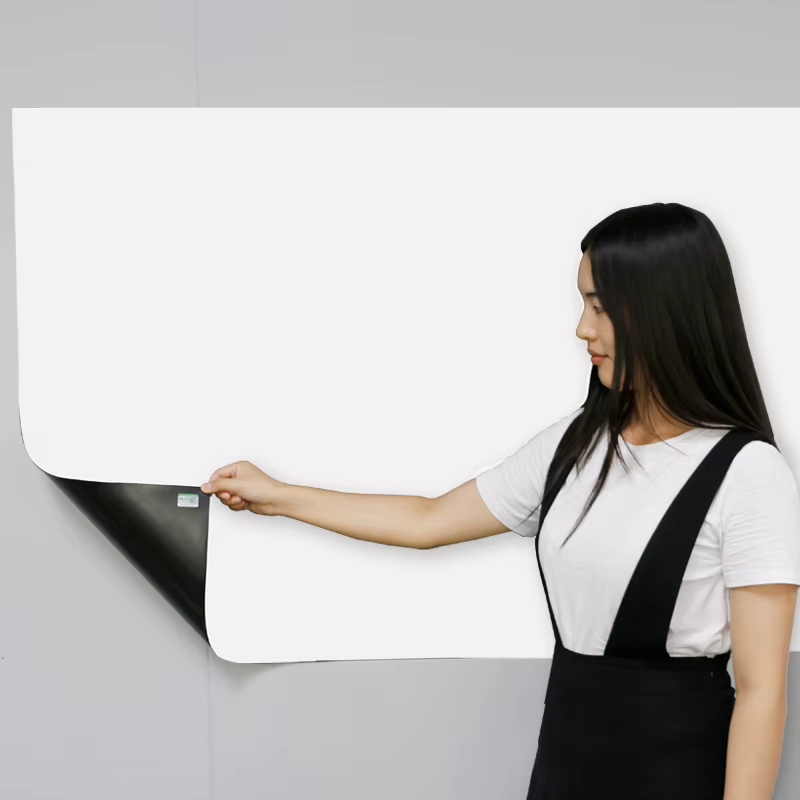
A third-party logistics firm in Rotterdam ran pick lists on clipboards for years, then lost a full afternoon reconciling stock after a clipboard went missing between two aisles. The fix was not software: it was a magnetic board mounted at the end of each racking run, holding one card per bin location with the current count and the last movement date. Six months later the daily reconciliation that used to take an hour takes about ten minutes, because the count lives where the picker stands. Because the magnetic board sits at eye level beside the pick face, the number gets read without a conscious decision to check it.
The Rotterdam site handles fast-moving consumer goods across roughly 40 racking bays. Each bay end now carries a magnetic board with printed card holders: one row for bin locations, one for stock rotation dates, one for exceptions such as damaged or quarantined pallets. Nothing on that magnetic board needs a login, a charged device, or a walk back to the office, which is why the system survives shift changes and staff turnover. The team chose a magnetic board over a printed chart because bin locations here change every few weeks.
Paper fails predictably: it tears, it gets wet, it goes missing, and it is always one version behind. A magnetic board fails differently. The common failure modes are a card holder rail that loosens under forklift vibration, a surface that stains so badly that handwritten numbers stop being readable, and a face too small for the number of bins it tracks. A magnetic board also degrades when the dry-erase coating is too thin for daily rewriting, which shows up as grey shadowing after a month.
Temperature and dust cause slower damage. A magnetic board in an unheated bay sees condensation at dawn, which lifts ink and leaves tidemarks that never fully erase. Cardboard dust settles into the coating and turns it grey, so a magnetic board beside a wrapping station needs cleaning twice as often as one on an office wall.
A warehouse magnetic board is usually a painted or laminated steel sheet, often 0.4 to 0.6 mm thick, with a printed grid under a dry-erase top coat. The steel must be ferromagnetic; austenitic stainless is not, and a magnetic board mounted on a stainless racking upright will slide off. Pull force matters most for card holders rather than the board itself: a loaded holder needs roughly 60 to 90 grams per square centimetre to stay put through a shift of vibration. Specify the holder magnet separately from the magnetic board sheet, because the two are rarely rated the same way.
Colour does the work that text cannot. Red for quarantine, amber for short-dated stock, green for released, blue for replenishment pending. A magnetic board with a printed colour key along the bottom edge means a new temporary worker reads the system in under a minute, which is the whole point of putting the information on the wall. Every magnetic board at the Rotterdam site uses the same four colours, so a worker moving between aisles is not relearning the code. A magnetic board without a printed key tends to acquire invented colours within a fortnight, and the code stops meaning the same thing across shifts. Keeping the key printed on the panel costs nothing and removes the argument.
ISO 9001:2015 clause 8.5.2 requires identification and traceability of product status through production and delivery, and a magnetic board with dated movement cards supports that requirement provided the cards are retained or photographed as records. Photographing the magnetic board at shift end creates the dated record an auditor wants to see. ANSI Z535.1 defines safety colour codes, which is why quarantine and hazard markings on a magnetic board should follow the standard rather than a house palette. OSHA 29 CFR 1910.176(b) covers secure storage of material, and NFPA 1 sets clearance rules around storage and electrical gear, so board placement must never block aisles or fire equipment.
Match board size to bin count, allow one line per location plus spare rows, and confirm the mounting surface is ferrous and flat before ordering a magnetic board. Ask the supplier for steel gauge, coating type, and the pull-force figure for any holder sold with the magnetic board. A magnetic board with a matte top coat reads better under high-bay lighting than a glossy one, which throws hot spots onto handwritten figures. Ask whether the magnetic board ships with fixings rated for racking uprights, since most uprights need band clamps rather than screws.
Wipe the magnetic board weekly with a damp cloth and a dedicated cleaner; solvent-heavy sprays leave a film that causes ghosting. Check monthly that every holder still grips and that the magnetic board has not drifted on its mounts. Retire a magnetic board once erased numbers stop coming off cleanly, because unreadable counts are worse than no board at all. Keep a spare magnetic board in the stores cupboard so a damaged panel can be swapped in the same shift. U&U Magnetic Technology supplies magnetic boards and label holders under ISO 9001 with REACH and RoHS documentation, which matters when a site is audited.
A magnetic board holds on carbon steel and ferritic stainless uprights, but not on austenitic stainless, which is common in food-grade and pharmaceutical racking. Test with a plain magnet in a hidden spot first. If the upright is non-magnetic, mount a thin steel sub-panel with bolts or band clamps and place the magnetic board on that.
A loaded card holder on a magnetic board should be rated around 60 to 90 grams per square centimetre of contact. Lighter holders creep down the face under forklift vibration and end up on the floor by mid-shift. Ask the supplier for the holder figure separately, since board and holder magnets are usually rated differently.
Allow one row per bin location plus two spare rows for exceptions, then choose the smallest magnetic board that fits those rows at a legible line height. A 40 by 60 cm panel suits most single bays. Undersizing is the most common specification mistake, because a cramped magnetic board stops being updated.
A magnetic board supports ISO 9001:2015 clause 8.5.2 on identification and traceability, but the cards themselves are working documents. Photograph or file them at shift end so dated status records exist. The board alone shows current status; the retained images show history, which is what an auditor checks.
Wipe a magnetic board weekly with a damp cloth and a dedicated whiteboard cleaner. Daily rewriting builds a solvent film that causes ghosting, so a light weekly clean prevents the heavy scrubbing that damages the top coat. Avoid abrasive pads, which scratch the surface permanently and make later cleaning harder.
A magnetic board works in chilled and frozen areas provided the coating and adhesive are rated for the temperature range. Condensation is the real enemy, so specify a sealed edge and wipe panels at the start of each shift. Ferrite magnets keep their strength at low temperature, unlike some polymer-backed products that stiffen and curl.

2026/08/20
Unlock flexible, repositionable whiteboarding for education, agile offices, retail, healthcare & more. Cuttable, magnetic, certified — request your free B2B sample today.

2026/10/10
Discover the 2027 Texture Magnetic Collection & Exclusive Exhibition Promotions Dear Global Partners and Valued Clients, We are thrilled to announce that Shenzhen U&U Magnetic Technology Co., Ltd. (Brand: UCMD) will be officially exhibiting...

2026/08/19
Discover how UCMD® leverages the Canton Fair to showcase magnetic educational & lifestyle products, build global buyer trust, and drive OEM/ODM partnerships. Explore our certified, customizable solutions today.

2026/08/28
Our Commitment to People, Planet & IntegrityAt ShenZhen U&U Magnetic Technology Co., Ltd. (UCMD®), we believe that how we make our products matters as much as what we make. From our factory floor in Shenzhen's Bao An District to the hands...

Please tell us about your company's advantages and characteristics.

Please tell us about your company's advantages and characteristics.

Please tell us about your company's advantages and characteristics.

Please tell us about your company's advantages and characteristics.

Please tell us about your company's advantages and characteristics.

Please tell us about your company's advantages and characteristics.

