 EN

Magnetic Whiteboards for Offices
Please tell us about your company's advantages and characteristics.
2026/10/13
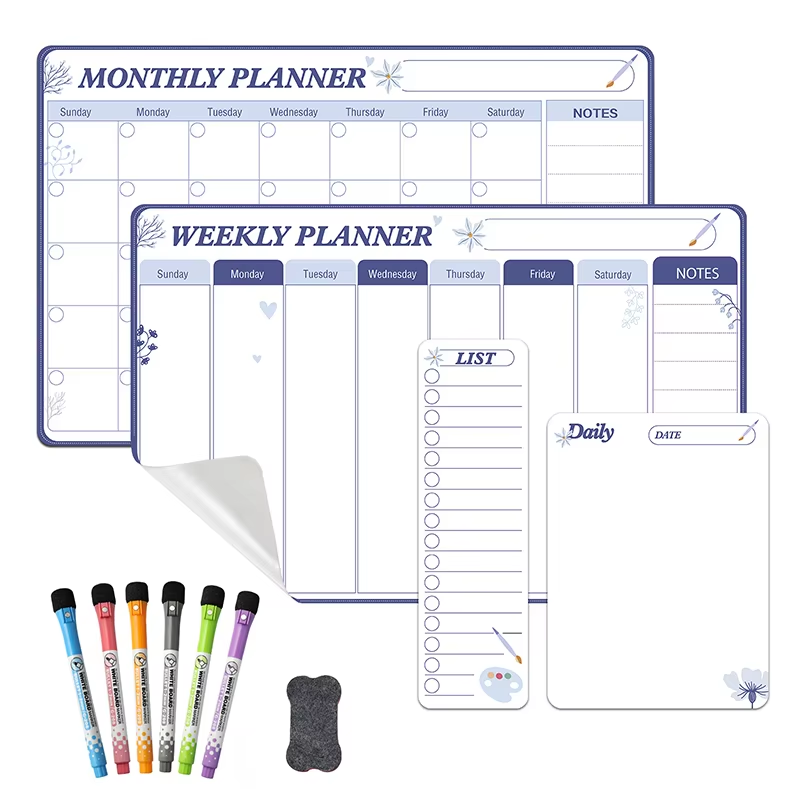
A magnetic dry erase board does more than hold meeting notes. It can be a family command center, a daily teaching surface, or the place a project team makes work visible. The right choice starts with how the board will be used—not with the biggest size or the most decorative frame. From a magnetic-materials adviser’s perspective, four decisions matter most: where it will sit, how often people will write on it, what needs to attach to it, and how it will be installed.
This guide turns those questions into a practical comparison. It also explains where a flexible board film works well, when a rigid steel-backed board is the safer choice, and which details to clarify before ordering several boards for a school, office, or branded program.
Before comparing finishes, define one repeatable use case. A magnetic dry erase board in a kitchen may mainly hold a weekly schedule and reminders. In a classroom, it may need to handle frequent writing, visual aids, and magnets that are moved throughout the day. A meeting room board needs to remain readable from across the room and stay tidy between sessions. Those are different jobs, so they should not automatically receive the same board specification.
| Space | What to prioritize | Useful questions |
|---|---|---|
| Home office or kitchen | Footprint, easy cleaning, and a layout that supports routines | Will it sit on a metal appliance, a small wall, or a desk? Is a clear acrylic look important? |
| Classroom or learning area | Writing area, glare control, durable cleaning, and dependable magnetic display | How many people view it at once? Will it carry lesson cards, student work, or magnetic letters? |
| Meeting room | Viewing distance, long writing sessions, installation security, and accessory storage | Will it be used during workshops? Do markers, erasers, and project cards need to stay at hand? |
It is tempting to choose the largest panel that fits the wall. In practice, a board should leave enough clear wall around it for people to stand, write, and view content comfortably. For a collaborative room, map the writing zones first: agenda, decisions, actions, and visual attachments. That small planning step makes size selection much more reliable.
The phrase magnetic dry erase board can describe several constructions. Flexible PET-based dry erase film is often useful where low profile, a custom-cut area, or a removable application matters. A rigid steel-backed board is generally the better fit when the surface will receive frequent writing and when users expect stronger support for magnets and repeated display changes.
An acrylic magnetic dry erase board can be attractive in a home office or reception area because it creates a clean, modern appearance. Check its intended mounting method and whether the magnetic function is on the writing surface or designed for placement on a metal backing. Don’t assume that a clear board performs exactly like a steel whiteboard; confirm the maker’s stated magnetic use and compatible accessories.
For a flexible option, the CMS-confirmed PET magnetic dry erase board film is relevant when a project calls for a rollable board format rather than a conventional framed panel. For scheduling use on a metal surface, a magnetic dry erase whiteboard fridge calendar illustrates a compact planning format. Use those links to review the supplied products; select the final specification only after confirming dimensions, attachment method, and the use environment.
Surface construction influences cleaning effort, ghosting resistance, and how the board looks after repeated use. A lower-intensity household planner may not need the same surface as a board used through several lessons or workshops each day. As a general material rule, porcelain-on-steel surfaces are commonly positioned for heavier-duty, repeated use, while more economical coated surfaces can suit lighter schedules. That does not make one universally better: it makes usage frequency the deciding variable.
If your board will see frequent writing, ask for the surface type, cleaning recommendations, and any care limits before you compare price. A smooth, easy-to-clean surface is useful, but the supporting substrate and edge treatment matter too. In rooms with strong windows or overhead lighting, review glare from the expected viewing angle rather than choosing by a product photo alone.
A magnetic acrylic dry erase board can make sense when style and small-format planning lead the requirement. For heavy, shared writing, a rigid board designed for that workload may be the more practical choice. This is one area where an attractive first impression can be misleading: what matters day to day is whether the writing surface, mounting, and magnet use fit the actual routine.
“Magnetic” should mean more than “a magnet can stick somewhere nearby.” Decide what will attach to the board: light reminder notes, lesson cards, printed schedules, manipulatives, or a marker holder. Then confirm that the chosen construction and magnet type are appropriate for that load. If a board will be a shared work surface, a dedicated tray or holder prevents markers and erasers from disappearing between sessions.
A practical add-on is the magnetic marker holder and eraser organizer. It provides an internal product option for keeping common writing tools close to the board. As with the board itself, verify dimensions and compatibility before purchase rather than assuming one accessory fits every frame or surface.
Installation is part of the product decision, especially for larger rigid boards. Measure the usable wall, identify its substrate, and follow the supplied mounting instructions and hardware guidance. Level placement is important for both appearance and usability. If the board is heavy, the wall condition and mounting method deserve more attention than the decorative frame.
Flexible film and self-adhesive formats can simplify some projects, but they still need a clean, suitable backing surface. A removable option is helpful only if it matches the wall finish and expected removal cycle. For leased offices or short-term displays, test a small area and document the surface requirement before rolling out a larger installation.
For a school group, distributor, or branded program, avoid a vague request for “magnetic whiteboards.” Write a short specification that names the board format, finished size, writing frequency, mounting method, accessory needs, packaging expectations, and logo or artwork requirements. This prevents a common purchasing problem: several boards arrive with different dimensions or installation details, making replacement parts and room-to-room consistency harder to manage.
Where private labeling is part of the project, request a sample and approve the visual placement before a full run. The supplied merchant context confirms OEM/ODM capability, but final logo method, minimum order, lead time, compliance documentation, and surface construction should be confirmed directly for the specific order. Treat those as order-level details, not assumptions.
A well-matched magnetic dry erase board fits the room’s real routine. Start with function, verify material and mounting details, and make magnets and accessories part of the plan. That approach gives a small home planner, a busy classroom, and a collaborative meeting room a board that is useful long after the first week on the wall.

2026/08/20
Unlock flexible, repositionable whiteboarding for education, agile offices, retail, healthcare & more. Cuttable, magnetic, certified — request your free B2B sample today.

2026/10/10
Discover the 2027 Texture Magnetic Collection & Exclusive Exhibition Promotions Dear Global Partners and Valued Clients, We are thrilled to announce that Shenzhen U&U Magnetic Technology Co., Ltd. (Brand: UCMD) will be officially exhibiting...

2026/08/19
Discover how UCMD® leverages the Canton Fair to showcase magnetic educational & lifestyle products, build global buyer trust, and drive OEM/ODM partnerships. Explore our certified, customizable solutions today.

2026/08/28
Our Commitment to People, Planet & IntegrityAt ShenZhen U&U Magnetic Technology Co., Ltd. (UCMD®), we believe that how we make our products matters as much as what we make. From our factory floor in Shenzhen's Bao An District to the hands...

Please tell us about your company's advantages and characteristics.

Please tell us about your company's advantages and characteristics.

Please tell us about your company's advantages and characteristics.

Please tell us about your company's advantages and characteristics.

Please tell us about your company's advantages and characteristics.

Please tell us about your company's advantages and characteristics.

