 EN

Magnetic Whiteboards for Offices
Please tell us about your company's advantages and characteristics.
2026/10/05
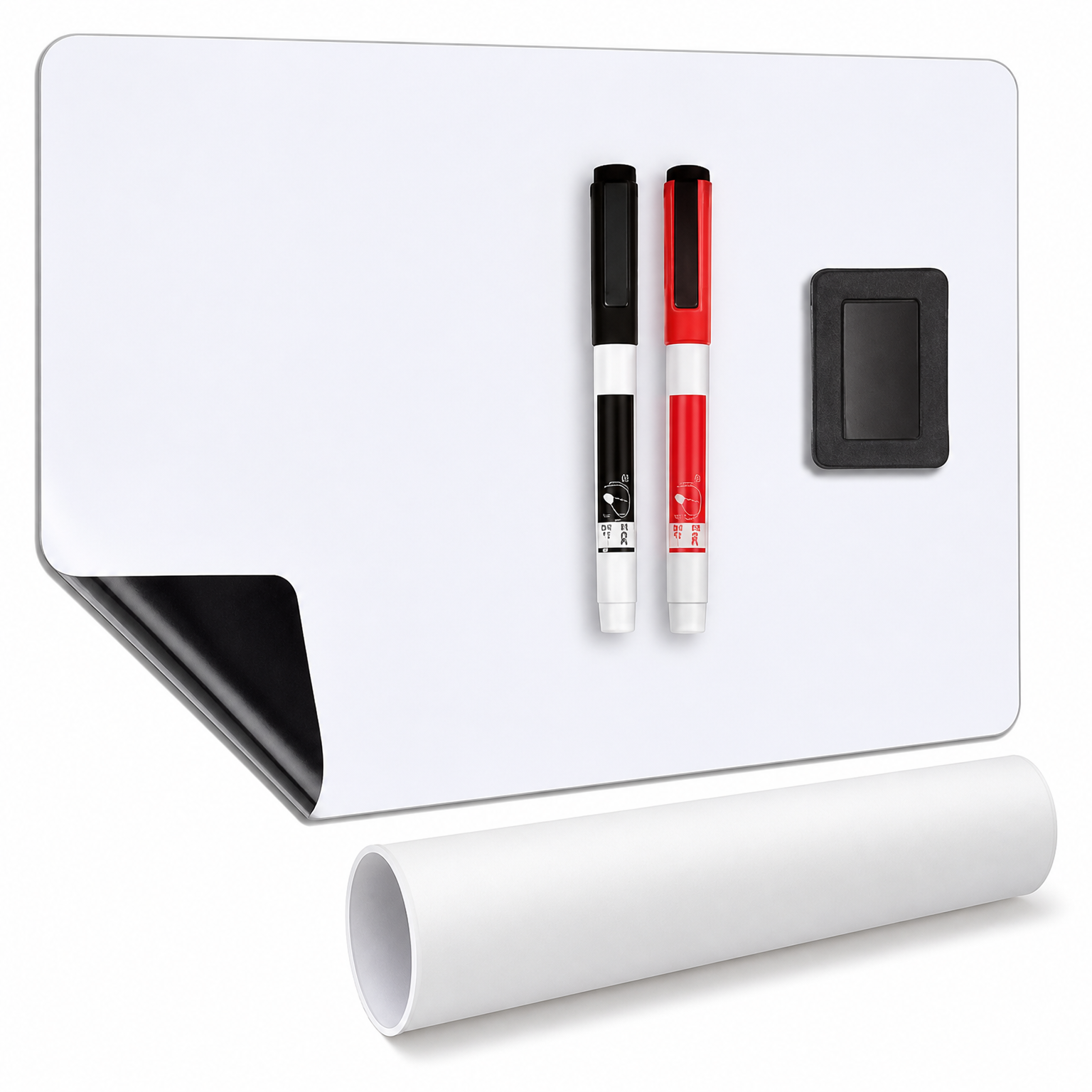
A big dry erase board calendar earns its wall space when several people need to see the same plan at once. In a school office, training room, operations area, or shared classroom, a small desk planner can record dates, but it cannot make priorities visible from across the room. For education-supply distributors and facilities buyers, the better question is not simply “Which calendar looks good?” It is: which board size, layout, mounting method, and purchasing model will stay useful after the first month?
As a distributor serving multiple sites, I would start with the workflow. A board that is attractive in a catalog can still be a poor fit if the date boxes are too small, the wall is undersized, or installation creates extra service calls. This guide compares common large-format options, explains where smaller boards fall short, and gives a practical buying checklist for a big dry erase board calendar.
The main advantage of a big dry erase board calendar is viewing distance. Teams can stand around it during a meeting, mark deadlines, assign responsibilities, and see conflicts without passing a device around. That makes a large wall calendar especially useful for shift planning, school events, project milestones, classroom rotations, and monthly campaign schedules.
Small refrigerator or desktop boards still have a place for one person or one household. However, their boxes become difficult to read once a schedule includes names, time windows, color coding, and recurring tasks. A small board also limits how much context can sit beside the calendar: a notes column, key, deadline list, or next-month preview often gets sacrificed. In contrast, a wall-mounted big dry erase board calendar can combine a monthly grid with a planning margin that supports group discussion.
Representative listings in the market range from 24 x 36 inch wall calendars to 48 x 36 and 72 x 48 inch annual boards, with jumbo formats around 38 x 58 inches. Treat those dimensions as comparison points, not a universal specification. The right format depends on how far viewers stand from the board and how much each day cell must hold.
| Use case | Practical starting range | What the extra space supports |
|---|---|---|
| Small office, reception area, or tutoring room | 24 x 36 to 36 x 48 in. | A monthly overview, basic color coding, and short task notes. |
| Classroom, department office, or project room | 36 x 48 to 48 x 72 in. | Larger date cells, names or rotations, a legend, and a visible action list. |
| Training center, multi-team operations area, or hallway planning wall | 48 x 72 in. and above, including custom layouts | Multiple schedule streams, longer annotations, and viewing from several meters away. |
Before choosing, sketch the calendar grid at the intended scale. A twelve-month layout spreads information across many cells, while a one-month layout needs larger daily writing zones. If staff will update the board while standing, leave enough space below and beside it for marker access and a readable legend. This simple exercise prevents the common mistake of buying a board that is physically large but still too dense to use.
A large monthly grid works well when the current month needs daily attention. It is the most flexible big dry erase board calendar format for offices and classrooms because the layout can be reused and adapted with color-coded markers. Buyers should compare board dimensions, the writable margin around the grid, and whether a magnetic surface is needed for notices or task cards.
An annual board is better for long lead times: academic terms, launch schedules, seasonal programs, or high-level resource planning. Its weakness is cell size, so it is most effective when each entry can remain brief. Pair it with a separate monthly board when teams also need detailed daily assignments.
Custom layouts are worth considering when a standard month grid does not match the workflow. A buyer may need sections for class groups, departments, locations, or recurring campaign stages. The quote normally changes with board size, print complexity, surface and frame choices, quantity, packaging, and delivery requirements. State the required layout and viewing distance early so a supplier can quote comparable options rather than only a base board price.
For compact, individual planning, the site offers a High Quality Magnetic Dry Erase Whiteboard Fridge Calendar Magnet. It is a relevant reference when a team needs a supplementary personal or refrigerator-based calendar rather than a large collaborative wall board.
A Weekly Planner Magnetic Board Dry Erase Monthly Planner Whiteboard for Fridge is another compact planning reference. For a shared display or custom communication wall, review the Magnetic Culture Wall Whiteboard Standard Single-sided Company Publicity Bulletin Board Performance Customizable Content Party. Confirm final dimensions, layout, mounting requirements, and availability directly with the supplier before placing a bulk order.
For a big dry erase board calendar, measure more than the blank wall width. Record the usable height, doors that swing nearby, windows, light switches, outlets, display screens, and any furniture that reduces standing room. Mark the preferred viewing zone: a board mounted behind a meeting table may need more clearance than one used by a receptionist at close range.
Installation guides for whiteboards consistently start with choosing the location, checking the supplied hardware, and gathering the right tools. For a heavy or unusually large board, follow the manufacturer’s current installation instructions and use qualified installers when the wall substrate, load, or local requirements call for it. Do not assume ordinary adhesive strips or generic anchors are appropriate.
Bulk procurement is easier to control when the specification is separated into cost drivers. Start with the board size and quantity, then document surface type, magnetic requirement, printed calendar artwork, frame style, accessories, individual versus master-carton packaging, and shipment destination. Custom artwork may involve setup or proofing, while a larger board affects material consumption, packaging volume, handling, and freight. A clear specification also makes it easier to compare quotes without assuming that two “large calendar boards” are equivalent.
UNU identifies itself as an OEM/ODM manufacturer of magnetic whiteboards, planners, and related magnetic products, with no MOQ stated in its site profile. That can be useful context for buyers exploring branded or custom planning products, but confirm current minimums, production timing, compliance needs, and product-specific terms during the quotation process.
Plan delivery before the board arrives. Check door widths, elevators, stair turns, and the route from receiving to the installation wall. Keep the board protected from edge damage, and avoid dragging it across hard surfaces. For wide panels, schedule enough people to lift and position the board safely rather than trying to balance it alone.
After mounting, inspect levelness and fastener engagement before writing on the board or attaching magnetic accessories. Then establish a simple updating routine: one color for events, one for deadlines, and a small legend. A big dry erase board calendar remains valuable only when the information stays current and legible.
When the goal is shared visibility rather than personal note-taking, a thoughtfully specified big dry erase board calendar can become a daily coordination tool. Start with the room and the workflow, then use size, layout, and mounting details to narrow the options.

2026/08/20
Unlock flexible, repositionable whiteboarding for education, agile offices, retail, healthcare & more. Cuttable, magnetic, certified — request your free B2B sample today.

2026/10/10
Discover the 2027 Texture Magnetic Collection & Exclusive Exhibition Promotions Dear Global Partners and Valued Clients, We are thrilled to announce that Shenzhen U&U Magnetic Technology Co., Ltd. (Brand: UCMD) will be officially exhibiting...

2026/08/19
Discover how UCMD® leverages the Canton Fair to showcase magnetic educational & lifestyle products, build global buyer trust, and drive OEM/ODM partnerships. Explore our certified, customizable solutions today.

2026/08/28
Our Commitment to People, Planet & IntegrityAt ShenZhen U&U Magnetic Technology Co., Ltd. (UCMD®), we believe that how we make our products matters as much as what we make. From our factory floor in Shenzhen's Bao An District to the hands...

Please tell us about your company's advantages and characteristics.

Please tell us about your company's advantages and characteristics.

Please tell us about your company's advantages and characteristics.

Please tell us about your company's advantages and characteristics.

Please tell us about your company's advantages and characteristics.

Please tell us about your company's advantages and characteristics.

