 EN

Magnetic Whiteboards for Offices
Please tell us about your company's advantages and characteristics.
2026/09/15
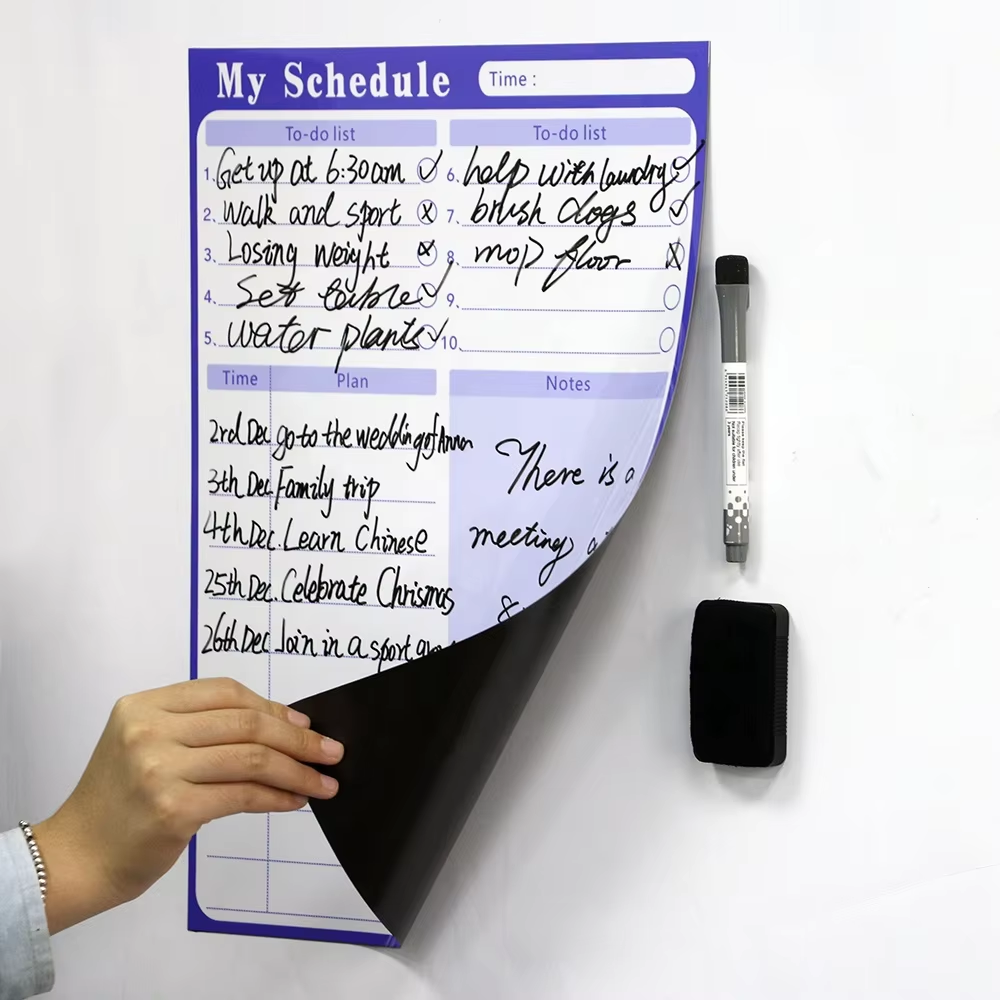
In the hyper-saturated digital landscape, corporate decision-makers are bombarded with hundreds of sponsored links, programmatic display ads, and promotional emails daily. Academic attention-span studies confirm that digital glances are fleeting, with online banners often registering less than a second of genuine cognitive engagement. Working alongside industrial manufacturers and B2B service firms, field observations consistently reveal that offline, utility-driven touchpoints command real estate that digital media cannot touch. When a company places custom magnetic office calendars directly onto heavy-duty steel surfaces—such as engineering bay toolboxes, administrative filing cabinets, or central breakroom hubs—it secures unblocked, zero-cost visual frequency. Unlike a browser tab that closes or an inbox folder that auto-archives, a physical magnet anchors the enterprise identity to the physical rhythm of the workday.
The lifespan of a corporate giveaway is inversely proportional to how generic it feels. Over multiple production cycles with enterprise marketing teams, the data shows that recipients routinely discard flimsy, lightweight promotional items within weeks. Designing an effective B2B promotional calendar requires shifting the focus from decorative branding to heavy-duty operational utility. This means engineering a rigid paper stock paired with high-coercivity magnetic sheeting that resists edge-curling or sliding under fluctuating ambient office temperatures. Incorporating clean, high-contrast grid lines, bold fiscal quarter markers, and uncrowded daily write-in blocks transforms the calendar into a desk-side or wall-mounted productivity tool. When administrative staff rely on a calendar to track project deadlines or shift changes, the sponsoring enterprise's logo becomes synonymous with daily workplace competence.
Scaling physical presence from individual desks to collective spaces opens up entirely new avenues for brand retention. In commercial distribution centers, multi-shift manufacturing plants, and corporate headquarters, the breakroom or central supply nook acts as the unofficial nexus of daily communication. Deploying large magnetic fridge calendars into these communal zones allows an organization’s brand emblem to be ingested not just by one employee, but by entire cross-functional teams multiple times a day. Through collaborative rollout programs managed via UNU, corporate clients report that oversized magnetic grids serving as communal roster boards or maintenance trackers enjoy near-permanent placement. This shared visibility turns a standard end-of-year token into an indispensable piece of architectural office infrastructure.
The commercial value of physical merchandise relies as much on temporal precision as it does on material quality. Distributing planning tools haphazardly in January or February misses the critical operational window when department heads map out annual goals. Based on commercial procurement cycles, the optimal window to dispatch fridge-mounted team calendars spans from late October through early December. During this period, office managers and plant supervisors actively seek out planning grids for the upcoming fiscal year. By timing the delivery to coincide with annual budgeting and workflow scheduling, UNU helps client brands position their logo front-and-center precisely when the recipient is organizing their next twelve months of operations.
Evaluating tangible merchandise through the lens of traditional digital cost-per-click attribution often miscalculates its true commercial yield. While a pay-per-click campaign stops generating value the moment the daily budget exhausts, a physical magnetic schedule compounds its impressions across 365 days of continuous exposure. Analytical tracking of client re-order trends and inbound referral metrics demonstrates that high-utility offline artifacts shorten sales cycles by keeping the vendor top-of-mind. When an unexpected equipment failure or supply chain bottleneck forces a B2B buyer to source a vendor immediately, the brand sitting quietly at eye-level on their breakroom or office metal surface enjoys an overwhelming psychological advantage over digital competitors buried in search results.
The line between an asset that enhances brand equity and one that diminishes it often comes down to sub-millimeter production tolerances. Low-tier promotional magnets frequently suffer from poor lamination peeling, dull CMYK color shifting, or weak magnetic pull that causes them to slide down vertical steel panels. At UNU, production workflows enforce strict quality gates—ranging from custom Pantone color verification and heavy-gauge protective UV coatings to corner-rounding die-cuts that eliminate sharp edges. By maintaining stringent quality control from pre-press digital proofs to final bulk carton freight, UNU ensures that every unit shipped preserves the integrity of the client’s corporate reputation. Choosing durable manufacturing transforms a routine holiday giveaway into a multi-year testament to brand reliability.
As international B2B enterprises face heightened scrutiny regarding environmental, social, and governance (ESG) compliance, the material lifecycle of corporate merchandise has become a direct reflection of brand values. Standard promotional giveaways frequently rely on non-recyclable plastics and heavy chemical treatments that end up discarded in commercial waste streams. Addressing this shift, UNU incorporates responsibly sourced, non-toxic magnetic sheets and FSC-certified paper stocks into its production line. By selecting eco-conscious materials for custom magnetic office calendars, B2B brands can satisfy corporate sustainability mandates without sacrificing product longevity or daily utility. Demonstrating environmental mindfulness in tangible client gifts reinforces institutional trust, proving to procurement committees that high-frequency brand exposure and ecological responsibility can coexist seamlessly.

2026/08/20
Unlock flexible, repositionable whiteboarding for education, agile offices, retail, healthcare & more. Cuttable, magnetic, certified — request your free B2B sample today.

2026/10/10
Discover the 2027 Texture Magnetic Collection & Exclusive Exhibition Promotions Dear Global Partners and Valued Clients, We are thrilled to announce that Shenzhen U&U Magnetic Technology Co., Ltd. (Brand: UCMD) will be officially exhibiting...

2026/08/19
Discover how UCMD® leverages the Canton Fair to showcase magnetic educational & lifestyle products, build global buyer trust, and drive OEM/ODM partnerships. Explore our certified, customizable solutions today.

2026/08/28
Our Commitment to People, Planet & IntegrityAt ShenZhen U&U Magnetic Technology Co., Ltd. (UCMD®), we believe that how we make our products matters as much as what we make. From our factory floor in Shenzhen's Bao An District to the hands...

Please tell us about your company's advantages and characteristics.

Please tell us about your company's advantages and characteristics.

Please tell us about your company's advantages and characteristics.

Please tell us about your company's advantages and characteristics.

Please tell us about your company's advantages and characteristics.

Please tell us about your company's advantages and characteristics.

