 EN

Magnetic Whiteboards for Offices
Please tell us about your company's advantages and characteristics.
2026/10/08
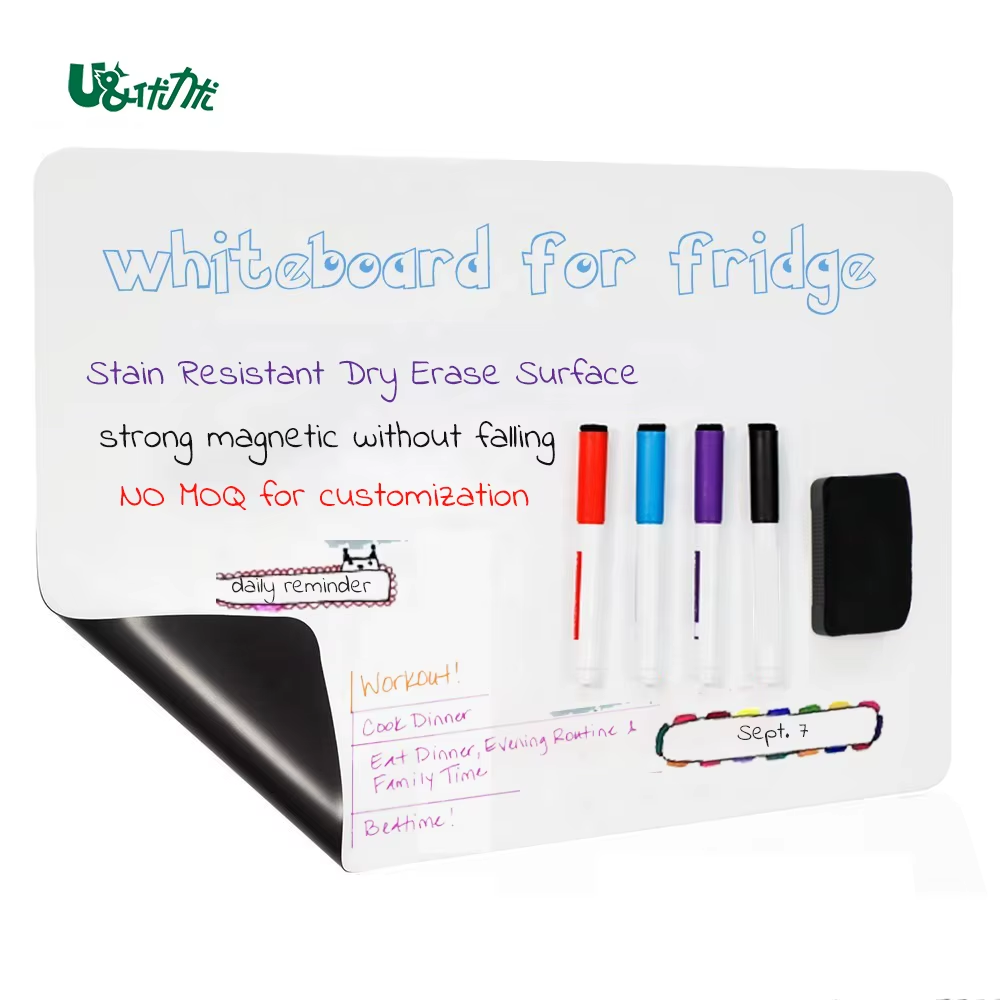
A dry erase board with lines does more than make handwriting neater. It gives recurring work a visible home: a child can form letters on a baseline, a team can see a weekly plan, and a household can turn loose reminders into a usable fridge calendar. That small amount of structure reduces the friction of deciding where the next note belongs.
For buyers, the useful question is not simply whether to purchase a dry erase board with lines. It is which ruled layout, writing surface, magnetic backing, size, and supply model will hold up in the intended setting. A board used for a few reminders at home has different demands from a classroom board that is written on all day or a wall board used during shift handovers.
Blank space is flexible, but it also asks users to impose their own order every time. A dry erase board with lines supplies a repeatable visual rhythm. Ruled rows can separate tasks, names, dates, vocabulary, or production checkpoints without drawing a new grid before each use. In early-learning rooms, the same guidance helps students practice letter size and spacing. In offices, it makes a short plan easier to scan from across a room.
The effect is practical rather than magical. A dry erase board with lines will not replace a sound workflow, but it can make that workflow easier to follow. If a board is meant for a group, choose line contrast that remains visible up close without dominating the information written over it. If it is meant for a dry erase wall, establish whether the layout should be permanent, changeable, or divided into replaceable panels before committing to a large format.
A compact dry erase board with lines near the refrigerator can turn a casual note area into a dependable fridge calendar. Horizontal rows work well for meals, appointments, chores, and school reminders; a magnetic design lets users attach invitations or permission slips beside the schedule. For a family board, consider the distance from the viewer, the number of people writing on it, and whether magnets are genuinely useful rather than assumed to be useful.
In an office, a dry erase board with lines is often more effective when the ruling reflects the work itself: days across the top, project owners down the side, or defined rows for priorities and blockers. A larger board should be sized to the viewing distance and meeting space, not just to the blank wall available. A formatted magnetic culture wall whiteboard can be evaluated as a site-specific display option when teams need a shared planning surface.
For instruction, a dry erase board with lines can support handwriting practice, word work, quick checks, and teacher-led modeling. Children may also use small magnetic pieces for controlled magnetic drawing activities, provided the product design and supervision suit the age group. The important purchasing detail is line spacing: a layout designed for beginning writers is not automatically suitable for older students, while a broad classroom grid may be more useful for math, diagrams, or group planning.
Surface material has a larger effect on lifecycle cost than a frame finish. Painted steel boards are commonly selected when a buyer needs a magnetic, budget-conscious dry erase board with lines for moderate use. They can be a sensible choice for home use, temporary campaigns, or lower-frequency office planning, but the coating deserves a close inspection because regular writing and cleaning create wear over time.
Porcelain enamel on steel is typically the stronger fit for high-frequency classrooms, training rooms, and busy operations boards. The vitreous, non-porous surface is widely valued for resistance to staining and ghosting. It can justify a higher initial price when the board will be written on repeatedly over years. Ask a supplier to describe the writing surface and magnetic substrate separately; “magnetic” alone does not identify the board’s erasability or durability.
Glass offers a smooth, polished look and strong resistance to staining, so it can suit executive spaces and design-conscious interiors. But a glass dry erase board with lines needs a precise printed layout, safe mounting plan, and confirmation of magnet compatibility. Depending on the construction, standard magnets may not provide the holding strength users expect. If the board will carry schedules, documents, or cards, test that scenario rather than relying on a generic magnetic claim.
A supplier with experience in magnetic-board production can customize more than width and height. For a dry erase board with lines, buyers can define line spacing, row and column labels, logo placement, frame style, mounting method, and packaging for retail or project delivery. For volume programs, provide the intended application, installation wall type, target market, artwork file, order quantity, and required delivery format before requesting a quote.
Use a sample or approved proof for custom printing. This is particularly valuable for a dry erase wall or a multi-board rollout: an attractive layout on a screen can still be hard to read at installation height. Buyers comparing factory quotes should evaluate surface construction, print durability, backing, corner protection, mounting hardware, packing, and quality-control process alongside unit price. The lowest initial quote may not be the lowest total cost if boards are difficult to clean or arrive damaged.
For buyer reference, the catalog includes a customizable magnetic drywipe writing board and a kids’ dry-erase magnetic to-do-list board. Review the confirmed product page and request a specification sheet before treating either option as a match for a particular project.
Price ranges vary sharply by size, surface, framing, printing complexity, order volume, freight route, and installation requirements, so a single market number can mislead. Instead, quote comparable specifications: the same board dimensions, surface type, line artwork, magnetic requirement, packaging, and order quantity. Then compare the cost of a dry erase board with lines over its expected use period, including replacement risk and cleaning time.
Prioritize four checks: an even, legible ruled print; clean erasability after repeated test writing; magnetic performance with the items users actually attach; and protective packaging that matches the shipping method. For high-use sites, it is worth testing one room or department before standardizing a full purchase. That pilot often reveals whether line spacing, glare, mount height, and marker behavior are right for the people who use the board every day.
Good maintenance protects the value of a dry erase board with lines. Erase fresh writing with a clean eraser or microfiber cloth, and periodically wipe the full surface with a cleaner appropriate to the material. Do not use an aggressive cleaner just because it removes a mark quickly; its suitability depends on the surface. Marker residue is more likely to become difficult to remove when it remains on a board for long periods, especially on more porous surfaces.
When ghosting appears, start gently: remove loose residue, use a soft cloth, and follow the board maker’s cleaning guidance. Replace worn erasers rather than spreading old ink across the board. For a magnetic dry erase board with lines, also remove dust from the frame and inspect mounting points during routine cleaning. These small habits help the lines stay legible and the board remain a focused, dependable shared tool.
A suitable dry erase board with lines is one whose layout matches the task and whose surface matches the frequency of use. Start with who will write on it, what must be visible at a glance, and what will be attached to it. Then select the material, size, magnetic construction, and custom format that make those habits easy to sustain. That approach gives homes, teams, and educators a board that organizes attention instead of becoming another surface to manage.

2026/08/20
Unlock flexible, repositionable whiteboarding for education, agile offices, retail, healthcare & more. Cuttable, magnetic, certified — request your free B2B sample today.

2026/10/10
Discover the 2027 Texture Magnetic Collection & Exclusive Exhibition Promotions Dear Global Partners and Valued Clients, We are thrilled to announce that Shenzhen U&U Magnetic Technology Co., Ltd. (Brand: UCMD) will be officially exhibiting...

2026/08/19
Discover how UCMD® leverages the Canton Fair to showcase magnetic educational & lifestyle products, build global buyer trust, and drive OEM/ODM partnerships. Explore our certified, customizable solutions today.

2026/08/28
Our Commitment to People, Planet & IntegrityAt ShenZhen U&U Magnetic Technology Co., Ltd. (UCMD®), we believe that how we make our products matters as much as what we make. From our factory floor in Shenzhen's Bao An District to the hands...

Please tell us about your company's advantages and characteristics.

Please tell us about your company's advantages and characteristics.

Please tell us about your company's advantages and characteristics.

Please tell us about your company's advantages and characteristics.

Please tell us about your company's advantages and characteristics.

Please tell us about your company's advantages and characteristics.

