 EN

Magnetic Whiteboards for Offices
Please tell us about your company's advantages and characteristics.
2026/10/16
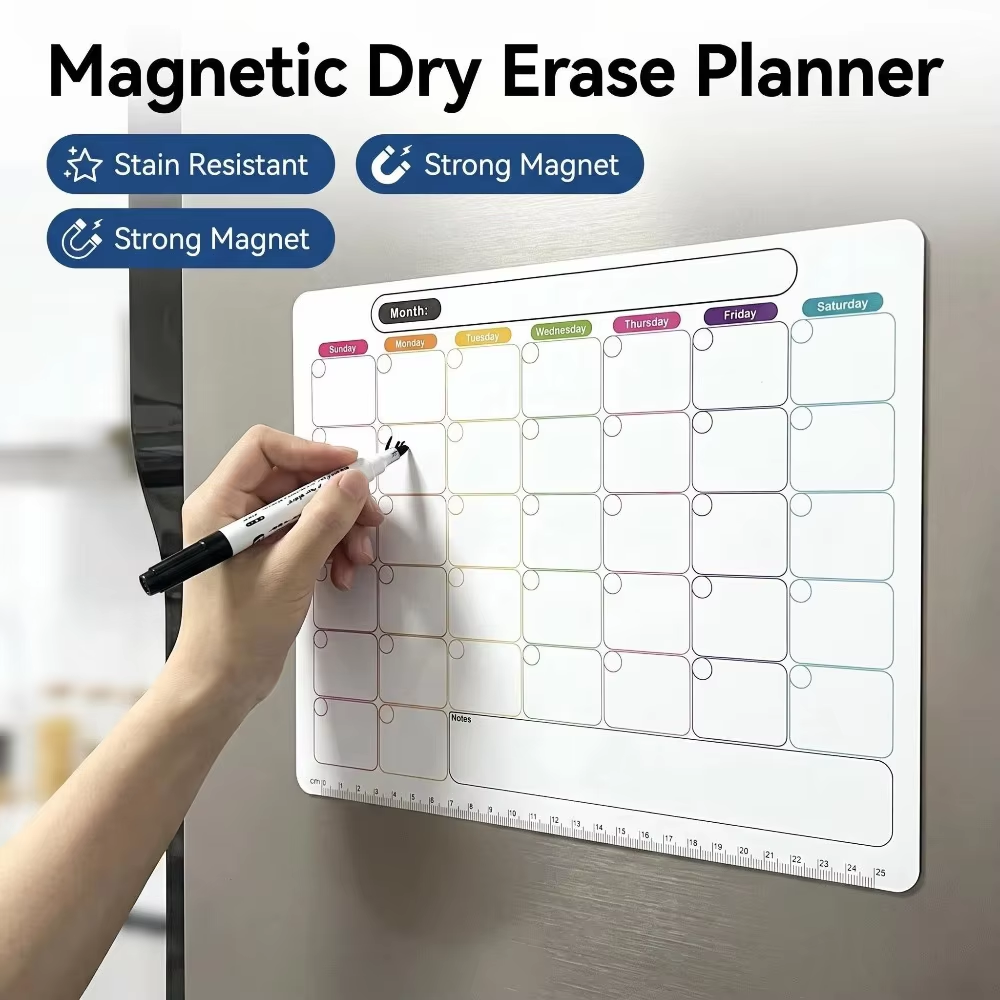
A magnetic board for wall use can make schedules, teaching materials, notices, and visual work easier to see. Yet the right choice is not simply the largest board in the catalog. The board has to fit the room, the items people will attach, the way the surface will be used, and the installation method the wall can support. This guide gives buyers a practical framework before they compare products or request a quotation.
First, define whether the board is mainly for writing, displaying paper, holding lightweight magnetic pieces, or creating a visual backdrop. A magnetic board for wall display in a reception area may need a clean finished appearance and a surface that accepts printed notices. In a classroom, the same category may need frequent writing and regular rearrangement of learning materials. In a home office, a wall-mounted planning board may be most useful when it combines a writable surface with enough room for task cards.
That distinction helps separate three common options. Flexible magnetic sheets are light and adaptable, but buyers should check their backing, flatness, and intended mounting surface. Magnetic dry erase boards support writing and magnetic accessories when the specified surface and backing are appropriate. Chalkboard-style products suit visual menus or decorative messages, although buyers should confirm whether their surface is actually magnetic rather than assuming it is. Ask a supplier what the board is designed to hold and whether the listed magnetic function applies across the full usable area.
Size affects readability and workflow, not only cost. A magnetic dry erase board 24 x 36 is often a manageable format for a personal workspace, a small team area, or a classroom station. It gives enough room for a short planning cycle without dominating a narrow wall. If the board will show daily assignments, process steps, or several groups of notes, map the content layout on paper before selecting the dimensions.
A 48 x 48 magnetic dry erase board gives a more square work area for diagrams, rotating displays, or a shared planning grid. It can be useful where viewers stand in front of the board rather than read from far away. An extra large magnetic dry erase board may be more appropriate for a meeting room, corridor, or teaching wall, but it also raises questions about wall structure, delivery access, framing, and installation labor. Product listings commonly show formats such as 48 x 24, 48 x 36, and 48 x 48 inches; treat these as comparison points, not as a rule that every room needs the same format.
When evaluating the wall placement, mark the available wall width and height, then leave clearance for doors, cabinets, screens, and people standing nearby. A board that technically fits can still feel cramped if its writing zone is blocked by furniture. For a large order, ask for a dimensioned drawing and approve it before production.
The surface is where daily experience is decided. A board in a high-touch area should be easy to wipe, resist ghosting within its intended use, and remain presentable after repeated cleaning. Buyers should ask what writing tools and cleaners are recommended rather than assuming every marker or cleaning product works the same way. A matte finish can reduce visible glare in bright rooms, while a glossy surface may suit another display goal.
Magnetic performance also needs a specific conversation. The question is not just whether the product is called “magnetic”; it is whether it can hold the intended papers, magnets, cards, or accessories in the planned environment. Request samples when the project depends on particular magnetic pieces. This is especially important for boards expected to carry multiple sheets, heavier visual aids, or frequent changes during a workday.
Frames and edge treatment matter as well. Aluminum-style frames, frameless edges, and flexible sheet formats create different visual and handling results. For public-facing spaces, check the corners, edge protection, and cleanability. For children’s areas, consider how the selected board will be reached and maintained. The board should match the room’s routine instead of forcing users to change how they work.
Drilled mounting generally gives a more permanent solution for heavier framed boards and busy shared spaces. It may suit classrooms, offices, and meeting rooms where the magnetic board for wall use will stay in one position for years. No-drill or adhesive-backed options can simplify temporary placement, rental locations, or lighter flexible materials, but the wall must be clean, dry, smooth, and compatible with the specified adhesive. Installation conditions are part of the product decision, not an afterthought.
Before choosing the mounting method, confirm the wall substrate, the available fixing points, and who will install it. Ask whether a template, hardware, or mounting guidance is included. Do not assume a board intended for one surface can be transferred safely to another. If a large board must span multiple panels, confirm seam alignment and whether the design leaves room for normal wall movement.
For a classroom board, prioritize visibility, a surface that supports the planned lesson format, and a size that teachers can reach. Larger boards can help with group displays, but several smaller zones may work better when different classes or activities share the room.
A home wall board often works well when it has a defined purpose: weekly planning, notes, meal coordination, or a small inspiration display. The magnetic dry erase board 24 x 36 format can be a sensible starting point when the wall is limited. Choose a finish that fits the room and a mounting approach the household can maintain.
A collaboration board should be sized around the number of contributors and the information that must be visible at once. An extra large magnetic dry erase board can support project mapping, but it should be specified with the room layout and installation plan in mind. A 48 x 48 magnetic dry erase board may offer a balanced shared canvas where a long horizontal board would interfere with other wall features.
For repeat purchasing, turn the board decision into a written specification. List dimensions, surface type, magnetic-use requirement, frame or edge treatment, mounting method, packaging, artwork needs, and inspection expectations. Ask whether custom sizing is available and what minimum order quantity applies to the selected construction. A sample or pre-production approval can help align the finished product with the intended space without making assumptions about performance.
When reviewing catalog options, compare confirmed product details rather than relying on a product name alone. For example, buyers can review a customizable magnetic culture wall whiteboard, a customizable soft magnetic drywipe whiteboard, or a magnetic color board wall sticker against the same checklist.
Start with the actual task: writing, display, planning, or teaching. Then match the surface, size, and mounting method to that task and the installation wall.
No. A larger board can improve shared visibility, but it may be harder to install, reach, clean, or fit around furniture. The useful size is the one that supports the content and viewers in the room.
Choose based on the board construction, weight, wall surface, permanence of the installation, and supplier guidance. Confirm those conditions before ordering rather than treating mounting as a separate purchase.
The right wall-mounted magnetic board is the one that supports a real routine: a teacher preparing lessons, a family organizing a week, or a team reviewing work in progress. Compare surface behavior, usable dimensions, magnetic needs, and mounting requirements together. With a written specification and a sample where appropriate, buyers can select a board that is practical to install and easier to use over time.

2026/08/20
Unlock flexible, repositionable whiteboarding for education, agile offices, retail, healthcare & more. Cuttable, magnetic, certified — request your free B2B sample today.

2026/10/10
Discover the 2027 Texture Magnetic Collection & Exclusive Exhibition Promotions Dear Global Partners and Valued Clients, We are thrilled to announce that Shenzhen U&U Magnetic Technology Co., Ltd. (Brand: UCMD) will be officially exhibiting...

2026/08/19
Discover how UCMD® leverages the Canton Fair to showcase magnetic educational & lifestyle products, build global buyer trust, and drive OEM/ODM partnerships. Explore our certified, customizable solutions today.

2026/08/28
Our Commitment to People, Planet & IntegrityAt ShenZhen U&U Magnetic Technology Co., Ltd. (UCMD®), we believe that how we make our products matters as much as what we make. From our factory floor in Shenzhen's Bao An District to the hands...

Please tell us about your company's advantages and characteristics.

Please tell us about your company's advantages and characteristics.

Please tell us about your company's advantages and characteristics.

Please tell us about your company's advantages and characteristics.

Please tell us about your company's advantages and characteristics.

Please tell us about your company's advantages and characteristics.

