 EN

Magnetic Whiteboards for Offices
Please tell us about your company's advantages and characteristics.
2026/09/14
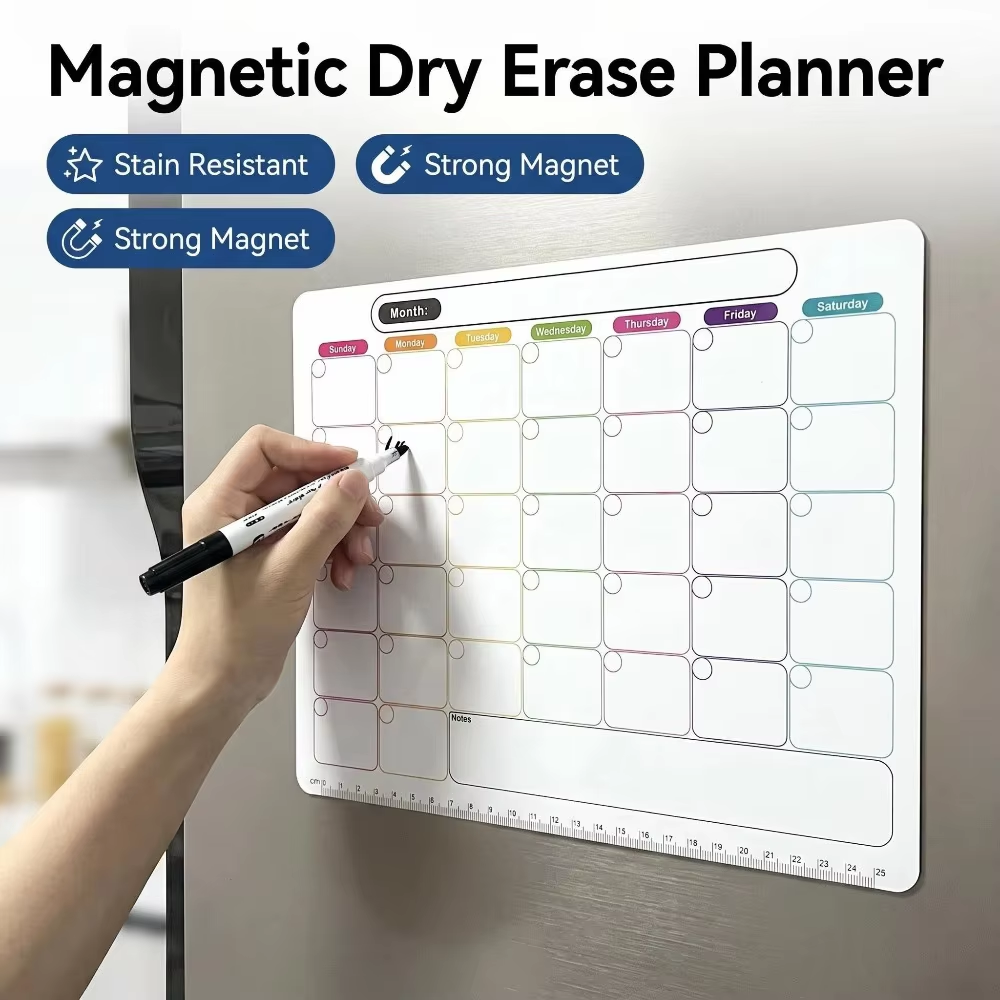
When integrating a magnetic calendars for wall into your home or office environment, strategic placement is the foundational step that determines daily utility and long-term engagement. Drawing from professional spatial organization case studies and ergonomics research, positioning your wall mounted calendar layout at eye level in high-traffic zones—such as near family command centers, office entryways, or kitchen communication hubs—drastically increases glance-value and operational efficiency. At UNU, our manufacturing and design evaluations show that users who place their organizational boards in areas with optimal ambient lighting experience a significantly higher rate of daily schedule adherence and task completion. Avoid placing your collaborative wall calendar behind swinging doors or in poorly lit corridors where shadows obscure handwritten entries. Instead, select a sturdy vertical surface that accommodates comfortable arm reach without obstruction. Furthermore, evaluating wall stud alignment or utilizing heavy-duty anchor hardware ensures that your display remains completely stable during frequent daily writing and magnet repositioning. By treating planning tools as both an operational fixture and a design element, you establish a seamless workflow that supports effective time management across busy households and dynamic professional workspaces alike. Additionally, analyzing foot traffic patterns during peak morning and evening hours helps identify the absolute best wall space for mounting, ensuring that every family member or team associate can effortlessly interact with the schedule without bottlenecking narrow hallways or preparation zones.
A successful layout relies heavily on an intentional color-coding framework and a clear visual hierarchy that prevents cognitive overload. Implementing a structured color system on your wall mounted calendar layout allows family members or team colleagues to parse complex schedules within seconds. For instance, assign distinct dry-erase marker colors to specific individuals, project categories, or priority levels—such as blue for professional deadlines, green for financial tracking, and red for urgent appointments. UNU product specialists recommend pairing your calendar boards with fine-tip low-odor markers and high-strength neodymium magnets to categorize recurring events clearly. When organizing your magnetic calendars for wall, reserve the upper grid sections for monthly milestone overviews, while utilizing the daily grid blocks for granular task allocations. This disciplined structural separation ensures that your collaborative wall calendar display remains clean, legible, and uncluttered throughout the month. Additionally, incorporating color-coded magnetic indicator icons helps distinguish completed tasks from pending action items without cluttering the writing surface. Through rigorous layout refinement, your planning board transforms into an intuitive dashboard that enhances collective productivity and eliminates scheduling friction. Maintaining consistency in your color coding across consecutive months builds intuitive muscle memory, allowing users to recognize scheduling patterns instantly at a single glance.
Integrating organizational tools into modern interior aesthetics requires a careful balance between visual elegance and robust functional ergonomics. A premium collaborative wall calendar should complement existing interior decor while maintaining a pristine writing surface that withstands daily wiping and repositioning. According to interior design standards and workplace efficiency studies, maintaining negative space around your display board prevents visual fatigue and draws natural focus to critical scheduling details. When mounting your planning tools, ensure that the surrounding wall area is free from competing visual clutter, allowing the minimalist frame and smooth metallic finish to stand out gracefully. UNU craftsmanship emphasizes durable, scratch-resistant writing substrates and sleek framing profiles that elevate any contemporary kitchen or executive boardroom. Furthermore, establishing a dedicated accessory tray directly beneath your wall mounted calendar layout keeps erasers, markers, and specialized magnets organized and instantly accessible. This ergonomic consideration minimizes friction during daily schedule updates, ensuring that maintaining your scheduling system becomes an effortless, enjoyable ritual rather than a tedious administrative chore. Selecting complementary accent colors for your surrounding decor further enhances the visual integration of your magnetic calendars for wall, turning a practical scheduling board into a sophisticated statement piece.
Long-term utility and sustained engagement with scheduling boards depend directly on establishing disciplined weekly and monthly maintenance routines. Industry research on productivity habits indicates that visual planning tools yield optimal results only when they are actively reviewed and updated in real-time. Dedicate a specific weekly slot—such as Sunday evening or Monday morning—to wipe down expired entries, evaluate upcoming deadlines, and refresh your wall mounted calendar layout for the weeks ahead. Using specialized cleaning solutions recommended for UNU products protects the melamine or tempered glass writing surface from ghosting and staining, preserving crystal-clear clarity over years of intensive daily use. When cleaning your collaborative wall calendar, avoid abrasive scouring pads that can compromise the protective anti-scratch coating. Instead, utilize microfiber cloths and pH-balanced cleaning sprays to maintain a flawless finish. By treating your scheduling board with proper care and conducting systematic weekly reviews, you ensure absolute data accuracy, transparency, and dependable performance for your entire household or collaborative team. Establishing these routines prevents the accumulation of outdated tasks and fosters a proactive mindset toward time management and long-term goal setting.
In today's fast-paced digital environment, combining the tactile clarity of an analog wall mounted calendar layout display with the sync capabilities of digital devices creates a foolproof time-management ecosystem. While smartphone calendars and cloud apps excel at automated reminders, a physical collaborative wall calendar provides an irreplaceable bird's-eye view that anchors daily family discussions and team synchronization meetings. Our industry observations at UNU demonstrate that households utilizing a hybrid model—syncing weekly digital commitments onto their magnetic calendars for wall every Sunday—achieve superior punctuality and reduced scheduling conflicts. Use your physical planning board to highlight non-negotiable family events, school milestones, and critical project deadlines where collective visibility is essential. By bridging digital alerts with tactile immediacy, you cultivate deeper cognitive retention of daily schedules. Ultimately, this balanced approach empowers every participant to engage actively with time management, turning your scheduling surface into the beating heart of your daily organization strategy. Harmonizing digital notifications with the physical layout guarantees that nothing falls through the cracks, bridging the gap between modern technology and traditional organizational habits.

2026/08/20
Unlock flexible, repositionable whiteboarding for education, agile offices, retail, healthcare & more. Cuttable, magnetic, certified — request your free B2B sample today.

2026/10/10
Discover the 2027 Texture Magnetic Collection & Exclusive Exhibition Promotions Dear Global Partners and Valued Clients, We are thrilled to announce that Shenzhen U&U Magnetic Technology Co., Ltd. (Brand: UCMD) will be officially exhibiting...

2026/08/19
Discover how UCMD® leverages the Canton Fair to showcase magnetic educational & lifestyle products, build global buyer trust, and drive OEM/ODM partnerships. Explore our certified, customizable solutions today.

2026/08/28
Our Commitment to People, Planet & IntegrityAt ShenZhen U&U Magnetic Technology Co., Ltd. (UCMD®), we believe that how we make our products matters as much as what we make. From our factory floor in Shenzhen's Bao An District to the hands...

Please tell us about your company's advantages and characteristics.

Please tell us about your company's advantages and characteristics.

Please tell us about your company's advantages and characteristics.

Please tell us about your company's advantages and characteristics.

Please tell us about your company's advantages and characteristics.

Please tell us about your company's advantages and characteristics.

