 EN

Magnetic Whiteboards for Offices
Please tell us about your company's advantages and characteristics.
2026/09/15
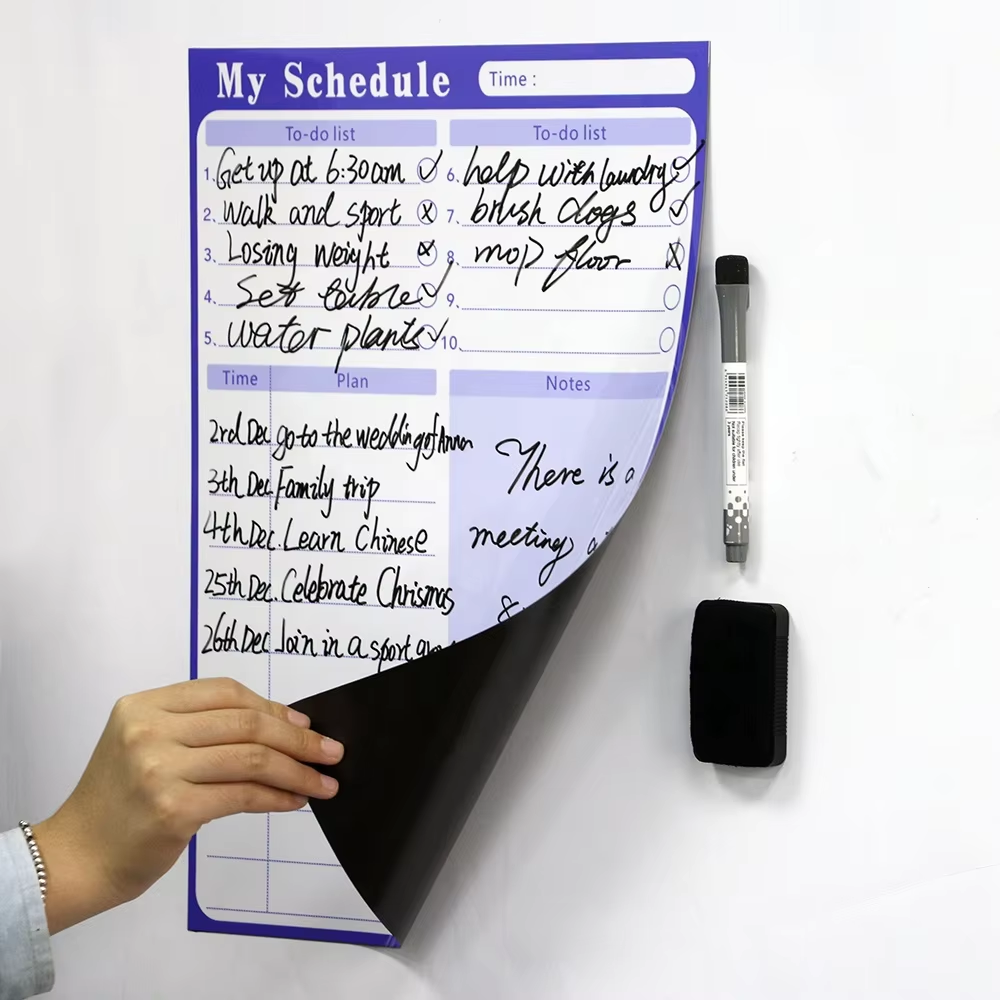
Traditional static wall calendars and digital app reminders often struggle to keep pace with the fluid dynamics of modern B2B office environments. When physical, high-visibility visual management tools replace isolated software notifications, team operational cadence improves immediately. At UNU, the hardware engineering philosophy focuses on combining tactile durability with clean, architectural minimalism. Implementing a structured magnetic calendars for whiteboards setup turns a standard writing plane into an interactive operational hub. Instead of burying critical deadlines inside digital subfolders, a physical magnetic calendar drives daily stand-ups, transparent ownership, and real-time adjustments that keep cross-functional teams synchronized without unnecessary status meetings.
Effective scheduling relies heavily on spatial discipline rather than rigid, permanent grid lines that quickly degrade into messy erasures. Utilizing modular accessories allows whiteboard calendar layouts to adapt dynamically as project scopes evolve. In typical commercial operations, partitioning a board into dual operational zones—such as a central monthly calendar backed by floating weekly priority strips—maximizes visual clarity. UNU technical recommendations emphasize pairing color-coded magnetic indicators with low-odor dry-erase markers to separate department milestones, client handoffs, and resource allocation windows. Because individual blocks remain easily movable across the painted steel surface, project leads can shift timelines in seconds while preserving a stain-free, ghost-resistant writing plane.
A scheduling board only delivers measurable ROI when every team member comprehends its structure at a glance. Integrating reliable office planning tools directly onto the magnetic surface bridges the divide between high-level strategic roadmaps and daily floor execution. Operational feedback from collaborative studios indicates that color-coding tasks and assigning dedicated magnetic ownership icons reduces verbal sync-ups significantly. UNU boards are manufactured with dual-function versatility, allowing the magnetic writing plane to simultaneously anchor physical blueprints, reference charts, or urgent briefing memos alongside written dates. This multi-layered approach ensures that critical path deliverables remain front and center for everyone moving through the workspace.
Long-term legibility and magnetic retention depend on consistent board hygiene and structured layout resets. Industry maintenance standards suggest executing a weekly archiving ritual where completed magnetic tags are cleared and upcoming milestones are re-indexed. When managing magnetic scheduling boards, pairing the surface with fine-tip, low-odor dry-erase markers prevents stubborn ink polymerization and surface micro-scratches. UNU high-density painted steel surfaces require minimal upkeep: a simple pass with a microfiber cloth or a specialized non-abrasive whiteboard cleaner restores the high-contrast white finish, ensuring red, blue, and black markings remain crisp and free of shadow ghosts through continuous daily operation.
Ultimately, the primary advantage of a physical planning board is operational and psychological transparency. When a team gathers around a well-organized magnetic calendar, potential bottlenecks surface long before they jeopardize hard deadlines. Translating abstract digital Gantt charts into a tangible room experience fosters a culture of proactive ownership and synchronized momentum. Whether deployed in an agile engineering pod, a logistics coordination center, or a creative agency studio, UNU magnetic scheduling solutions provide the dependable hardware foundation required to transform complex multi-week schedules into smooth, repeatable daily habits.
A truly high-performing visual schedule relies on more than just basic dates; it requires a psychological and organizational color hierarchy. When configuring magnetic calendars for whiteboards, assigning strict chromatic rules to different operational tiers prevents visual fatigue and speeds up information processing. For instance, high-urgency client deliverables can be anchored with bold red magnetic indicators, internal engineering milestones marked in blue, and resource allocation windows highlighted in neutral or soft green tones. UNU’s precision-coated steel surfaces allow various magnetic markers and dry-erase ink colors to pop without glare or visual distortion. By standardizing these color-coded whiteboard calendar layouts across multiple departments, executive teams and floor supervisors can scan a multi-week projection in seconds, immediately spotting resource gaps or overlapping deadlines before they impact bottom-line delivery.
In today’s blend of remote, hybrid, and co-located teams, keeping everyone anchored to a single source of truth is a persistent challenge. While digital project management suites handle asynchronous updates, they often suffer from "out of sight, out of mind" syndrome. Deploying physical office planning tools in a central physical office serves as an irreplaceable anchor that draws remote team members in during in-office days and provides on-site staff with an unmissable reference point. UNU magnetic scheduling boards bridge this physical-digital divide by acting as the tangible meeting point for weekly sprint kickoffs and daily stand-ups. Transcribing key digital milestones onto a physical magnetic board transforms cold data points into a shared room experience, reinforcing collective ownership and ensuring that hybrid team members re-synchronize their operational tempo the moment they step back into the workspace.

2026/08/20
Unlock flexible, repositionable whiteboarding for education, agile offices, retail, healthcare & more. Cuttable, magnetic, certified — request your free B2B sample today.

2026/10/10
Discover the 2027 Texture Magnetic Collection & Exclusive Exhibition Promotions Dear Global Partners and Valued Clients, We are thrilled to announce that Shenzhen U&U Magnetic Technology Co., Ltd. (Brand: UCMD) will be officially exhibiting...
2026/08/19
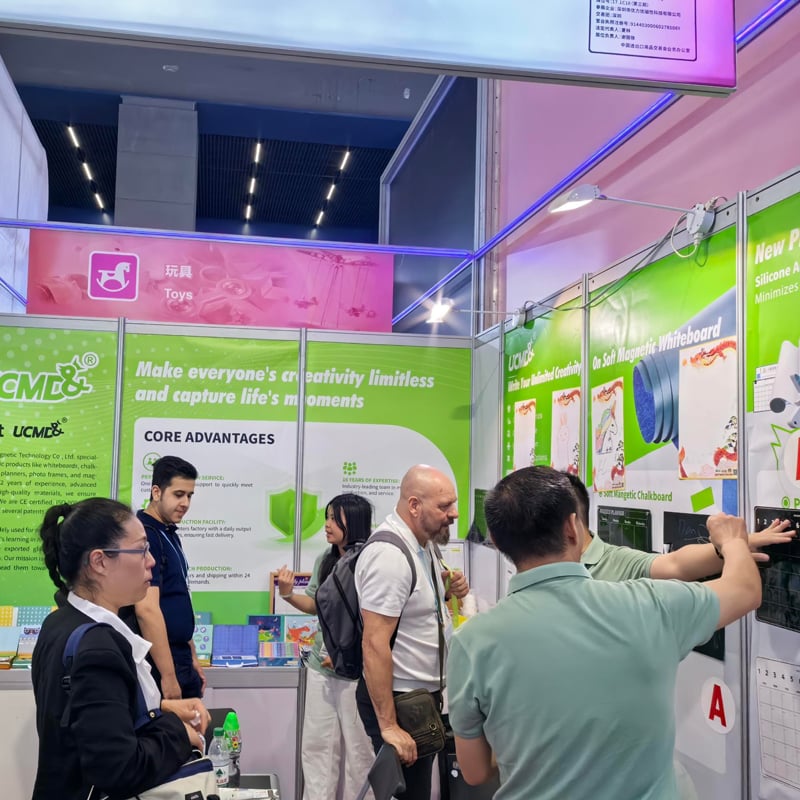
Discover how UCMD® leverages the Canton Fair to showcase magnetic educational & lifestyle products, build global buyer trust, and drive OEM/ODM partnerships. Explore our certified, customizable solutions today.
2026/08/28
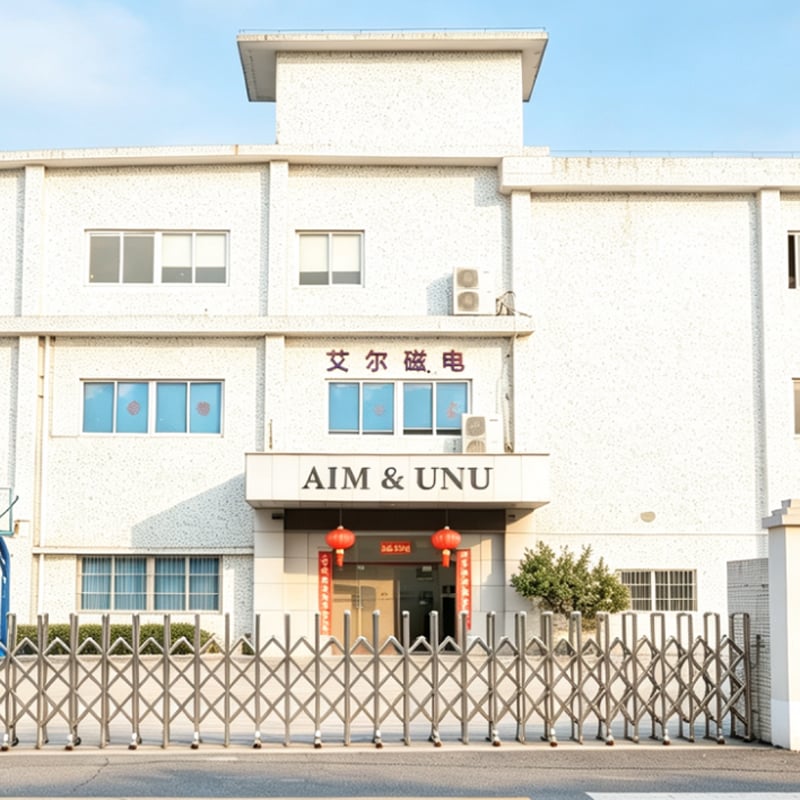
Our Commitment to People, Planet & IntegrityAt ShenZhen U&U Magnetic Technology Co., Ltd. (UCMD®), we believe that how we make our products matters as much as what we make. From our factory floor in Shenzhen's Bao An District to the hands...

Please tell us about your company's advantages and characteristics.

Please tell us about your company's advantages and characteristics.

Please tell us about your company's advantages and characteristics.

Please tell us about your company's advantages and characteristics.

Please tell us about your company's advantages and characteristics.

Please tell us about your company's advantages and characteristics.

