 EN

Magnetic Whiteboards for Offices
Please tell us about your company's advantages and characteristics.
2026/10/15
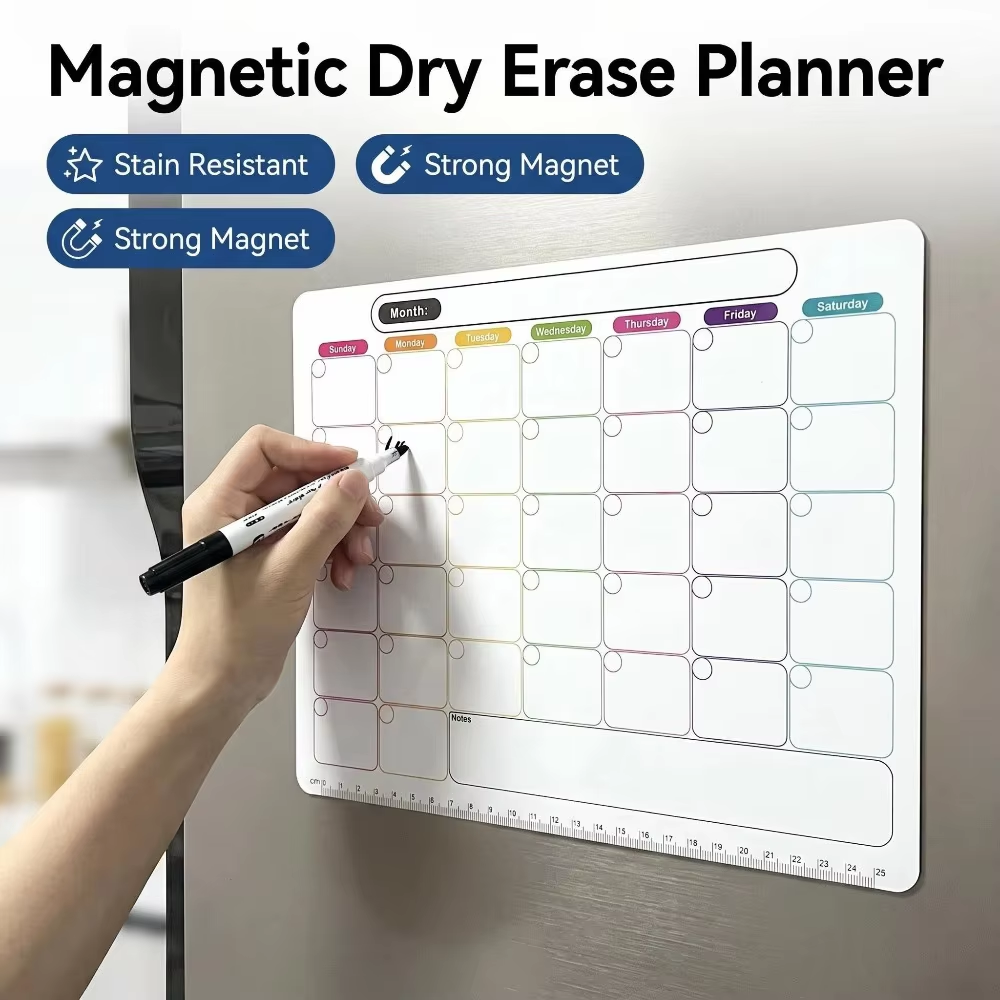
A melissa and doug magnetic chore chart is often the reference point for parents who want routines to feel visible rather than nag-driven. For an education-products buyer or private-label seller, though, the useful question is broader: what makes a magnetic reward system easy for a child to understand, easy for an adult to reset, and practical to source at scale?
Strong chore charts turn an abstract instruction—“put away your shoes”—into a small action a child can see, complete, and discuss. Behavior-chart guidance commonly frames these tools around specific positive actions and agreed rewards. That makes the design of the chart important: the board needs clear tasks, a satisfying completion signal, and a reward rule that adults can apply consistently.
The appeal of a melissa and doug magnetic chore chart style is not simply that it looks playful. Reusable magnets let a child move a marker after finishing a task, which creates a visible record of progress without disposable stickers. For families, classrooms, and retailers, that repeatable interaction is a useful starting point—but it is not a guarantee that every routine will stick.
The chart is more useful when adults choose a short set of observable tasks, explain what “done” means, and keep rewards proportionate. Saying “help more” is too vague; “put pajamas in the hamper before story time” gives a child a clear finish line. It is also sensible to revisit the system as the child gains confidence, rather than turning every routine into a permanent transaction.
| Format | Best fit | What buyers should check |
|---|---|---|
| Preprinted board with task magnets | Preschool and early elementary routines | Readable icons, enough duplicate markers, and a storage area for unused pieces |
| Dry-erase magnetic chart | Families with changing schedules | Writing space, erasability, and compatible task/reward magnets |
| Hybrid board with icons and writable rows | Mixed-age households or classrooms | Clear zones for pictures, names, days, and custom goals |
| Large wall-mounted planning board | Group routines and visible weekly planning | Mounting method, sightline, magnetic holding surface, and replacement components |
When shoppers search for a melissa and doug magnetic chore chart, they often expect reusable pieces and an immediate reward cue. A private-label alternative does not need to copy another brand’s layout. It can answer the same need with a different mix of writable space, icon style, language options, family names, or task categories.
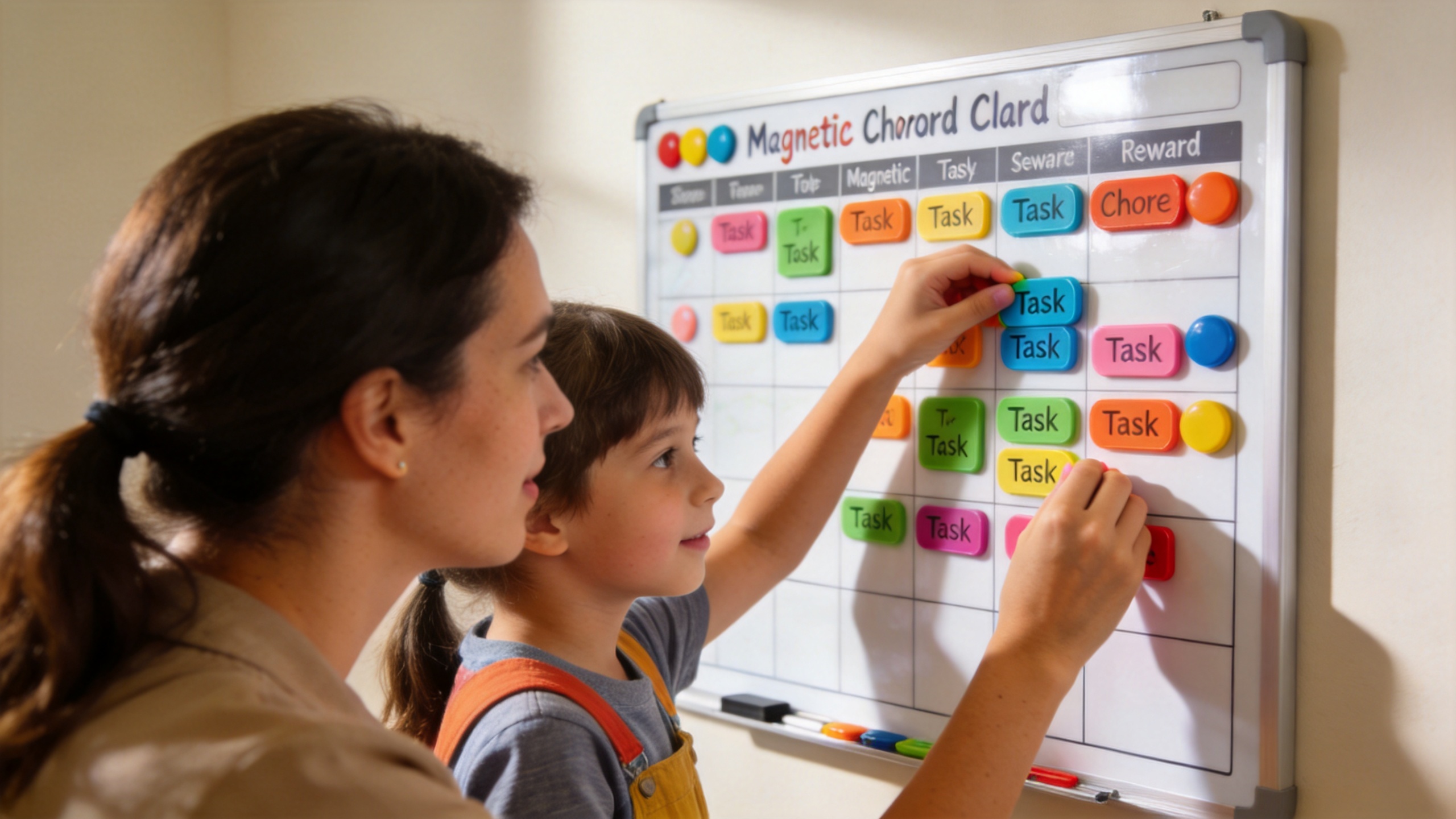
For younger children, picture-led tasks reduce the reading burden. Use a small number of large, familiar icons for actions such as getting dressed, putting toys away, or feeding a pet with supervision. Avoid a crowded board: too many magnets can make a simple routine feel like a test. A melissa and doug magnetic chore chart comparison is helpful here because it highlights the value of physical, reusable task tokens—but task names and rewards should still be tailored to the family.
Older children can usually handle written tasks, weekday columns, and simple point totals. Letting them help select a reward or choose the order of age-appropriate chores can make the chart feel collaborative. This is where a writable surface has an advantage: sports practice, homework, and seasonal jobs change, so fixed magnets alone may become restrictive.
Some auxiliary search terms point to very different product classes. An enclosed magnetic bulletin board is usually chosen to protect notices or keep materials behind a cover; it is not automatically a child-friendly reward chart. A 48 x 60 magnetic whiteboard can suit a school program, camp, or shared family-command center, but it may overwhelm a single child’s daily routine. A mobile reversible magnetic whiteboard can work for guided small-group activities because it can move between spaces, yet buyers should confirm stability and age-appropriate use before positioning it as a children’s reward product.
In other words, select the board around the routine first, then select the size. Starting with the largest board or the most decorative magnet set can create a system that looks impressive but is awkward to use every morning.
For distributors and Amazon sellers, the strongest alternative to a generic melissa and doug magnetic chore chart listing is a well-specified product program. Request a sample and verify the board’s writing surface, magnet fit, edges, packaging, task-card count, and instructions. If the product will be marketed for children, ask the supplier for applicable material and safety documentation for the destination market; do not assume a claim is supported until the documents are reviewed.
For a directly relevant example, review the product format and request details for the custom PET kids whiteboard dry-erase magnet reward chart. Related educational magnetic formats, such as the magnetic early-education activity product, can also help buyers build a more coherent learning-products assortment without claiming that every item performs the same role.
A melissa and doug magnetic chore chart can be a useful benchmark for this category, but the most suitable reward system is the one a child can read, an adult can maintain, and a buyer can source responsibly. For custom programs, prioritize task clarity, repeatable components, documented materials, and a format that fits the routine rather than chasing a single branded look.

2026/08/20
Unlock flexible, repositionable whiteboarding for education, agile offices, retail, healthcare & more. Cuttable, magnetic, certified — request your free B2B sample today.

2026/10/10
Discover the 2027 Texture Magnetic Collection & Exclusive Exhibition Promotions Dear Global Partners and Valued Clients, We are thrilled to announce that Shenzhen U&U Magnetic Technology Co., Ltd. (Brand: UCMD) will be officially exhibiting...

2026/08/19
Discover how UCMD® leverages the Canton Fair to showcase magnetic educational & lifestyle products, build global buyer trust, and drive OEM/ODM partnerships. Explore our certified, customizable solutions today.

2026/08/28
Our Commitment to People, Planet & IntegrityAt ShenZhen U&U Magnetic Technology Co., Ltd. (UCMD®), we believe that how we make our products matters as much as what we make. From our factory floor in Shenzhen's Bao An District to the hands...

Please tell us about your company's advantages and characteristics.

Please tell us about your company's advantages and characteristics.

Please tell us about your company's advantages and characteristics.

Please tell us about your company's advantages and characteristics.

Please tell us about your company's advantages and characteristics.

Please tell us about your company's advantages and characteristics.

