 EN

Magnetic Whiteboards for Offices
Please tell us about your company's advantages and characteristics.
2026/10/16
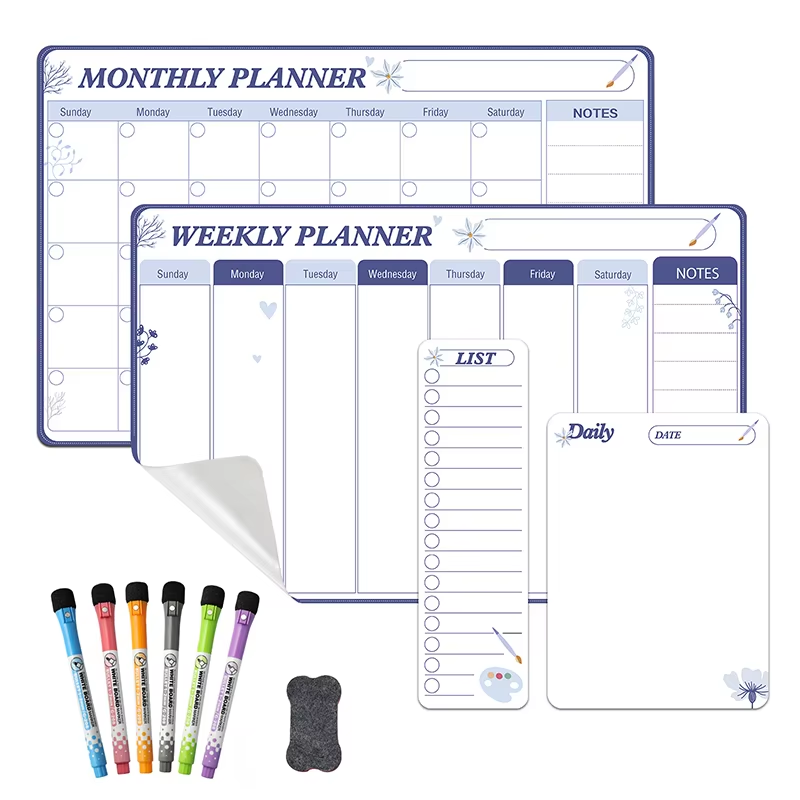
A dry erase board magnetic enough for notes, calendars, and visual planning does two jobs at once: it accepts dry-erase ink and gives people a place to hold paper, cards, or teaching pieces with magnets. That combination sounds simple, but the right choice depends on what is actually magnetic, how the board will be mounted, and how often it will be erased. For office buyers, school administrators, and online sellers, a clear comparison saves more time than choosing by dimensions alone.
From a magnetic-materials advisor’s perspective, start with the use case rather than the frame. A board used for a weekly stand-up needs fast updates and readable space; a classroom display may need a larger surface for several magnetic items; a kitchen planner may benefit from a flexible format. The guide below separates these decisions so you can compare options without assuming that every white surface performs the same way.
The phrase dry erase board magnetic can describe two different constructions. The first is a rigid dry-erase board with a steel-backed or steel writing surface, so magnets attach to the face. The second is a flexible dry-erase sheet with a magnetic backing, designed to attach to a refrigerator, filing cabinet, or another ferrous metal surface. Both can be useful, but they solve different installation problems.
This distinction matters in purchasing. A board can be described as magnetic because it sticks to a refrigerator, yet the writing face may not be intended to hold magnets. Ask suppliers which side is magnetic, what substrate the board attaches to, and whether the planned accessories are included in the intended use.
A steel-backed board is a practical starting point for meeting rooms, classrooms, and public information areas. It provides a dedicated writing surface plus a magnetic display area. Check the wall location, mounting method, and the amount of material you expect to display. If a team regularly pins schedules, cards, and printed notices with magnets, usable face area matters as much as the writing area.
Flexible sheets are often chosen for refrigerators, lockers, metal cabinets, and temporary planning stations. They are convenient when the board needs to be repositioned, but their performance depends on a clean, compatible metal surface. They are not a substitute for a rigid wall board when users need a large, permanently installed presentation surface.
Glass boards can create a polished look, but purchasers should verify magnetic compatibility rather than infer it from appearance. Some glass-board designs require stronger magnets or use a construction that changes how accessories attach. If magnet use is essential, request clear product documentation or a sample test with the magnets and accessories your team plans to use.
| Scene | What to prioritize | Useful layout direction |
|---|---|---|
| Office meetings | Readable writing area, repeatable cleanup, space for action cards | Landscape board with a planning zone and open notes area |
| Classrooms | Visibility, display space, suitable mounting and edges | Larger rigid board with zones for teaching aids and notices |
| Home planning | Easy placement, simple routines, visual clarity | Compact or refrigerator-mounted weekly planner |
| Retail or reseller programs | Format range, packaging, customization details | Offer several sizes and clearly separate wall boards from magnetic sheets |
For calendar-led applications, large yearly wall calendar dry erase formats can make annual deadlines visible in one place, while a smaller monthly or weekly format is easier to refresh. A decorative dry erase wall calendar may fit home or boutique retail settings, but visual styling should not obscure dates, labels, or the amount of writable space.
Do not treat “magnetic” as a universal strength rating. Magnet performance changes with the magnet itself, the board construction, the weight of the item being held, and the distance created by paper or protective layers. When the board will support frequent displays, test the actual magnetic clips, labels, and card holders planned for daily use.
Also review the writing routine. Use markers designed for dry-erase surfaces, erase marks before they remain for long periods, and follow the supplier’s cleaning guidance. A low purchase price can lose its advantage if a high-use board becomes difficult to clean or does not match the team’s display workflow. The practical question is not whether the board looks white on day one; it is whether staff can write, erase, and rearrange information comfortably week after week.
For a branded workflow, custom printed magnetic dry erase boards can turn a plain surface into a reusable schedule, checklist, classroom routine, or campaign tracker. The most useful customization begins with the information users need to repeat, not just a logo. Decide whether the artwork needs columns, icons, date fields, color zones, QR-free internal references, or a blank notes area.
When requesting a quote, give the supplier a concise specification: board type, finished size, orientation, intended mounting surface, desired writable zones, artwork files, packaging needs, and expected order quantity. For a custom-printing project, request a proof and confirm that printed elements leave enough blank space for handwriting. Procurement teams should also ask how samples, lead times, and packing are handled for their destination rather than assuming one arrangement fits every order.
For reference, UNU lists a customizable magnetic dry-erase whiteboard option and a magnetic culture wall whiteboard. Review the current product pages and confirm the final configuration directly with the supplier before ordering.
A dry erase board magnetic choice should match the direction of magnetism, the scale of the workspace, and the information people need to manage. Choose a rigid magnetic face for permanent display and writing, a flexible sheet for metal-surface convenience, and a custom layout when it improves a repeated routine. With those checks in place, buyers can compare board types on fit and function instead of relying on a broad product label.

2026/08/20
Unlock flexible, repositionable whiteboarding for education, agile offices, retail, healthcare & more. Cuttable, magnetic, certified — request your free B2B sample today.

2026/10/10
Discover the 2027 Texture Magnetic Collection & Exclusive Exhibition Promotions Dear Global Partners and Valued Clients, We are thrilled to announce that Shenzhen U&U Magnetic Technology Co., Ltd. (Brand: UCMD) will be officially exhibiting...
2026/08/19
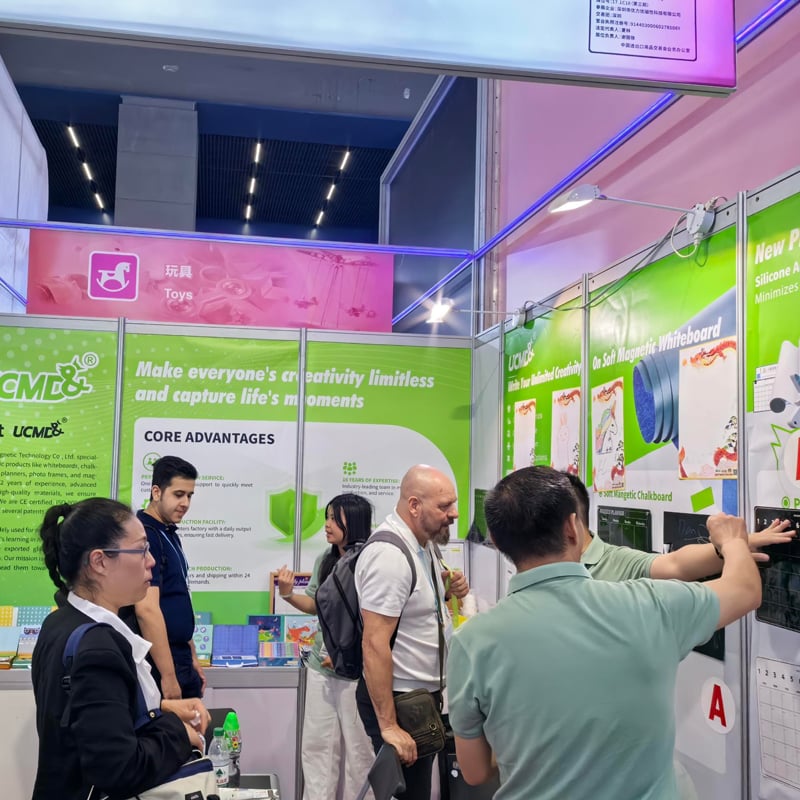
Discover how UCMD® leverages the Canton Fair to showcase magnetic educational & lifestyle products, build global buyer trust, and drive OEM/ODM partnerships. Explore our certified, customizable solutions today.

2026/08/28
Our Commitment to People, Planet & IntegrityAt ShenZhen U&U Magnetic Technology Co., Ltd. (UCMD®), we believe that how we make our products matters as much as what we make. From our factory floor in Shenzhen's Bao An District to the hands...

Please tell us about your company's advantages and characteristics.

Please tell us about your company's advantages and characteristics.

Please tell us about your company's advantages and characteristics.

Please tell us about your company's advantages and characteristics.

Please tell us about your company's advantages and characteristics.

Please tell us about your company's advantages and characteristics.

