 EN

Magnetic Whiteboards for Offices
Please tell us about your company's advantages and characteristics.
2026/08/27
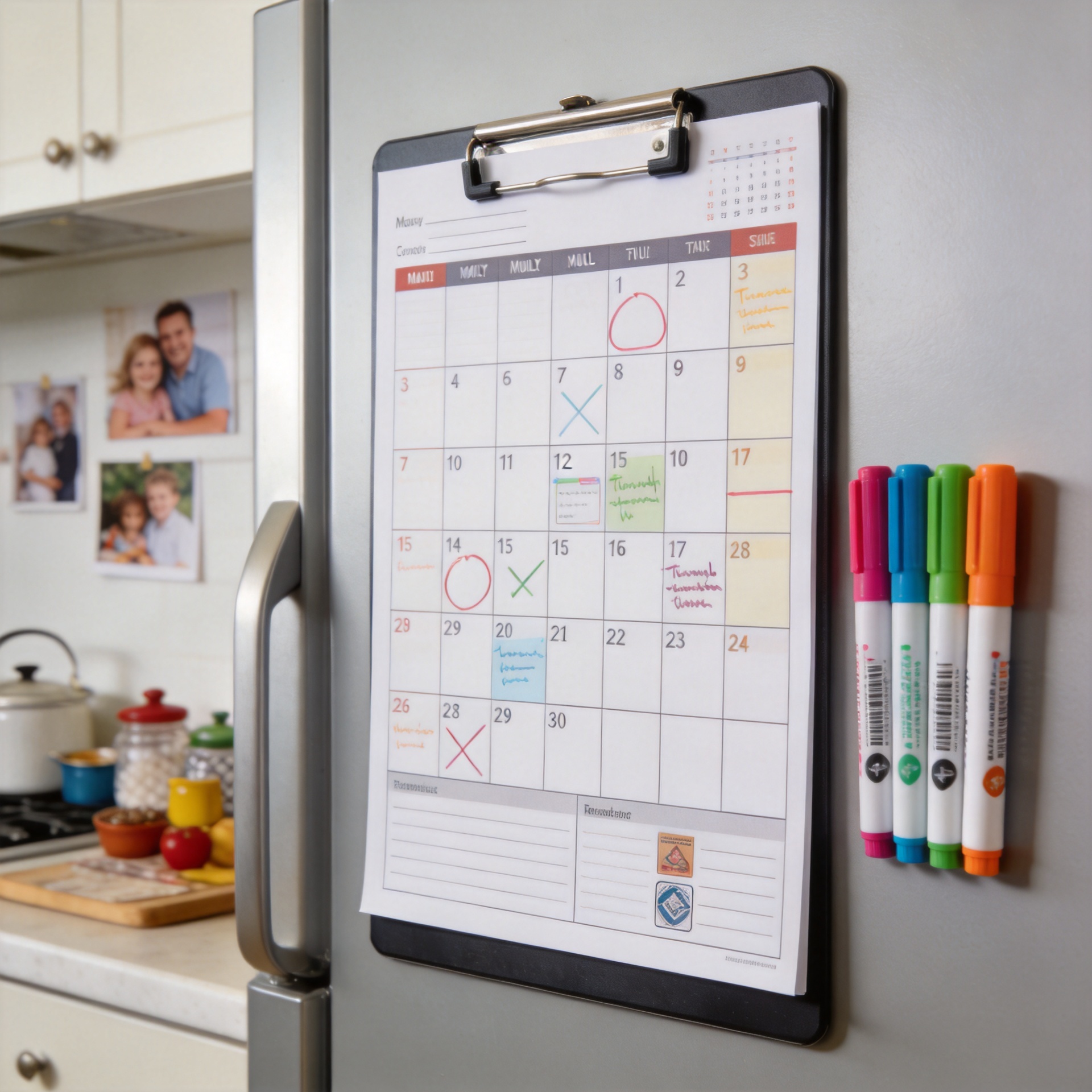
Modern kitchens use the refrigerator door as the primary command station. While sticky notes fall off and paper calendars clutter the counter, a high-grade magnetic monthly planner turns vertical steel space into an active household schedule. Selecting the right backing thickness and print lamination ensures this daily tool remains firmly attached without sliding every time the door swings open.
The primary structural flaw in low-cost calendar pads is poor attraction. Many modern appliance doors feature thick protective coatings, brushed stainless steel, or composite skins that weaken magnetic fields. When a thin, cheap magnetic monthly planner is placed on a curved or textured door, it quickly slides down under the weight of dry-erase markers or extra notes.
Printing durability presents another hurdle. Low-end suppliers print grids using surface-level inks that bleed or erase entirely after a few weeks of dry-wiping, leaving a grey, smudged mess. Physical dimensions matter just as much: placing an oversized magnetic monthly planner on a single-door unit blocks handles and obscures model plates, while thin-gauge backings tend to warp along the edges in humid kitchen environments.
Selecting a functional magnetic monthly planner comes down to matching the backing material to your appliance door type:
Flexible Isotropic Magnet Sheets (0.8 mm): The industry standard for curved or textured fridge doors. The flexible rubberized core conforms tightly to minor surface contours, maximizing contact area and grip.
Rigid Steel/Enamel Panels: Ideal for completely flat, heavy-duty appliances. These feature a solid core with strong rear magnet strips for absolute rigidity.
Laminated Dry-Erase Skins: PET or PVC top coatings protect the printed month grid beneath, allowing thousands of write-and-wipe cycles without ink ghosting.
Layout functionality drives daily usability. A traditional 35-day grid accommodates every month layout, while an integrated side margin provides space for grocery lists or meal prep notes. Choosing a magnetic monthly planner with an ultra-clear PET finish ensures dry-erase markers wipe away effortlessly without leaving shadow lines behind.
Even home accessories like a magnetic monthly planner must comply with chemical safety directives, particularly when used around food preparation spaces or handled by children:
REACH Regulation (EC 1907/2006): Ensures zero harmful plasticizers, phthalates, or toxic adhesives are present in the flexible magnet or printed layer.
RoHS Directive (2011/65/EU): Restricts heavy metals in surface pigments and composite laminates.
EN 71-3 Migration Testing: Guarantees that printed inks on any magnetic monthly planner remain non-toxic if touched by young children.
Factories certified under ISO 9001:2015 maintain rigorous raw-material controls, ensuring every export shipment complies with customs standards without delay.
Verify door magnetism first: Test your fridge door with a heavy souvenir magnet before buying. Stainless steel units with high nickel content may require adhesive mounting alternatives.
Select 0.8 mm magnetic thickness: Thicker rubberized backings resist thermal warping from nearby ovens and maintain a stronger hold on textured finishes.
Confirm physical clearances: Measure the flat recess of the fridge door, ensuring the magnetic monthly planner leaves ample clearance around handles and dispensers.
Use low-odor dry-erase markers: Fine-tip, alcohol-based markers write clearly in small grid squares and erase without requiring harsh chemical sprays.
Perform weekly maintenance: Clean the board face with a soft microfiber cloth; avoid acetone, bleach, or abrasive pads that damage the protective PET laminate.
In 2023, a busy family of five in Toronto reached out after two budget adhesive calendars fell off their brushed stainless appliance. They needed a magnetic monthly planner that could handle constant daily door openings and the occasional tug from a toddler. We supplied a flexible 0.8 mm steel-backed sheet with a high-contrast PET finish. Throughout a cold Canadian winter of heavy kitchen use, the unit stayed firmly anchored, becoming the central hub for meal prep and soccer practice tracking.
In another instance, a commercial bakery in Edinburgh installed a heavy-duty magnetic monthly planner on their walk-in fridge to manage staff shift rosters. The textured door finish caused standard thin magnets to slip constantly. Upgrading to a thicker 0.8 mm flexible magnetic grid provided the necessary magnetic pull to withstand the warm, high-humidity kitchen environment.
Our quality control process tests every magnetic monthly planner run against real-world kitchen conditions:
Curved Surface Grip Test: Magnet retention is tested on textured, powder-coated steel panels rather than flat lab sheets to guarantee real-world hold.
Grid Abrasion Testing: Printed surfaces undergo a 200-cycle mechanical dry-wipe test to verify zero ink bleeding or grid line degradation.
Lamination Adhesion Check: The PET protective layer is stress-tested to ensure it won't peel or bubble along the edges over time.
Chemical Safety Certification: Chemical compliance reports for REACH and RoHS are verified for every ink and polymer batch.
It depends on the steel composition. Austenitic stainless steel (300 series) contains high nickel levels and is non-magnetic, whereas ferritic stainless steel (400 series) holds magnets easily. Testing your door with a standard magnet before selecting a magnetic monthly planner is always recommended.
A 0.8 mm flexible magnet provides substantially higher flux density and surface contact than 0.4 mm or 0.5 mm budget sheets. This added thickness allows a magnetic monthly planner to stay securely in place on textured, curved, or painted fridge doors without slipping down.
Only if the product explicitly features a glossy PET or enamel dry-erase laminate. Standard paper or thin PVC laminates can trap liquid chalk pigments, leading to permanent staining. A high-quality magnetic monthly planner with a clear PET top layer cleans up easily with a damp cloth.
Spray a small amount of diluted isopropyl alcohol or dedicated whiteboard cleaner onto a soft microfiber towel and wipe gently. Avoid abrasive sponges, as they can scratch the protective surface of your magnetic monthly planner and compromise future dry-erase performance.

2026/08/20
Unlock flexible, repositionable whiteboarding for education, agile offices, retail, healthcare & more. Cuttable, magnetic, certified — request your free B2B sample today.

2026/10/10
Discover the 2027 Texture Magnetic Collection & Exclusive Exhibition Promotions Dear Global Partners and Valued Clients, We are thrilled to announce that Shenzhen U&U Magnetic Technology Co., Ltd. (Brand: UCMD) will be officially exhibiting...

2026/08/19
Discover how UCMD® leverages the Canton Fair to showcase magnetic educational & lifestyle products, build global buyer trust, and drive OEM/ODM partnerships. Explore our certified, customizable solutions today.

2026/08/28
Our Commitment to People, Planet & IntegrityAt ShenZhen U&U Magnetic Technology Co., Ltd. (UCMD®), we believe that how we make our products matters as much as what we make. From our factory floor in Shenzhen's Bao An District to the hands...

Please tell us about your company's advantages and characteristics.

Please tell us about your company's advantages and characteristics.

Please tell us about your company's advantages and characteristics.

Please tell us about your company's advantages and characteristics.

Please tell us about your company's advantages and characteristics.

Please tell us about your company's advantages and characteristics.

