 EN

Magnetic Whiteboards for Offices
Please tell us about your company's advantages and characteristics.
2026/09/28
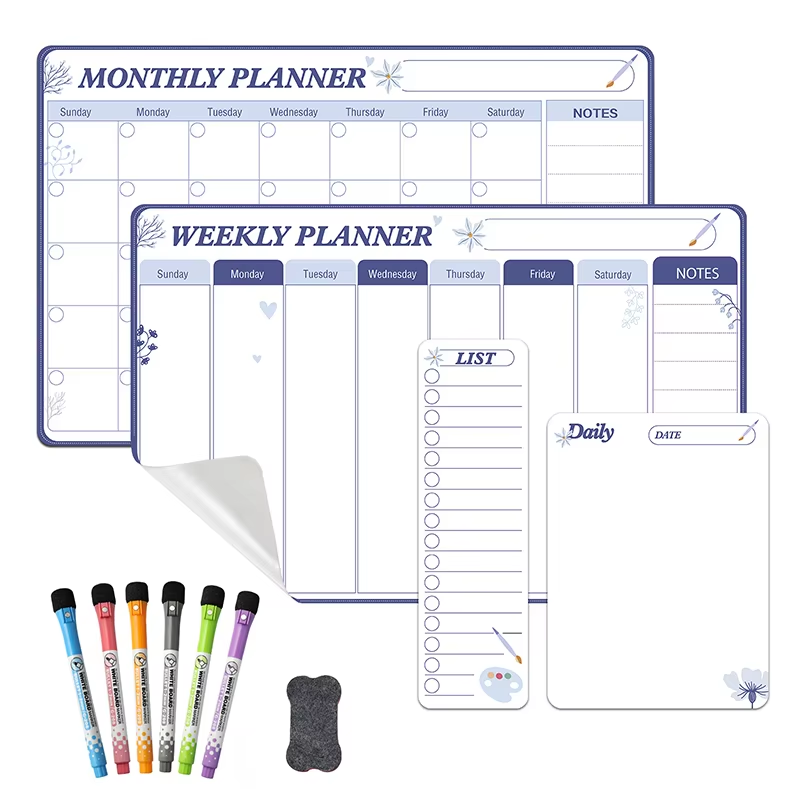
A weekly planner magnetic format puts the week where people can actually see it: on a refrigerator, a shared office board, or a metal work surface. That visibility is its practical advantage. Instead of asking everyone to open an app or locate a paper notebook, the plan sits in the flow of daily routines, ready for a quick update.
For households, teams, retailers, and B2B buyers, a suitable weekly planner magnetic product is not simply the largest one or the one with the most boxes. It is the one whose layout, placement, and rewrite cycle match the way people coordinate tasks. This guide compares the common options and gives a purchasing framework for reusable planning products.
A phone calendar is excellent for private reminders and alerts. A paper planner is portable and personal. A weekly planner magnetic board serves a different job: it creates a shared, at-a-glance view that remains in one familiar place. A family can see pickups, meals, and appointments beside the refrigerator; an office team can track recurring work near a meeting area.
That distinction matters because planning systems often fail at handoffs, not at note-taking. When a schedule is visible to the people who act on it, a change can be written down before it becomes a missed instruction. Research summaries comparing calendar formats have also suggested that a large-format, big-picture view can help users perceive the whole schedule more easily than a mobile-only view. A magnetic board should complement digital alerts, not replace them when a timed notification is essential.
For a retailer or distributor, this makes the weekly planner magnetic category easy to position: it is a reusable coordination tool rather than another stationery item. Reusable layouts also allow customers to revise meals, shifts, school tasks, and project priorities without discarding a full page.
| Format | Best for | Watch-out |
|---|---|---|
| Paper planner | Private notes, portability, and long-form journaling | Updates can be hard for several people to see |
| Digital calendar | Alerts, remote access, and rapid rescheduling | It depends on each user opening or noticing the app |
| Weekly planner magnetic board | Shared routines, visual prompts, and repeatable weekly workflows | It needs a suitable metal surface or a compatible board |
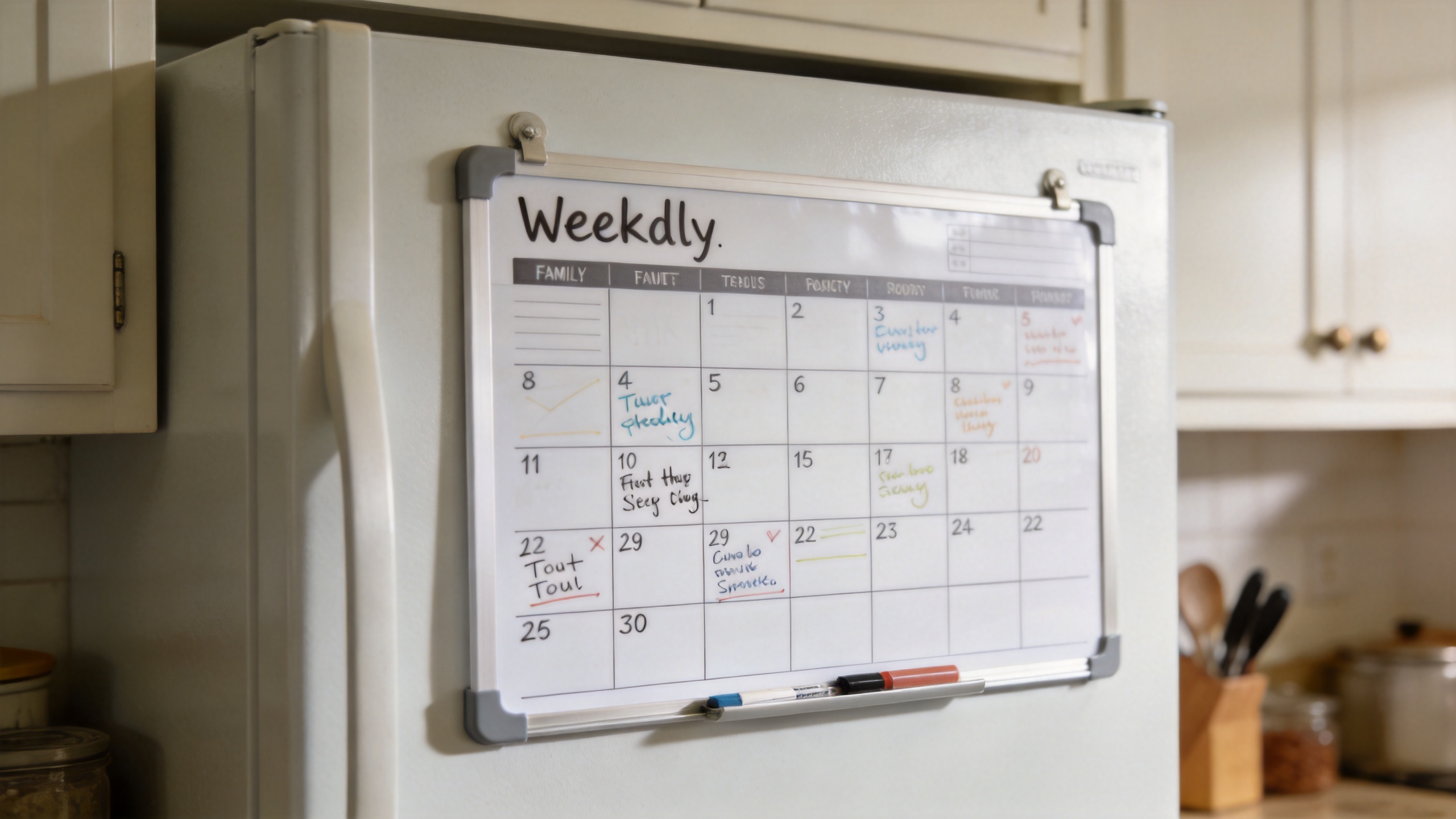
The useful comparison is not “which option fits?” but “which task needs which format?” A weekly planner magnetic layout is strongest when several people need to see the same plan. Digital calendars can carry alerts and remote changes; a paper notebook can preserve detailed notes. Many users combine all three.
Choose a readable weekly grid with enough room for names, meals, school activities, and a short task list. A fridge-based weekly planner magnetic design keeps routine information close to the place where families often discuss the day. Some buyers also pair planning boards with blank fridge magnets for labels, moveable responsibilities, or simple visual markers. Before purchase, confirm that the refrigerator surface is magnetic; stainless-steel finishes vary.
For shared work, prioritize clear day columns, durable writing areas, and enough contrast to read from a standing distance. Glass boards for office settings can provide a polished meeting-room surface, but buyers should verify which magnets and accessories are compatible with the specific board. A weekly view is particularly useful for handoffs, recurring meetings, and short planning cycles; detailed project management can remain in the team’s software.
Not every magnetic surface is a planner. A travel magnet display board, for example, is designed to present souvenirs or visual collections rather than schedule a week. The distinction helps retailers merchandise related magnetic products without promising a planning function that a display board does not have. In contrast, a weekly planner magnetic product needs an intentional grid, writable surface, and room for routine changes.
It is easy to assume that extra features automatically create more value. In practice, a crowded layout can reduce usability. The key question is simple: can the intended user see and revise the week quickly? If the answer is no, a more elaborate weekly planner magnetic design may be less useful than a clean one.
For buyers looking at related products, the confirmed catalog options below provide starting points. Review the individual product pages for current specifications and ordering details.
Custom planning products are more than a logo printed in a corner. A buyer may need a specific weekly grid, bilingual labels, a monthly companion sheet, color coding, packaging artwork, or a format matched to a retailer’s shelf plan. A supplier with OEM and ODM capability can discuss these choices, but the brief should begin with the use case and the surface where the planner will be used.
For a weekly planner magnetic program, clarify the following early: intended audience, board or magnet format, dimensions, layout, marker inclusion, packaging, artwork ownership, and sample approval. This avoids the common batch-purchasing problem of receiving consistent-looking products that are not actually easy for customers to use.
Daily use is simple: write with the recommended marker, erase completed items promptly, and avoid abrasive cleaning tools. Do not assume every household cleaner is appropriate for every dry-erase finish. Test a small inconspicuous area or follow the supplier’s instructions when deeper cleaning is needed. Store loose magnets and markers together so the weekly planner magnetic system remains ready for the next planning session.
The right weekly planner magnetic tool makes the next seven days easier to see, discuss, and revise. For homes, that may mean a compact fridge grid. For offices, it may mean a larger shared board. For retail and B2B buyers, it means selecting a clear format, confirming compatibility, and turning customization into a useful planning experience rather than decoration. Start with the workflow, then choose the size, layout, and reusable surface that support it.

2026/08/20
Unlock flexible, repositionable whiteboarding for education, agile offices, retail, healthcare & more. Cuttable, magnetic, certified — request your free B2B sample today.

2026/10/10
Discover the 2027 Texture Magnetic Collection & Exclusive Exhibition Promotions Dear Global Partners and Valued Clients, We are thrilled to announce that Shenzhen U&U Magnetic Technology Co., Ltd. (Brand: UCMD) will be officially exhibiting...

2026/08/19
Discover how UCMD® leverages the Canton Fair to showcase magnetic educational & lifestyle products, build global buyer trust, and drive OEM/ODM partnerships. Explore our certified, customizable solutions today.

2026/08/28
Our Commitment to People, Planet & IntegrityAt ShenZhen U&U Magnetic Technology Co., Ltd. (UCMD®), we believe that how we make our products matters as much as what we make. From our factory floor in Shenzhen's Bao An District to the hands...

Please tell us about your company's advantages and characteristics.

Please tell us about your company's advantages and characteristics.

Please tell us about your company's advantages and characteristics.

Please tell us about your company's advantages and characteristics.

Please tell us about your company's advantages and characteristics.

Please tell us about your company's advantages and characteristics.

