 EN

Magnetic Whiteboards for Offices
Please tell us about your company's advantages and characteristics.
2026/09/23

Selecting high-performance magnetic whiteboards for classrooms requires understanding how specialized surface materials respond to intense daily instruction. Over nine years of equipping primary, secondary, and higher education facilities, field assessments demonstrate that surface wear remains the single greatest failure point for cheap instructional boards. Standard non-magnetic or low-grade lacquered boards suffer from surface micro-porosity, which absorbs marker solvents and leads to permanent ink ghosting after a few months of continuous use. In contrast, superior magnetic whiteboards for classrooms utilize multi-layer porcelain-enameled steel or high-density resin coatings over a galvanised steel sheet base. This non-porous structure ensures that dry-erase marker pigments sit entirely on the top layer, allowing markers to wipe away cleanly without ghosting or requiring harsh liquid chemical cleaners. UNU engineers institutional-grade magnetic whiteboards for classrooms featuring sturdy aluminum alloy frames, anti-warp honeycomb backing cores, and protective ABS corner caps that eliminate sharp edges in high-traffic student environments. According to technical testing guidelines published by the Educational Technology Industry Association (ETIA), non-porous magnetic steel surfaces maintain baseline contrast and erase clarity through over 10,000 continuous write-and-erase cycles. Investing in well-constructed magnetic whiteboards for classrooms eliminates frequent replacement costs while maintaining a pristine visual teaching surface year after year.
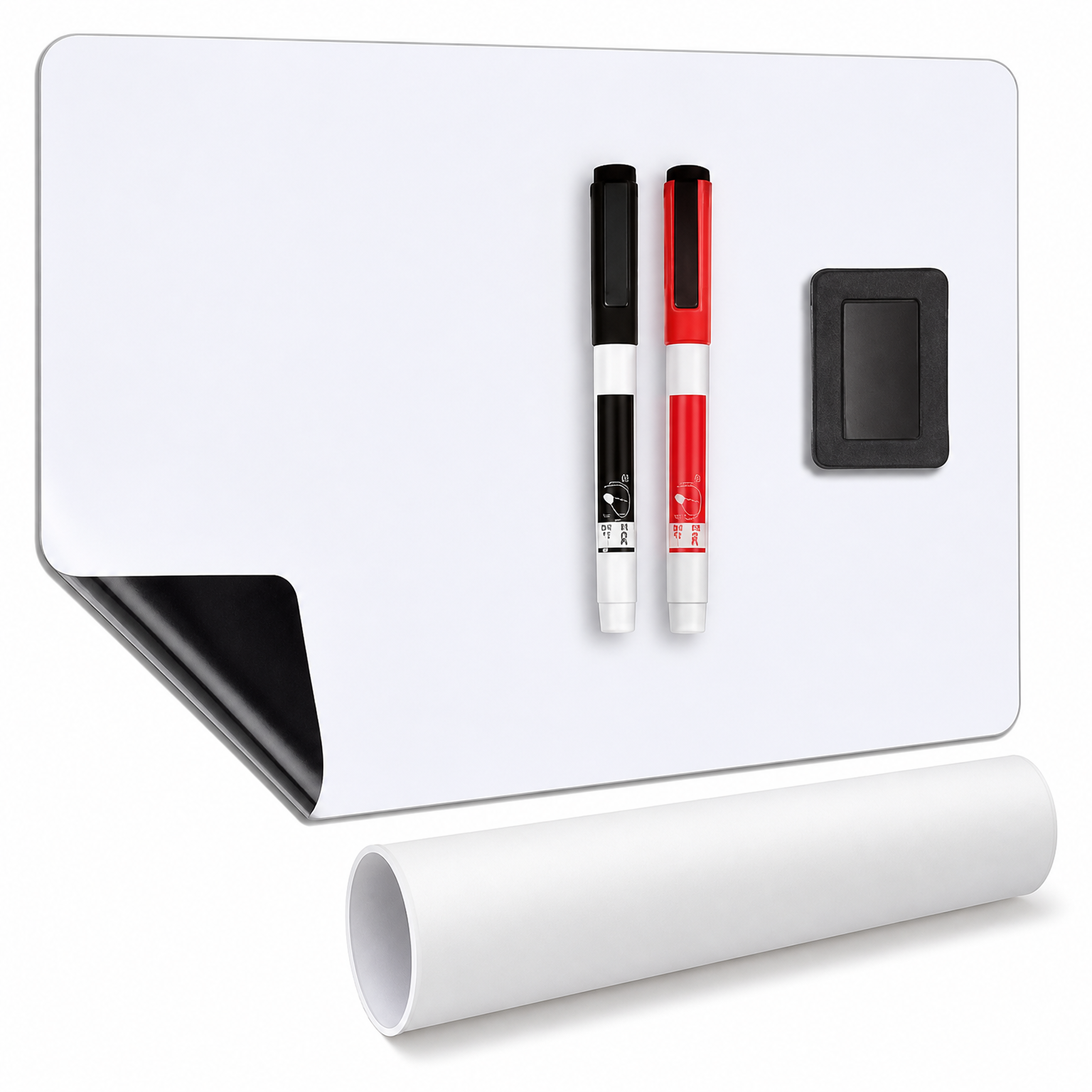
Navigating procurement decisions across large school districts or private academies demands a structured classroom whiteboard buying guide that balances mechanical safety, installation flexibility, and overall cost-efficiency. A practical classroom whiteboard buying guide begins by categorizing instructional zones according to classroom layout and teaching methodology. Large wall-mounted magnetic panels serve as primary lecture focal points, whereas mobile double-sided rolling boards offer flexible division for small group work, STEM workshops, and special education breakout sessions. Furthermore, an effective classroom whiteboard buying guide emphasizes checking structural safety certifications to prevent frame separation or wall detachment under heavy usage. When administrators consult a classroom whiteboard buying guide, verifying the board's magnetic holding force is essential, as teachers rely on magnetic accessories—such as chart clips, magnetic rulers, and visual schedule indicators—to build interactive lesson plans. UNU supplies certified visual management systems built to strictly comply with international safety standards, delivering non-toxic, low-emission materials suitable for modern indoor learning environments. Indoor air quality standards established by the Greenguard Environmental Institute highlight that institutional furnishings must emit negligible volatile organic compounds (VOCs) to safeguard student respiratory health. Utilizing an objective classroom whiteboard buying guide enables procurement teams to allocate educational budgets effectively toward durable, compliant, and highly functional teaching tools.
Determining the best educational whiteboards involves assessing specific functional design elements that streamline daily classroom routines. Primary among these features is magnetic receptivity, which elevates a simple writing panel into a multi-dimensional instructional hub. Teachers using the best educational whiteboards can instantly attach printed reading passages, student assignments, and metallic learning aids directly onto the board alongside handwritten notes, reducing lesson transition downtime. In addition, high-end models within the best educational whiteboards category incorporate full-length integrated marker trays, offering dedicated storage for dry-erase pens, magnetic erasers, and cleaning cloths within arm's reach. UNU designs high-contrast magnetic visual boards with anti-glare surface treatments, ensuring optimal visibility from every angle in bright classroom environments without eye strain. Educational facility research from the National Education Association (NEA) demonstrates that clear visual organization on active teaching surfaces increases student task engagement and information retention during whole-class instruction. Choosing the best educational whiteboards ensures that schools provide teachers with reliable visual platforms that foster collaborative learning and active student participation.
Integrating premium magnetic whiteboards for classrooms directly enhances daily pedagogy by allowing teachers to combine written explanations with physical visual aids. In fast-paced K-12 learning environments, magnetic whiteboards for classrooms function as central command hubs where daily agendas, learning targets, homework assignments, and schedule modifications are displayed transparently. Utilizing high-grade magnetic whiteboards for classrooms prevents instruction interruptions, as marker pens slide smoothly across non-porous surfaces to generate bold, high-contrast lines that remain legible even from the back row. UNU produces versatile magnetic whiteboards for classrooms built with scratch-resistant, impact-absorbing layers, allowing boards to handle daily marker pressure and magnetic clip adjustments without denting or peeling. Psychological studies on classroom ergonomics published in the Journal of Educational Psychology indicate that structured, visually clear teaching boards significantly lower cognitive load in young learners, aiding in step-by-step problem comprehension. Deploying durable magnetic whiteboards for classrooms equips teachers with versatile visual tools that support diverse learning styles across mathematics, language arts, and scientific instruction.
Preserving the smooth writing performance and visual clarity of magnetic whiteboards for classrooms requires establishing simple routine maintenance practices. Over time, improper marker selection or abrasive cleaning cloths can wear down surface sealants on low-quality boards, leading to stubborn stain accumulation and micro-scratching. Even when utilizing the best educational whiteboards, school maintenance staff should enforce cleaning protocols using soft microfiber cloths and mild dry-erase cleaning solutions rather than harsh solvents. Following recommendations detailed in a professional classroom whiteboard buying guide, selecting porcelain or high-density resin-coated steel boards provides built-in resistance against ink penetration, ensuring that residual marker pigments evaporate on the top layer rather than soaking into internal core materials. UNU applies advanced protective coating technology across its magnetic whiteboard lineups, ensuring long-term surface smoothness and stain resistance over years of rigorous institutional deployment. Maintenance guidelines published by the International Sanitary Supply Association (ISSA) confirm that regular surface conditioning with microfiber pads prevents ink residue buildup and extends the functional operational lifespan of institutional writing boards. Adhering to structured care guidelines ensures that magnetic whiteboards for classrooms remain clean, highly visible, and ready for daily instruction throughout the academic year.

2026/08/20
Unlock flexible, repositionable whiteboarding for education, agile offices, retail, healthcare & more. Cuttable, magnetic, certified — request your free B2B sample today.

2026/10/10
Discover the 2027 Texture Magnetic Collection & Exclusive Exhibition Promotions Dear Global Partners and Valued Clients, We are thrilled to announce that Shenzhen U&U Magnetic Technology Co., Ltd. (Brand: UCMD) will be officially exhibiting...

2026/08/19
Discover how UCMD® leverages the Canton Fair to showcase magnetic educational & lifestyle products, build global buyer trust, and drive OEM/ODM partnerships. Explore our certified, customizable solutions today.

2026/08/28
Our Commitment to People, Planet & IntegrityAt ShenZhen U&U Magnetic Technology Co., Ltd. (UCMD®), we believe that how we make our products matters as much as what we make. From our factory floor in Shenzhen's Bao An District to the hands...

Please tell us about your company's advantages and characteristics.

Please tell us about your company's advantages and characteristics.

Please tell us about your company's advantages and characteristics.

Please tell us about your company's advantages and characteristics.

Please tell us about your company's advantages and characteristics.

Please tell us about your company's advantages and characteristics.

