 EN

Magnetic Whiteboards for Offices
Please tell us about your company's advantages and characteristics.
2026/09/29
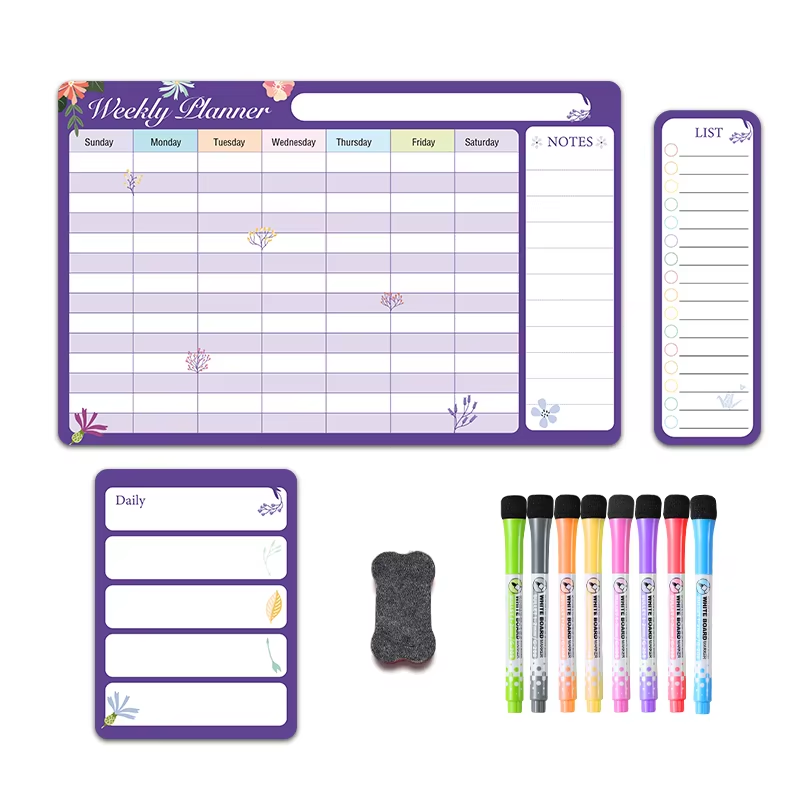
A magnetic whiteboard for wall use can be much more than a place to leave a note. In a classroom it can hold lesson cards while giving teachers a write-and-wipe surface. In an office it can make project work visible. At home it can become a family command center. The useful choice is not automatically the largest or most decorative board; it is the board whose surface, mounting method, size, and magnetic performance fit the work people will do every day.
For distributors and bulk buyers, the decision gets broader. A board that looks appropriate in a sample room may be too reflective for a teaching wall, too small for a giant wall calendar dry erase layout, or too awkward to standardize across several sites. This guide provides a practical way to compare materials and specify a magnetic whiteboard for wall installation without assuming that one format fits every buyer.
Before comparing frames or finishes, list the activities that will happen in front of the board. Home users often want an easy-to-clean message board, meal planner, or weekly diary. Offices may need a durable surface for planning sessions, notices, and presentation support. Schools need fast content changes, dependable magnet holding, and readable viewing angles. A magnetic whiteboard for wall placement is especially helpful when it needs to serve both writing and display functions in the same footprint.
Ask a few basic questions: Will users attach laminated cards, several sheets of paper, or only lightweight notes? Is the board written on daily or occasionally? Does direct sunlight or overhead lighting hit the surface? Is it intended to be a large whiteboard calendar for wall planning, a classroom display, or a reception noticeboard? These answers make later material decisions clearer.
A steel-faced dry-erase board is the familiar, flexible starting point. The steel layer enables magnets, and a coated writing surface can suit routine home, office, and light-to-medium-use educational applications. It is often a sensible choice where budget, straightforward magnetic display, and a wide range of sizes matter. Buyers should still request details about the writing surface and backing rather than treating the word “magnetic” as a complete specification.
For a high-frequency magnetic whiteboard for wall installation, porcelain enamel on steel is worth considering. Published industry guidance commonly describes porcelain-style dry-erase surfaces as more resistant to staining, ghosting, and scratching in heavy-use settings. That does not make every porcelain board identical, but it gives procurement teams a useful direction: evaluate it when repeated writing, cleaning, and magnet use are expected. In busy classrooms, training rooms, and shared meeting spaces, the higher initial cost may be easier to justify when replacement and disruption are considered alongside purchase price.
Glass can deliver a clean, modern look and a smooth wipeable face, which makes it attractive in design-led offices, reception areas, and premium home workspaces. The trade-off is that glass boards need careful mounting planning because weight and hardware compatibility matter. They may also change how a room handles glare. If the board will be read from varied angles or under strong lighting, test the intended location before a large rollout. Style matters, but day-to-day visibility matters more.
| Surface direction | Often suited to | What to confirm |
|---|---|---|
| Coated steel | General home, office, and routine display use | Writing coating, backing, magnetic holding needs |
| Porcelain enamel steel | Frequent writing and shared high-use areas | Surface construction, cleaning guidance, warranty terms |
| Glass | Design-focused office or home spaces | Weight, mounting hardware, glare, compatible magnets |
It is tempting to assume a bigger magnetic whiteboard for wall use will be more useful. In practice, clear sightlines, reachable writing height, and usable border space determine whether a large board works. Measure the available wall, then mark the intended board footprint with tape. This simple step reveals conflicts with doors, screens, furniture, and viewing paths before an order is placed.
For calendar applications, reserve enough blank space around headings and grids so a giant wall calendar dry erase format remains legible after several weeks of entries. For a large whiteboard calendar for wall planning across a team, decide whether the calendar needs columns for people, projects, or locations. A bespoke printed grid may help, but the layout should be reviewed by the people who will update it, not only by the person approving the purchase.
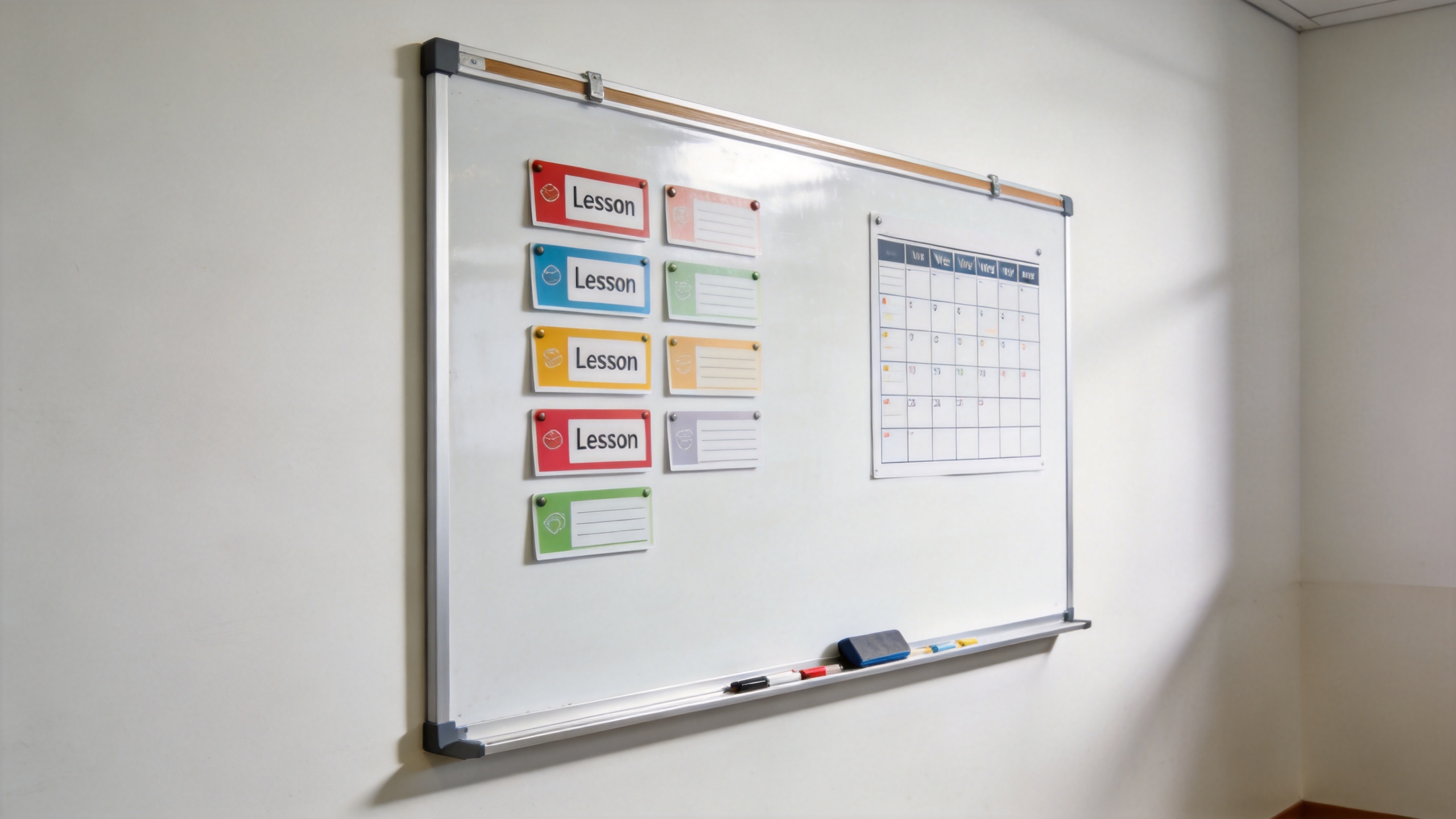
The magnet function should match the display load. Lightweight paper notices need far less holding force than layered documents, classroom manipulatives, or heavy magnetic accessories. Where the application is important, ask for a sample and test it with the actual magnets and materials. A board can be easy to write on yet still be a poor display surface for the intended use if the magnet-and-material combination is wrong.
Installation is another point where a careful buyer prevents later trouble. Check wall construction, board weight, mounting points, and the supplier’s installation instructions before scheduling a rollout. General mounting guidance commonly recommends locating suitable structural support or using anchors rated for the wall condition and load. Do not treat generic hardware advice as a substitute for site assessment. For glass or oversized boards in particular, a qualified installer and the specified hardware are prudent.
Bulk purchasers often need consistency more than a one-off retail size. A supplier with OEM or ODM capability can discuss custom dimensions, frame treatments, printed planning formats, packaging, and private-label requirements. The key is to turn each request into a written specification: finished dimensions, orientation, board material, frame, mounting set, artwork approval, packaging expectations, and inspection points.
UNU’s catalog includes wall-oriented magnetic board options, including a customizable magnetic culture wall whiteboard and a customizable magnetic dry-wipe whiteboard. These product links help buyers review relevant catalog directions, but final suitability should be confirmed against the approved specification and application.
Price comparisons are more meaningful when all suppliers quote the same scope. Include surface type, dimensions, frame, backing, mounting hardware, printed elements, packaging, and quality checks in the comparison. A lower unit price can look attractive until missing hardware, inconsistent sizing, or early surface replacement adds cost. That is why experienced buyers consider purchase price, installation effort, maintenance, and expected use intensity together.
For school systems, retail programs, or multi-office groups, standardizing a manageable set of sizes can simplify replenishment and visual consistency. A sample review, artwork proof, and pre-production confirmation are generally more valuable than trying to solve every question after a full shipment is underway.
Use markers intended for dry-erase surfaces, remove writing regularly, and follow the supplier’s cleaning guidance. A soft cloth and a suitable board cleaner are usually safer than abrasive pads or harsh tools. Test any cleaner in an inconspicuous area first. Keep magnets clean as well: grit caught under magnets can mark a surface when they are slid across it. For a weekly diary or shared calendar, set a routine for erasing obsolete entries so the board stays readable rather than becoming a permanent archive.
A suitable magnetic whiteboard for wall use is one that supports the way people actually organize, teach, present, and plan. Match the surface to usage frequency, the size to sightlines, the magnet performance to display materials, and the installation method to the wall. Then make style serve function rather than compete with it. With that sequence, buyers can select a board that looks appropriate on day one and remains useful long after the first notes are erased.

2026/08/20
Unlock flexible, repositionable whiteboarding for education, agile offices, retail, healthcare & more. Cuttable, magnetic, certified — request your free B2B sample today.

2026/10/10
Discover the 2027 Texture Magnetic Collection & Exclusive Exhibition Promotions Dear Global Partners and Valued Clients, We are thrilled to announce that Shenzhen U&U Magnetic Technology Co., Ltd. (Brand: UCMD) will be officially exhibiting...

2026/08/19
Discover how UCMD® leverages the Canton Fair to showcase magnetic educational & lifestyle products, build global buyer trust, and drive OEM/ODM partnerships. Explore our certified, customizable solutions today.

2026/08/28
Our Commitment to People, Planet & IntegrityAt ShenZhen U&U Magnetic Technology Co., Ltd. (UCMD®), we believe that how we make our products matters as much as what we make. From our factory floor in Shenzhen's Bao An District to the hands...

Please tell us about your company's advantages and characteristics.

Please tell us about your company's advantages and characteristics.

Please tell us about your company's advantages and characteristics.

Please tell us about your company's advantages and characteristics.

Please tell us about your company's advantages and characteristics.

Please tell us about your company's advantages and characteristics.

