 EN

Magnetic Whiteboards for Offices
Please tell us about your company's advantages and characteristics.
2026/09/29
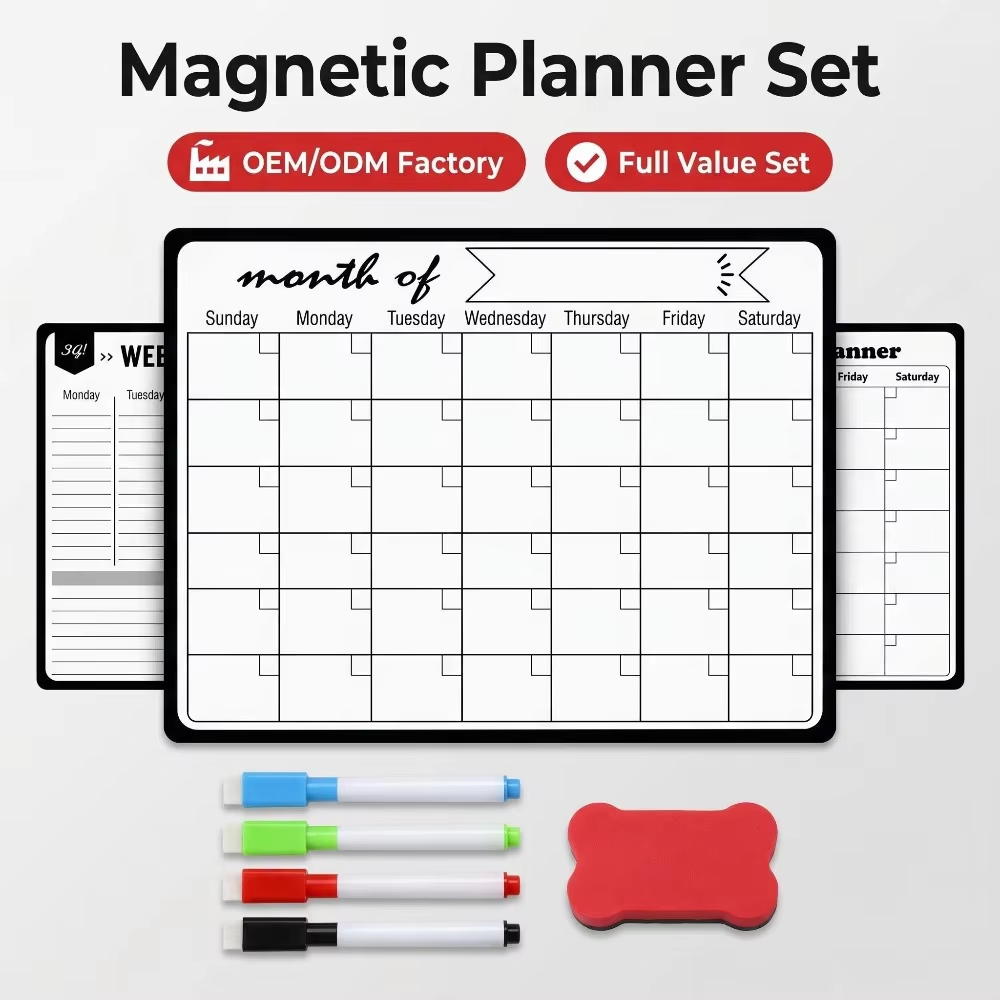
A planning surface works most reliably when people can see it at the moment they need it. That is the practical appeal of magnets for dry erase calendar systems: a schedule can stay visible on a refrigerator, a filing cabinet, or another suitable ferrous surface, then be updated without printing a new page. For households, offices, retailers, and B2B buyers, the useful question is not simply whether a calendar is magnetic. It is whether the format, attachment method, writing surface, and replenishment plan fit the way people actually organize work.
From a magnetic-products adviser’s perspective, the first correction is important: a bigger planner is not automatically a better planner. A calendar that dominates a narrow kitchen door may be ignored, while a compact layout beside the coffee station can become part of the daily routine. Start with the location and the planning habit, then select the format.
Most magnets for dry erase calendar products are flexible magnetic sheets or planner boards designed to attach to a steel refrigerator or another magnetic metal surface. The board and the marker do different jobs: the magnetic backing keeps the planner in view, while the dry erase face allows dates, meals, appointments, or shifts to change. Before buying, test the intended mounting area with a small household magnet. Stainless-look appliances, glass boards, aluminum panels, and painted walls may not provide a magnetic surface even when they look suitable.
That small check avoids a common sourcing problem. Buyers sometimes focus on the printed layout first and discover later that the placement surface is incompatible. If a calendar will be used on a wall rather than a fridge, confirm whether it needs a separate magnetic whiteboard, a steel panel, or a non-magnetic mounting option.
The calendar grid should match the decision horizon. Monthly layouts are useful for family events, campaign milestones, school dates, and project visibility. Weekly layouts make sense when the board needs to show meal preparation, staffing, deliveries, or daily priorities. A combined system can work well when the monthly view stays stable and a smaller weekly panel handles the details.
| Use case | Best starting format | What to check |
|---|---|---|
| Family kitchen | Monthly calendar plus notes area | Viewing distance, grocery or meal-planning space, marker storage |
| Home office | Weekly planner | Task space, meeting rhythm, whether the mounting surface is magnetic |
| Retail assortment | Multiple sizes and monthly/weekly options | Packaging, layout clarity, accessory bundle, seasonal demand |
| B2B program | Custom monthly or weekly format | Branding area, language, artwork approval, and intended mounting environment |
A kitchen whiteboard can be especially effective when it has one clearly assigned purpose. If it becomes a calendar, menu, shopping list, school noticeboard, and message wall all at once, the visual benefit disappears. Give each zone a job and leave some blank space for changes.
Paper calendars are portable and require no compatible surface, but edits can become messy and the current plan may not be visible to everyone. Digital calendars are strong for reminders and sharing across locations, yet they are easy to overlook when notifications are muted. A magnetic dry erase planner occupies the middle ground: it offers a visible, shared record that can be revised quickly. It does not replace digital alerts for time-sensitive appointments, but it can make household and team priorities easier to discuss.
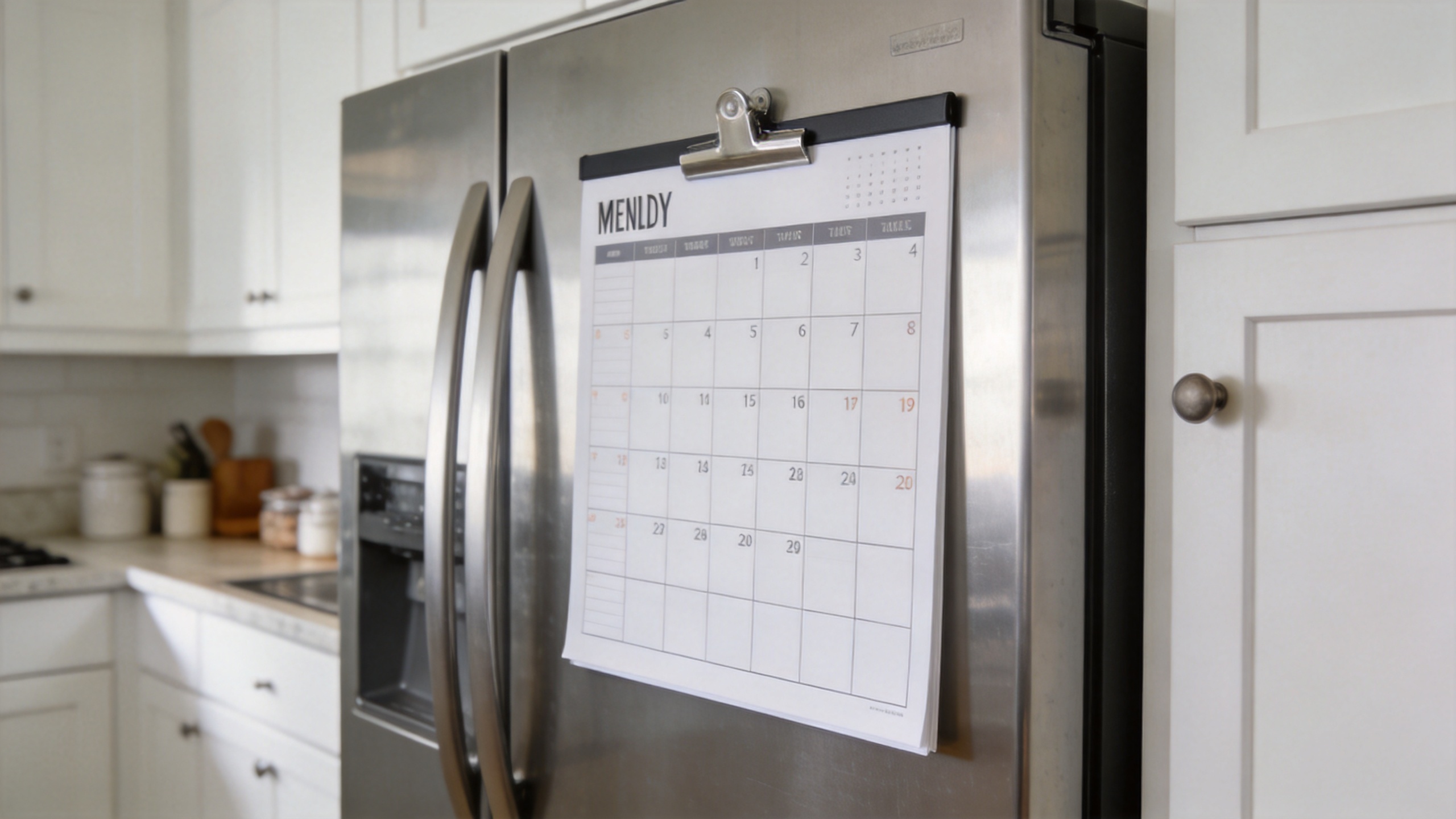
This is where visual placement matters. A fridge planner magnetic board puts the plan where routine activity already happens. In a workplace, a wall-mounted magnetic planner can help a small team review the week together. A white board on wheels is better suited to mobile workshops, classrooms, or changing project spaces; it is a different solution from a thin refrigerator calendar, so buyers should not judge both by the same mounting requirements.
For a starting point, the CMS-confirmed Reusable Magnetic Fridge Calendar Monthly & Weekly Planner with Dry Erase Markers for Kitchen Organization illustrates how monthly and weekly planning can be brought together for a kitchen-oriented use case. For a different footprint, the A3 Size Dry Erase Calendar for Refrigerator Office Desktop Magnetic Calendar Board Desktop Monthly Planner Sheet is a relevant format to review. These links describe confirmed product titles; the final choice should still follow a sample and specification review.
For private-label, promotional, or wholesale projects, customization should begin with use rather than decoration. A logo can be added, but a more valuable OEM brief also defines the calendar period, language, week-start preference, notes sections, color contrast, packaging, and target mounting surface. A manufacturer with magnetic-planner experience and OEM/ODM capability can help translate that brief into an artwork and sampling process. It is sensible to confirm minimum order quantity, lead time, print proof approval, and packaging requirements directly rather than assume standard terms.
Erase current writing regularly rather than leaving marker ink on the board for long periods. Use a soft cloth or a cleaner appropriate for dry erase surfaces, and avoid abrasive pads that can scratch the finish. Keep the planner flat when possible, store markers with caps closed, and avoid forcing the magnetic sheet onto a curved or unsuitable surface. These simple habits help keep magnets for dry erase calendar products readable and reusable.
The right magnets for dry erase calendar setup is the one that matches a real planning moment: a family checking the week at breakfast, a retailer offering clear format choices, or a buyer developing a branded planner program. Verify the mounting surface, choose monthly or weekly visibility intentionally, and treat samples as part of the decision. With those basics in place, a reusable planner can be a clear visual companion to paper and digital tools rather than another object that gets overlooked.

2026/08/20
Unlock flexible, repositionable whiteboarding for education, agile offices, retail, healthcare & more. Cuttable, magnetic, certified — request your free B2B sample today.

2026/10/10
Discover the 2027 Texture Magnetic Collection & Exclusive Exhibition Promotions Dear Global Partners and Valued Clients, We are thrilled to announce that Shenzhen U&U Magnetic Technology Co., Ltd. (Brand: UCMD) will be officially exhibiting...

2026/08/19
Discover how UCMD® leverages the Canton Fair to showcase magnetic educational & lifestyle products, build global buyer trust, and drive OEM/ODM partnerships. Explore our certified, customizable solutions today.

2026/08/28
Our Commitment to People, Planet & IntegrityAt ShenZhen U&U Magnetic Technology Co., Ltd. (UCMD®), we believe that how we make our products matters as much as what we make. From our factory floor in Shenzhen's Bao An District to the hands...

Please tell us about your company's advantages and characteristics.

Please tell us about your company's advantages and characteristics.

Please tell us about your company's advantages and characteristics.

Please tell us about your company's advantages and characteristics.

Please tell us about your company's advantages and characteristics.

Please tell us about your company's advantages and characteristics.

