 EN

Magnetic Whiteboards for Offices
Please tell us about your company's advantages and characteristics.
2026/10/06
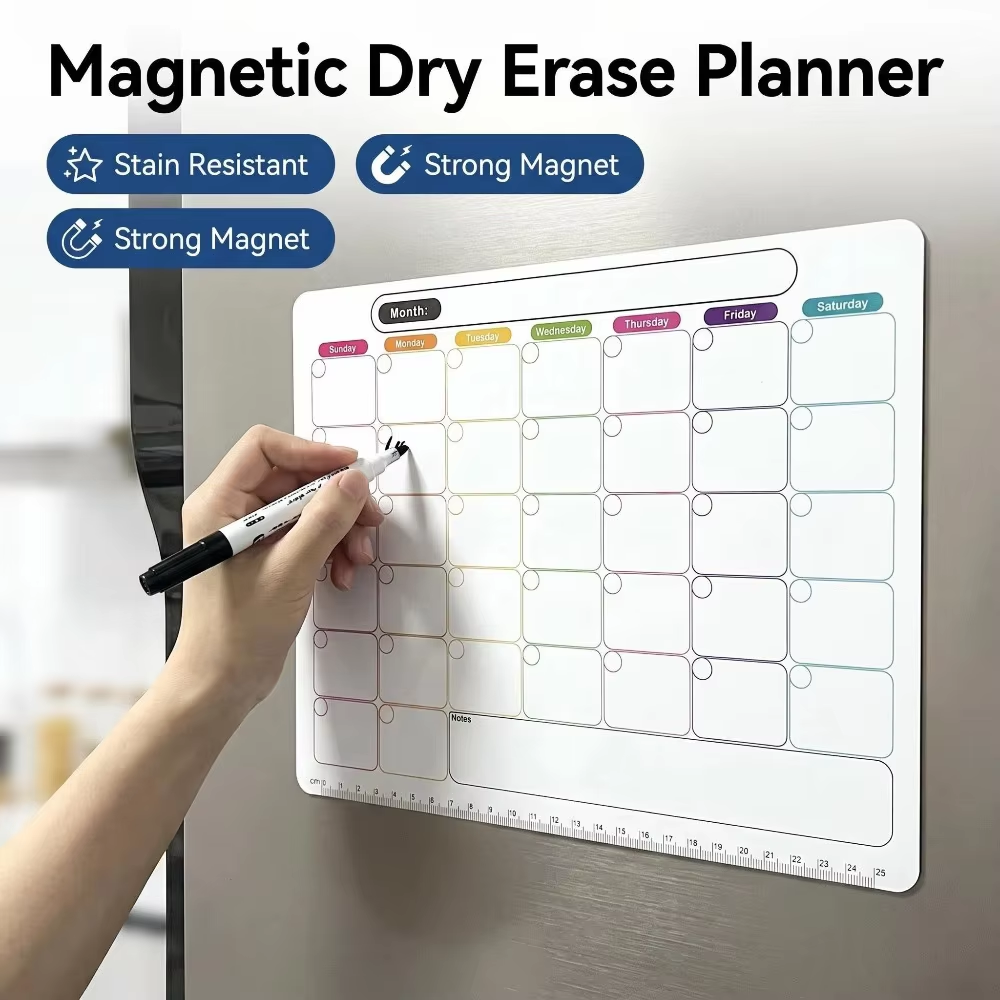
In a busy office, a whiteboard should do more than fill a blank wall. It should give teams one visible place to turn a discussion into next steps, keep a project moving between meetings, and make priorities easy to revisit. The right office dry erase board can become that shared work surface—provided its size, surface, mounting method, and magnetic function fit the way people actually work.
For an office manager or procurement team, the most useful question is not “Which board is biggest?” It is “What needs to stay visible, who will use it, and how often will it be updated?” A board for weekly stand-ups has different requirements from one used for reception notices, training sessions, or a hybrid project room.
An office dry erase board earns its wall space when it reduces friction. In a meeting room, teams may sketch a decision, assign owners, and leave action items up until the next check-in. In a project area, a magnetic board can hold printed timelines, task cards, or dry erase board stickers alongside written notes. At a shared desk, a smaller surface may simply track today’s priorities.
Map the intended workflow before comparing finishes. Ask four practical questions:
This approach prevents a common purchasing mistake: choosing a visually tidy board that is too small for the team’s planning rhythm or non-magnetic when paper-based project cues are essential.
A standard display board can show information, but a magnetic, writable office dry erase board supports a two-layer workflow. The written layer captures changing ideas, dates, and decisions. The magnetic layer holds items that should stay intact: printed milestones, responsibility cards, product samples, or branded labels. That combination is especially useful when a team mixes analog planning with digital tools.
For example, use magnetic headings to establish columns such as “To decide,” “In progress,” and “Ready to review.” Team members can then move cards during a meeting and add short notes underneath. Dry erase board stickers can help establish recurring zones for deadlines, parking-lot ideas, or weekly goals, but select removable labels that do not leave adhesive residue on the writing surface.
If your team frequently changes rooms, a portable white board on a stable stand can be more practical than adding another wall-mounted unit. Portable whiteboards are useful for workshops, temporary project rooms, and training because the board can travel with the conversation. Check wheel locks, frame stability, and storage needs before treating portability as an automatic upgrade.

Size affects more than visibility. It determines whether people use the board as a quick reminder or as the working center of a project. A small board may be sufficient beside an individual workstation. A team room generally benefits from enough horizontal space to show an agenda, decisions, and action owners without crowding text into tiny handwriting.
Before ordering an office dry erase board, mark the proposed wall area with painter’s tape. Stand where meeting participants will sit and test whether the planned board width leaves room for large, readable writing. Also account for door swings, monitor placement, light reflections, and the space needed to step back from the board.
| Use case | What to prioritize | Typical board approach |
|---|---|---|
| Individual planning | Quick access and daily notes | Compact wall board or desktop-sized surface |
| Small-team stand-up | Visible tasks and movable cards | Medium magnetic wall board |
| Meeting or training room | Long sightlines and broad writing area | Large wall-mounted board or paired boards |
| Flexible workshop space | Mobility and stability | Locking-frame portable whiteboards |
The surface is where the long-term value of an office dry erase board is decided. Light-use spaces may accept a budget-oriented melamine finish, while meeting rooms with frequent writing and erasing usually justify a more durable surface. The key distinction is not simply price; it is how reliably the surface remains easy to erase after repeated use.
Do not let an attractive frame decide the purchase. If a board will host daily project updates, test a sample with the markers and eraser your office intends to use. A higher initial cost can be sensible when it avoids early ghosting, extra cleaning time, or a premature replacement.
Wall-mounted boards preserve floor space and create a dependable visual anchor in a meeting room. They work well when the wall construction can support the board and when the installation position is confirmed before drilling. Use a stud finder or appropriate wall anchors, follow the supplier’s hardware guidance, and get help for large boards rather than lifting them alone.
Choose the mounting height around the real users and the bottom reach of the writing area. There is no single height that suits every office. A quick mock-up with tape helps reveal whether seated attendees can see the lower rows and whether shorter users can reach the top without strain. Leave clearance for a marker tray, magnets, and opening doors.
A portable white board is the alternative when a fixed wall location would limit the team. For a mobile model, inspect the base width, caster locks, board balance, and whether the board can be safely stored when not in use. Portable whiteboards should make collaboration easier, not introduce a wobbly obstacle into the room.
For a company-wide rollout, the board can reinforce a familiar planning system rather than looking like a generic presentation surface. Ask a qualified supplier about available color options, frame finishes, printed grid layouts, and logo printing or engraving. These choices are most useful when they support a repeatable process—for example, a lightly printed weekly planning structure, a colored border that aligns with a department area, or a logo that identifies shared equipment.
Customization should not compromise usability. Keep branded elements outside the primary writing zone, specify how much writable area must remain clear, and request a proof before approving production. If several sites will use the same design, agree on dimensions, mounting hardware, and accessory compatibility so replacement orders stay consistent.
For product-format inspiration from the confirmed catalog, review a customizable magnetic culture wall whiteboard, a customizable magnetic dry-wipe whiteboard option, or a magnetic dry erase calendar board. Review the exact listing details with the supplier before treating any configuration as part of your specification.
Even a well-chosen office dry erase board needs consistent care. Use dry erase markers suited to the surface, erase meeting notes promptly, and clean the board with the manufacturer-recommended method rather than harsh solvents. Keep magnets, an eraser, and fresh markers in one accessible tray so the board remains ready for the next conversation.
Once a month, check mounting hardware, frame alignment, wheel locks on mobile units, and any dry erase board stickers that need replacing. If ghosting starts, address it early by reviewing marker choice and cleaning practice. The goal is not a perfectly blank board; it is a dependable place where teams can see work, discuss it, and move it forward.
A well-matched office dry erase board is one people use without thinking about it: clear enough to guide a meeting, flexible enough to hold changing work, and durable enough to stay useful long after the first project plan is erased.

2026/08/20
Unlock flexible, repositionable whiteboarding for education, agile offices, retail, healthcare & more. Cuttable, magnetic, certified — request your free B2B sample today.

2026/10/10
Discover the 2027 Texture Magnetic Collection & Exclusive Exhibition Promotions Dear Global Partners and Valued Clients, We are thrilled to announce that Shenzhen U&U Magnetic Technology Co., Ltd. (Brand: UCMD) will be officially exhibiting...

2026/08/19
Discover how UCMD® leverages the Canton Fair to showcase magnetic educational & lifestyle products, build global buyer trust, and drive OEM/ODM partnerships. Explore our certified, customizable solutions today.

2026/08/28
Our Commitment to People, Planet & IntegrityAt ShenZhen U&U Magnetic Technology Co., Ltd. (UCMD®), we believe that how we make our products matters as much as what we make. From our factory floor in Shenzhen's Bao An District to the hands...

Please tell us about your company's advantages and characteristics.

Please tell us about your company's advantages and characteristics.

Please tell us about your company's advantages and characteristics.

Please tell us about your company's advantages and characteristics.

Please tell us about your company's advantages and characteristics.

Please tell us about your company's advantages and characteristics.

