 EN

Magnetic Whiteboards for Offices
Please tell us about your company's advantages and characteristics.
2026/09/07

A sensor maker in Stuttgart specified a hard sintered ferrite to hold a cover onto a handheld device, and the cover cracked on the first drop because the brittle magnet could not flex with the housing. The engineering team switched to a Rubber Magnet strip bonded into a gasket, and the cover survived repeated drops because the magnetic layer bent instead of breaking. A Rubber Magnet solved a mechanical problem that a rigid magnet had created, and the field failure rate dropped to near zero after the change was rolled out.
The Stuttgart case is a neat illustration of why material choice is a mechanical decision, not just a magnetic one. A Rubber Magnet trades some field strength for flexibility and impact survival, which is exactly what a portable device needs. The team had chased maximum pull with a rigid part and paid for it in returns, until the flexible option fixed the root cause of the breakage on the line.
Sintered ferrite is hard and brittle, so it snaps under shock instead of absorbing it. A Rubber Magnet uses the same ferrite powder but binds it in a flexible polymer, so the strip bends rather than breaks on impact. The sensor cover stopped cracking once the Rubber Magnet replaced the sintered piece, because the bond between powder and polymer absorbed the energy that used to shatter the rigid part on the assembly floor.
The flexibility comes from the binder, not the magnetic phase. A Rubber Magnet keeps useful pull while bending around a curved housing, which a sintered part cannot do without cracking at the edge. That bend-and-hold behaviour is why a Rubber Magnet shows up in gaskets, seals, and removable covers where the surface is never perfectly flat in the real product that ships to the customer.
Both material families fail in service, but for opposite reasons, and the failure mode tells the buyer which one to specify for the job at hand.
Heat relaxes the magnetic alignment in any permanent magnet. A Rubber Magnet with a nitrile or PVC binder tolerates moderate heat but softens above its rated limit, while a soft iron part loses little field but gains none either. Keep a Rubber Magnet below its stated temperature ceiling, because exceeding it permanently reduces the pull the strip can deliver in the assembly over time.
Brittle magnets snap under shock and leave sharp fragments in the product. A Rubber Magnet resists snap because the polymer holds the powder together even after a crack starts at the edge. IEC 60404 methods let a lab measure the magnetic properties, while a simple bend test shows the flexibility that separates a Rubber Magnet from a rigid sintered alternative on the bench during incoming inspection.
The difference is coercivity and binder chemistry, both of which a spec sheet can state clearly for the buyer who reads it before placing the order.
The ferrite powder is usually barium or strontium ferrite, with strontium giving higher coercivity for the same weight. A Rubber Magnet filled with strontium holds field better in thin sections, which matters when the strip must be flexible and strong at once. REACH and RoHS compliance on the filler matters for European sale, and IECQ QC 080000 controls the hazardous-substance process at the converter that makes the magnetic compound.
The binder is nitrile rubber, PVC, or a thermoplastic elastomer, each with a different temperature and oil resistance. A Rubber Magnet in a nitrile binder suits oily environments, while a PVC-bound one suits dry indoor use at lower cost. ISO 9001 control at the maker keeps the powder-to-binder ratio steady, so a reordered Rubber Magnet matches the first batch in both pull and flexibility across the production year without drift.
Specifying well means stating the pull, the thickness, and the service temperature, then testing a sample before the full run is released to the line. A Rubber Magnet specified this way rarely fails in the field, because the numbers on the drawing match the strip on the bench when the order is placed with the converter. A Rubber Magnet that is tested at incoming inspection also protects the buyer from a silent grade change between two lots.
Pull scales with thickness and filler grade. A Rubber Magnet of 1.5 mm typically delivers more hold than a 0.8 mm strip of the same blend, so state the minimum thickness on the drawing. U&U Magnetic supplies a pull table per thickness and grade so the buyer can match the Rubber Magnet to the clamp force the cover or gasket must provide in the final assembly with confidence.
Verify pull with a hang test and check flexibility with a bend, then store rolls flat and cool. A Rubber Magnet stored this way keeps its spec from the day it ships, which protects the assembly line from a surprise drop in hold force during a long production run. A Rubber Magnet stored in heat bakes the plasticiser out and turns the strip brittle, the very fault it was chosen to avoid in the design. Keep samples from each lot so a field complaint can be traced to a batch, and re-test annually if the product sits in stock before it is built into the device.
A Rubber Magnet is a flexible bonded ferrite held in a polymer binder, while a soft magnet is a low-coercivity material like iron that magnetises and demagnetises easily. The Rubber Magnet keeps a permanent field and bends, whereas the soft part conducts flux but holds little on its own. Choose the flexible bonded type when the part must flex, stick, and survive shock in a real product.
A Rubber Magnet gives less pull per volume than a dense sintered ferrite, because the binder dilutes the magnetic powder in the strip. The trade is flexibility and impact survival, which a rigid part cannot offer. For thin, curved, or shock-exposed uses, a Rubber Magnet often outperforms on total function even if the raw pull number looks lower on the data sheet from the lab.
A Rubber Magnet tolerates moderate heat but softens above its rated ceiling, which permanently lowers the pull it can deliver. Nitrile-bound strip resists oil and heat better than PVC-bound types, so match the binder to the environment. Keep the part below the stated temperature limit, and verify the rating with the supplier before using it near a motor, a lamp, or any warm surface in the device.
Yes, a Rubber Magnet cuts cleanly with a die, a blade, or a laser, which is why it suits gaskets and custom seals in production. Cut edges stay flexible because the binder holds the powder together along the line. Order pre-cut shapes from the converter for tight tolerances, or cut strips in-house for prototypes, then check the pull after cutting because a ragged edge can slightly reduce the effective contact area.
Reputable converters certify a Rubber Magnet under RoHS and REACH and run the process under IECQ QC 080000 for hazardous-substance control. Request the declarations with the quote, because restricted plasticisers or heavy fillers can block customs for European and North American sale. U&U Magnetic includes the compliance paperwork with each batch so the buyer can file it with the product's documentation pack.
Store a Rubber Magnet roll flat and cool, away from direct sun and heat that bakes the plasticiser out of the binder. Heat makes the strip brittle, the exact fault it was chosen to avoid in the design of the product. Keep samples from each lot for traceability, and re-test pull annually if the stock sits before assembly, so a slow change in the material never reaches the customer unnoticed.

2026/08/20
Unlock flexible, repositionable whiteboarding for education, agile offices, retail, healthcare & more. Cuttable, magnetic, certified — request your free B2B sample today.

2026/10/10
Discover the 2027 Texture Magnetic Collection & Exclusive Exhibition Promotions Dear Global Partners and Valued Clients, We are thrilled to announce that Shenzhen U&U Magnetic Technology Co., Ltd. (Brand: UCMD) will be officially exhibiting...
2026/08/19
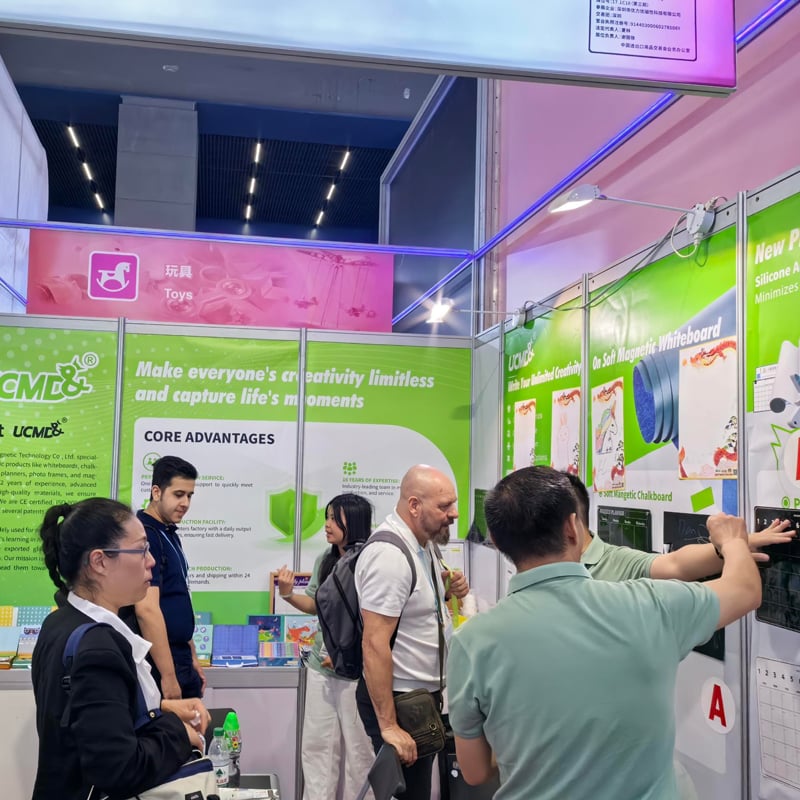
Discover how UCMD® leverages the Canton Fair to showcase magnetic educational & lifestyle products, build global buyer trust, and drive OEM/ODM partnerships. Explore our certified, customizable solutions today.

2026/08/28
Our Commitment to People, Planet & IntegrityAt ShenZhen U&U Magnetic Technology Co., Ltd. (UCMD®), we believe that how we make our products matters as much as what we make. From our factory floor in Shenzhen's Bao An District to the hands...

Please tell us about your company's advantages and characteristics.

Please tell us about your company's advantages and characteristics.

Please tell us about your company's advantages and characteristics.

Please tell us about your company's advantages and characteristics.

Please tell us about your company's advantages and characteristics.

Please tell us about your company's advantages and characteristics.

