 EN

Magnetic Whiteboards for Offices
Please tell us about your company's advantages and characteristics.
2026/10/14
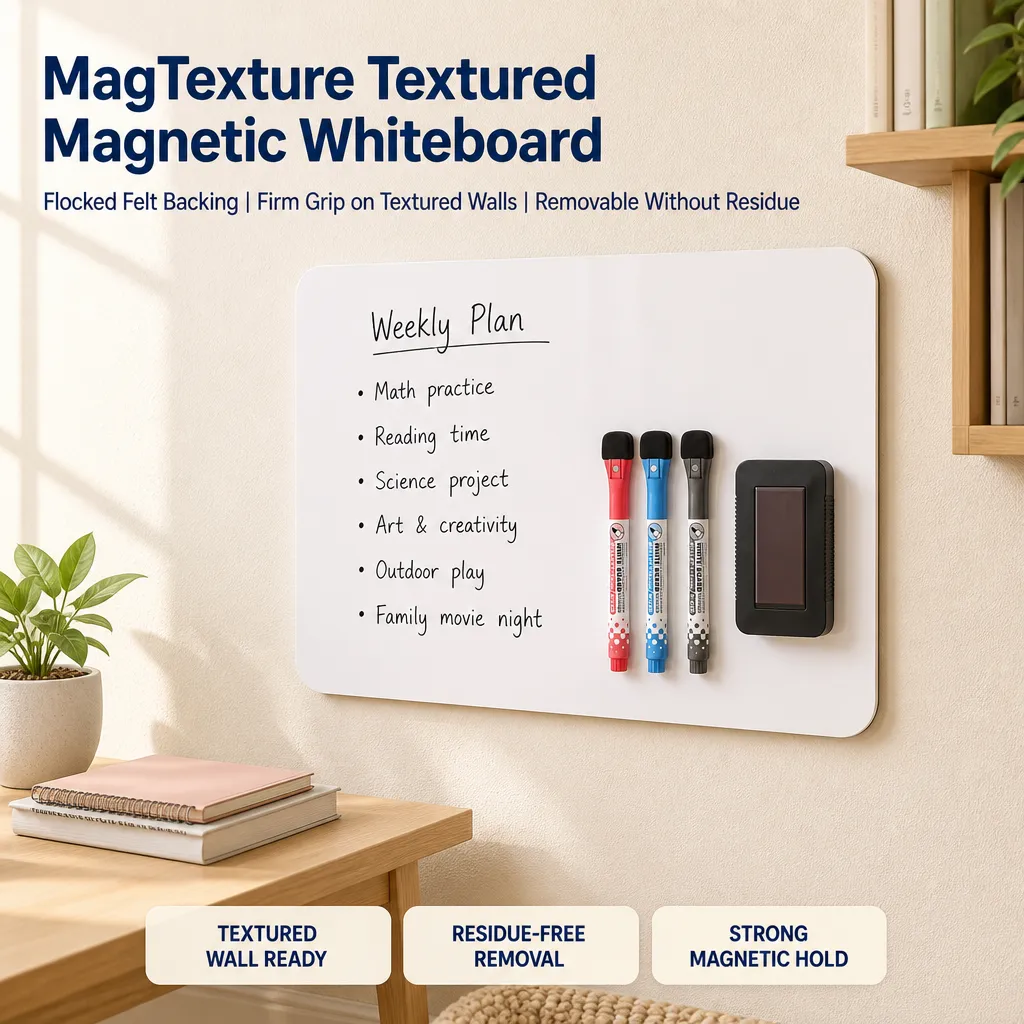
A soft whiteboard is a flexible, dry-erase writing surface that is designed to bend, roll, or sit flush against a suitable surface instead of behaving like a rigid framed board. For schools, tutoring centers, family spaces, and resellers, that flexibility is its main advantage: the board can make temporary planning, children’s activities, and changeable displays easier without turning every installation into a drilling project.
It is tempting to treat a soft whiteboard as simply a thinner whiteboard. That is not quite right. The useful question is whether its construction, mounting method, and daily writing routine match the space. A flexible sheet can be very practical on a refrigerator, a ferrous cabinet, or a prepared smooth wall; it is not automatically the right replacement for a large rigid board used all day in a busy classroom.
Most rigid whiteboards rely on a stiff backing, frame, and wall-mounting hardware. A soft whiteboard is commonly built as a layered sheet: a writable top film, an intermediate layer that supports the surface, and a flexible magnetic or adhesive backing. Suppliers may use PET-based surface films and rubber-magnet composites, but the exact material stack, thickness, magnetic pull, and surface finish vary by product. Buyers should request the actual specification rather than assuming that every flexible board is the same.
The practical result is a board that can conform more easily to flat metal surfaces and can often be cut or supplied in different formats. A magnetic version attaches to iron-containing surfaces; it does not make a nonmetal wall magnetic. An adhesive-backed version needs a clean, dry, compatible wall and should be tested on a small area first, especially where paint, textured finishes, or rental restrictions matter.
| Decision point | Soft whiteboard | Rigid board |
|---|---|---|
| Installation | Often quick on an appropriate metal surface or prepared wall | Usually needs brackets, screws, or a stand |
| Portability | Lightweight and easier to move, roll, or store | Best for a fixed, long-term position |
| Writing feel | Depends on surface flatness and backing support | Typically firmer because of its rigid substrate |
| Best use | Temporary planning, displays, children’s activities, and compact areas | High-frequency teaching, meeting rooms, and permanent writing walls |
The comparison is less about “better” and more about fit. A soft whiteboard works well when installation freedom and low weight matter most. A large framed board is generally the safer choice when users need a highly rigid writing plane, heavy daily use, or a permanent visual focal point.
In early-learning rooms and tutoring centers, activities change quickly. A soft whiteboard can support letter cards, routine prompts, drawing exercises, and teacher notes without committing to a large fixed panel. For children’s rooms, rounded or custom shapes may also be more approachable than a standard office board. The important safety step is to confirm that the mounting surface, edges, and supplied materials suit the intended age group and local requirements.
A weekly wall planner whiteboard format is useful when a family wants a visible schedule but does not want to drill into cabinetry or walls. On a refrigerator or other compatible metal surface, a magnetic soft whiteboard can be repositioned as routines change. For a painted wall, buyers should verify adhesive compatibility and removal guidance before installation rather than relying on a generic “removable” claim.
Small teams can use a soft whiteboard for short sprint notes, shift reminders, or temporary task lanes. It is especially helpful where a conventional board would be awkward to carry upstairs, transport between rooms, or fit into a narrow niche. That said, a flexible board should be applied smoothly: wrinkles, dust beneath the sheet, or an uneven wall can affect both appearance and writing comfort.
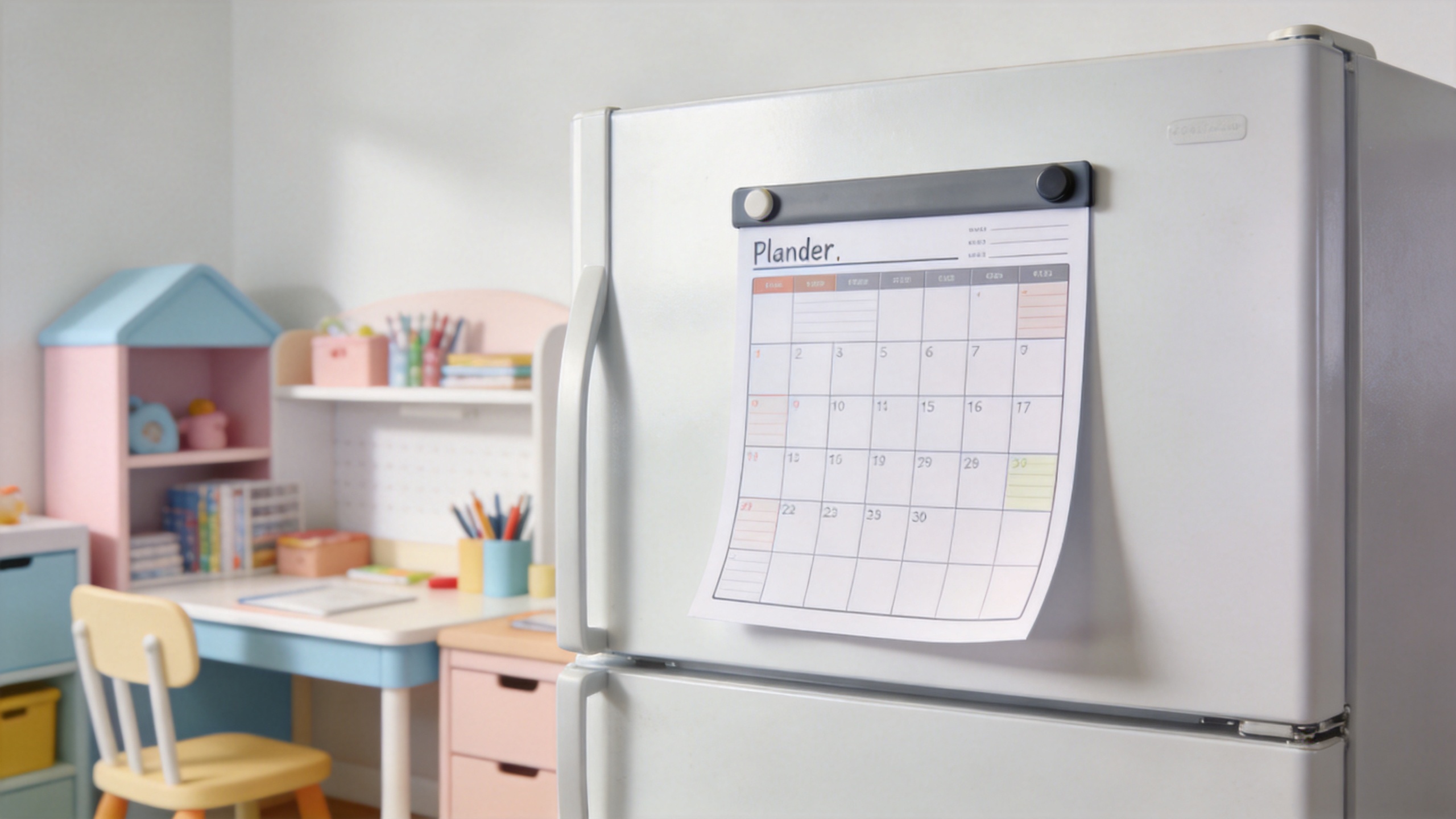
Start with the surface, not the catalog image. If the board will attach magnetically, confirm that the destination is ferrous and large enough for the sheet to lie flat. If it will be adhesive-mounted, inspect the wall finish and test a sample. Next, decide how the board will be used: a small schedule board needs different dimensions from a teaching display or a retail planning board.
Terms such as 4x6 glass whiteboard and 6x4 glass whiteboard describe rigid glass-board formats rather than flexible magnetic sheets. They can still be useful comparison points for buyers who are choosing between a permanent writing wall and a lightweight alternative. A glass board may suit a formal meeting room; a soft whiteboard may be more practical for a temporary schedule, a mobile classroom activity, or a customized branded insert.
Use markers that the supplier identifies as compatible with the writable film, erase ink promptly when practical, and follow the recommended cleaner. A soft whiteboard should not be treated like an indestructible rigid panel: sharp objects, aggressive solvents, and prolonged residue can damage a surface. In high-use environments, ask for a sample and test the actual marker, eraser, cleaning routine, and mounting surface before placing a large order.
Writing feel is also contextual. On a smooth, fully supported surface, many flexible boards can feel clean and responsive. On a textured wall or over a gap, the same sheet may feel less firm. This is why a pre-production sample is more useful than a general promise about “premium quality.”
For an OEM or private-label program, define the use case before requesting artwork. Confirm the writable surface, backing type, size tolerance, shape, printed layout, marker and accessory bundle, packaging, labeling, and carton protection. If the product will be marketed to schools or children’s spaces, request the relevant material and compliance documentation for the destination market rather than copying broad claims into a listing.
For product references, compare a customizable soft magnetic dry-erase whiteboard, a magnetic fridge calendar whiteboard, and a children’s magnetic wall whiteboard against the actual application, mounting surface, and customization brief. These links identify available product references; their individual specifications should be confirmed directly before purchase.
A soft whiteboard works because it combines a reusable writing surface with flexible placement. It is most compelling when quick setup, low weight, customization, or temporary use matter more than the rigid feel of a fixed board. Choose the backing for the real installation surface, confirm the writing and cleaning routine with a sample, and treat material, magnet strength, and compliance questions as specifications to verify—not assumptions. That approach gives schools, home users, and B2B buyers a clearer way to decide whether a soft whiteboard is the right format.

2026/08/20
Unlock flexible, repositionable whiteboarding for education, agile offices, retail, healthcare & more. Cuttable, magnetic, certified — request your free B2B sample today.

2026/10/10
Discover the 2027 Texture Magnetic Collection & Exclusive Exhibition Promotions Dear Global Partners and Valued Clients, We are thrilled to announce that Shenzhen U&U Magnetic Technology Co., Ltd. (Brand: UCMD) will be officially exhibiting...

2026/08/19
Discover how UCMD® leverages the Canton Fair to showcase magnetic educational & lifestyle products, build global buyer trust, and drive OEM/ODM partnerships. Explore our certified, customizable solutions today.

2026/08/28
Our Commitment to People, Planet & IntegrityAt ShenZhen U&U Magnetic Technology Co., Ltd. (UCMD®), we believe that how we make our products matters as much as what we make. From our factory floor in Shenzhen's Bao An District to the hands...

Please tell us about your company's advantages and characteristics.

Please tell us about your company's advantages and characteristics.

Please tell us about your company's advantages and characteristics.

Please tell us about your company's advantages and characteristics.

Please tell us about your company's advantages and characteristics.

Please tell us about your company's advantages and characteristics.

