 EN

Magnetic Whiteboards for Offices
Please tell us about your company's advantages and characteristics.
2026/10/02
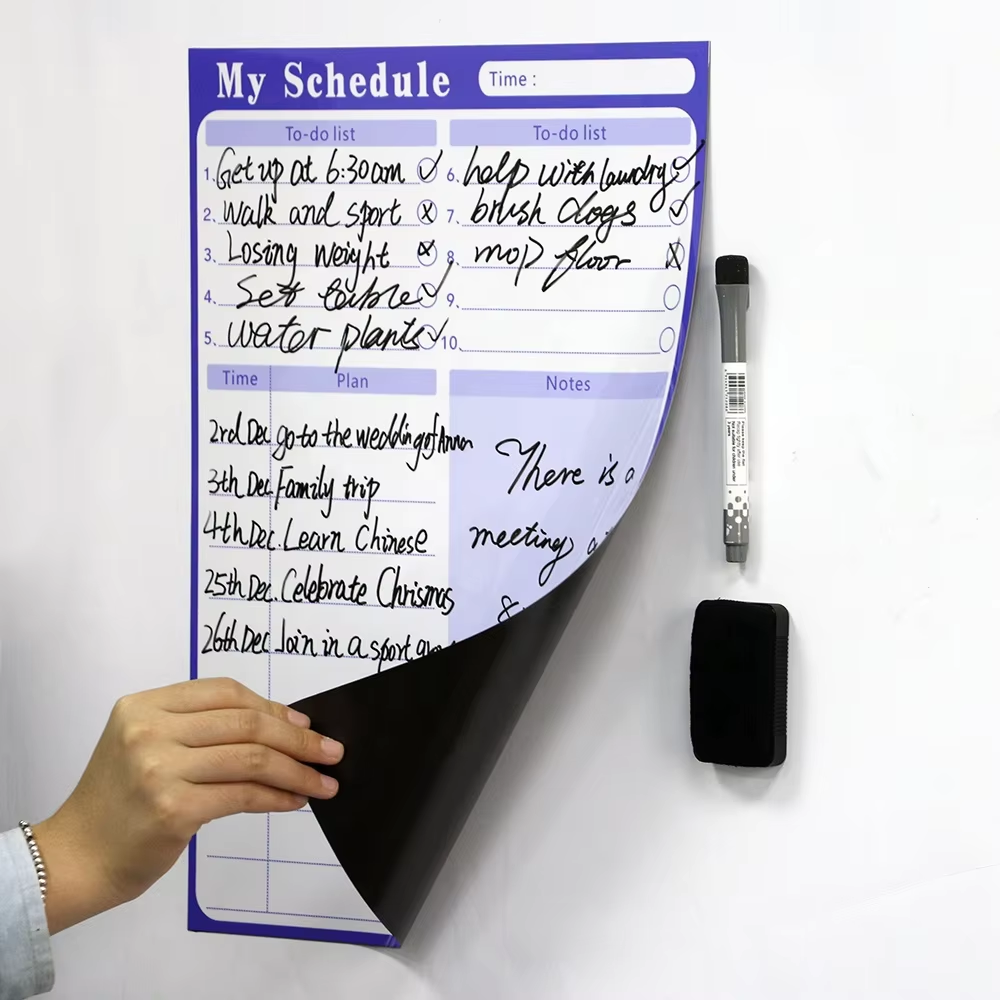
A weekly and monthly planner is most useful when it helps people see two different things clearly: the commitments coming up and the work that must happen next. A monthly page gives the long view. A weekly page turns that view into realistic actions. Neither format is automatically better; the right choice depends on whether the planning problem is visibility, follow-through, or both.
For a family, team, classroom, or office, the question also affects where the plan lives. A reusable magnetic board on a shared fridge or wall can make the weekly and monthly planner visible to the people who need to act on it, rather than leaving it in one person’s notebook.
Monthly planning is a horizon tool. It is well suited to deadlines, travel, school dates, campaigns, recurring bills, appointments, and events that would be easy to forget if they appeared only a few days in advance. A monthly view makes clashes easier to spot because the whole period is visible at once.
Weekly planning is an execution tool. It gives appointments, task blocks, meal ideas, errands, and follow-ups enough room to become specific. In practice, a weekly and monthly planner is most effective when the monthly side answers “what is coming?” and the weekly side answers “what will we do about it this week?”
The distinction matters for shared schedules. A date can belong on the monthly calendar while preparation steps belong on the weekly plan. If a school event falls on Friday, the monthly view preserves the date; the weekly view can hold the supply list, reminder, pickup arrangement, or meeting agenda.
A weekly and monthly planner with a strong weekly section is a good fit for people who time-block work, coordinate several people, or need to break priorities into small next actions. The extra writing space supports the detail that a monthly grid often cannot: who is responsible, what needs buying, and which task must happen before another.
A blank weekly calendar is especially flexible for changing schedules. Teams can assign it to a rolling workweek, households can use it for school activities, and retailers can position it as a reusable planning surface rather than a dated paper product. That flexibility is useful only if the headings and day divisions are readable at the intended viewing distance.
The limitation is short sight. A week-by-week routine can create a busy-looking board while hiding an approaching deadline three weeks away. This is why a weekly-only method can feel productive yet still produce last-minute conflicts.
The monthly portion of a weekly and monthly planner is well suited to sequencing commitments across several weeks. It supports a fast scan of upcoming dates and gives a household or workplace a shared reference point. Planning resources commonly describe a monthly schedule as a longer-range overview of commitments; that qualitative benefit is what makes it useful for preventing surprises.
A monthly meal planner is a practical example. It can show the rhythm of busy nights, grocery days, guests, or school activities before detailed recipes are chosen. A dinner planner then becomes easier to maintain because the weekly plan can translate the broad meal idea into ingredients, prep steps, and a day-by-day dinner decision.
Monthly formats have less space per day. They are less effective when users need a full task list, precise time blocks, or notes about changing responsibilities. Adding every detail to a small monthly square usually makes the board harder to use.
For most recurring planning routines, a weekly and monthly planner is not a compromise between two competing systems. It is a two-level system. The monthly portion protects the big picture, while the weekly portion creates the operating plan. A quick weekly review becomes more useful when it starts by checking the next few weeks, not merely the next seven days.
The combination is particularly helpful for kitchens, small offices, teachers’ areas, and administrative teams. A shared display makes commitments visible during ordinary routines. Still, visibility alone is not enough. The board must be easy to update, positioned where people look naturally, and divided clearly enough that several users can add information without creating clutter.
For buyers evaluating reusable formats, this weekly planner magnetic board with dry-erase monthly planner layout is one confirmed on-site example of the combined category. Another option is a reusable magnetic fridge calendar with monthly and weekly planning areas. The choice should be based on the intended shared use and display space, not assumed performance details.
| Need | Better emphasis | How the weekly and monthly planner helps |
|---|---|---|
| See dates, deadlines, and travel early | Monthly | Keep major commitments visible across the full month. |
| Assign tasks and manage daily follow-through | Weekly | Create room for owners, steps, and realistic priorities. |
| Coordinate meals and household routines | Combined | Use a monthly meal planner for the overview and a dinner planner for weekly execution. |
| Supply a retail, office, or education channel | Combined | Offer a reusable format that supports several visible planning routines. |
For a distributor or retailer, a weekly and monthly planner can serve several demand patterns: household scheduling, meal organization, employee coordination, and classroom routines. Rather than treating every customer as identical, assess the display location, audience, expected writing volume, and whether a dated or reusable format better matches the assortment.
Consistency is often more valuable than adding loosely related features. A product line may use coordinated weekly, monthly, meal, and task-planning formats so customers can choose the surface that matches their routine. For private-label projects, it is sensible to discuss brand artwork, layout, packaging, and SKU grouping with the manufacturer before making customer-facing claims. Shenzhen U&U Magnetic Technology lists magnetic planners among its product categories and states that it supports OEM/ODM work; individual specifications and project terms should be confirmed directly.
A confirmed example for a combined reusable format is the removable weekly and monthly planner with a to-do list. Use the product page and supplier discussion to verify the details relevant to a specific order.
If the goal is simply to remember dates, lead with a monthly layout. If the goal is to complete work, lead with a weekly layout. If people need to see what is ahead and coordinate what happens next, a weekly and monthly planner is the stronger format. It gives the overview enough room to prevent conflicts and the weekly detail enough room to turn plans into action.

2026/08/20
Unlock flexible, repositionable whiteboarding for education, agile offices, retail, healthcare & more. Cuttable, magnetic, certified — request your free B2B sample today.

2026/10/10
Discover the 2027 Texture Magnetic Collection & Exclusive Exhibition Promotions Dear Global Partners and Valued Clients, We are thrilled to announce that Shenzhen U&U Magnetic Technology Co., Ltd. (Brand: UCMD) will be officially exhibiting...
2026/08/19
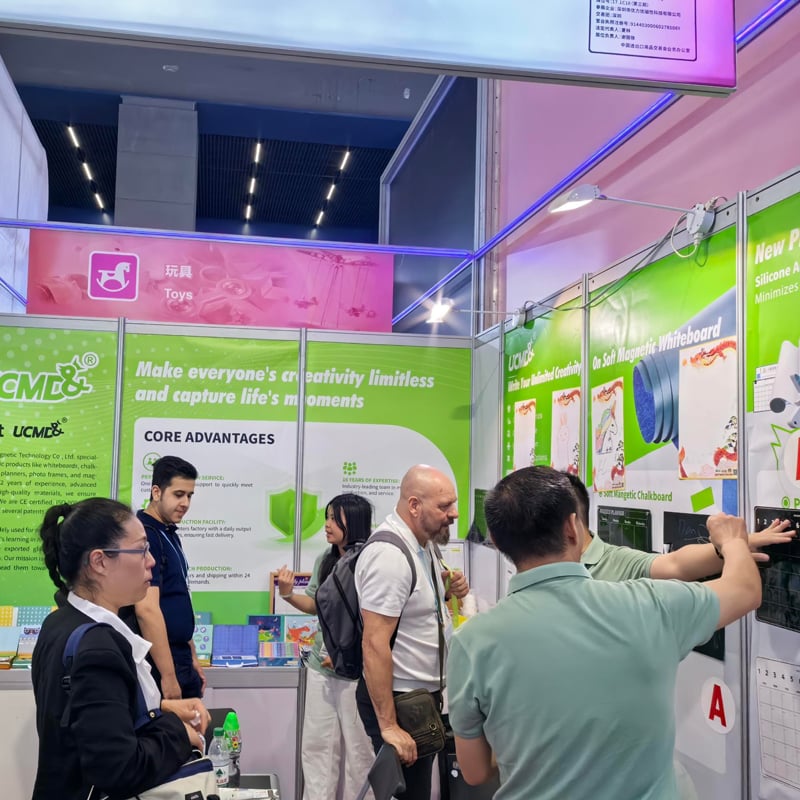
Discover how UCMD® leverages the Canton Fair to showcase magnetic educational & lifestyle products, build global buyer trust, and drive OEM/ODM partnerships. Explore our certified, customizable solutions today.

2026/08/28
Our Commitment to People, Planet & IntegrityAt ShenZhen U&U Magnetic Technology Co., Ltd. (UCMD®), we believe that how we make our products matters as much as what we make. From our factory floor in Shenzhen's Bao An District to the hands...

Please tell us about your company's advantages and characteristics.

Please tell us about your company's advantages and characteristics.

Please tell us about your company's advantages and characteristics.

Please tell us about your company's advantages and characteristics.

Please tell us about your company's advantages and characteristics.

Please tell us about your company's advantages and characteristics.

