 EN

Magnetic Whiteboards for Offices
Please tell us about your company's advantages and characteristics.
2026/09/03

A primary school in Leeds replaced twelve classroom boards in a single summer, not because the old ones broke, but because nobody could read them. The school had bought on size and price, and the melamine surfaces had stained to grey within three years of daily use. The replacement magnetic whiteboard specification started from the surface and worked backwards, and a magnetic whiteboard specified that way now carries a ten-year service expectation rather than a three-year one.
The school's magnetic whiteboard specification now runs to one page: porcelain-enamel steel face, 0.4 mm minimum steel gauge, moisture-resistant core, and an anodised aluminium frame with rounded corners. Every magnetic whiteboard in the building uses the same face material, so a teacher moving rooms is not adapting to a different erasing feel. The site manager keeps two spare panels in the store, which matters more than it sounds when a magnetic whiteboard is damaged mid-term.
Schools report the same four problems. Boards stain and ghost, so writing stops being legible from the back row. Glossy magnetic whiteboard surfaces throw light from windows and hide the left-hand third of the board. Frames have sharp mitred corners at child height. And panels come loose because magnetic whiteboard fixings were chosen for the weight in the box rather than for a wall. Cheap magnetic whiteboard cores also swell when a single fixing leaks, which bows the face permanently. One more complaint arrives late rather than early: pen trays that sag. A tray fixed to the frame rather than the wall carries marker weight into the fixings, and a magnetic whiteboard installed with a wall-supported tray avoids the whole problem.
Melamine is resin-impregnated paper over a board core: cheap, light, and the fastest to stain. Painted steel adds magnet receptivity and a harder face, which suits most primary classrooms. Porcelain enamel, fired onto steel at high temperature, is the most durable and the most expensive, and it is the usual choice where a magnetic whiteboard will be written on for six hours a day. For most schools, painted steel remains the sensible middle, and the magnetic whiteboard surface choice drives everything else in the specification.
Magnet holding depends on steel gauge, not on the finish. Thin 0.3 mm steel accepts lightweight letters but drops heavier items, and a magnetic whiteboard with a gauge below about 0.4 mm often disappoints teachers who expect to hang posters. Core material matters for moisture resistance: particleboard swells if a fixing leaks, so specify a moisture-resistant or honeycomb core for any magnetic whiteboard near a sink. Frames should be anodised aluminium with rounded corners and a continuous pen tray, since magnetic whiteboard frame corners sit at child height. Ask the supplier to state gauge in the magnetic whiteboard quotation rather than a generic steel face line.
Wall-mounted boards in schools are subject to fire and accessibility rules. ASTM E84 measures surface burning characteristics, and NFPA 101, the Life Safety Code, limits flame spread for interior wall finishes in corridors and exits, so a magnetic whiteboard in a corridor needs a compliant face and core. The 2010 ADA Standards for Accessible Design limit protruding objects in circulation paths and set reach ranges, which affects magnetic whiteboard mounting height and depth in accessible classrooms. Dry-erase markers sold in the US are assessed against ASTM D4236 under the Labeling of Hazardous Art Materials Act. REACH, RoHS and EN 71-3 cover magnetic whiteboard coatings and inks, and ISO 9001 covers production consistency.
Set the face material first, then the steel gauge, then the size from writing rows rather than available wall. Confirm magnet hold with a real item rather than a paperclip, because a magnetic whiteboard that cannot hold a laminated poster has failed its main purpose. Ask for core type, frame profile and fixing kit, and check the ASTM E84 classification for corridor installation. A magnetic whiteboard used by younger pupils should have rounded frame corners and a pen tray with no sharp lip. Set the magnetic whiteboard height from the shortest user who writes daily, not from a standard. Confirm that the pen tray and marker set are included, since a magnetic whiteboard delivered without either generates a second purchase order.
Fix to structure rather than plaster skim; a French cleat across two studs is the safe method for a magnetic whiteboard above 5 kg. Clean weekly with a dedicated cleaner and microfibre cloth, and avoid solvent sprays, which leave a film that causes ghosting. Re-check magnetic whiteboard fixings at the start of each term, since a panel that has worked loose is a safety issue as much as a maintenance one. Retire a magnetic whiteboard once erased text stops coming off cleanly, because an unreadable board costs more in teaching time than a replacement. Board placement also affects how the panel is used. A magnetic whiteboard sited beside a window loses its left-hand third to glare at certain times of day, and staff quietly stop using that area. Check the sightline during the busiest hour before fixing the final position. U&U Magnetic Technology supplies magnetic boards and panels under ISO 9001 with REACH and RoHS documentation.
Porcelain enamel fired onto steel lasts longest, followed by painted steel, then melamine. A school magnetic whiteboard written on for six hours a day usually justifies porcelain on lifetime cost. Melamine suits low-use rooms such as staff rooms, where daily rewriting is not expected and the face will not be scrubbed hard.
Specify 0.4 mm or thicker for a school magnetic whiteboard. Thinner 0.3 mm steel accepts lightweight plastic letters but drops laminated posters and heavier items. Test with the heaviest item teachers will actually hang, not with a paperclip, since a paperclip hides the difference between gauges almost entirely.
Yes. ASTM E84 measures surface burning characteristics, and NFPA 101 limits flame spread for interior wall finishes in corridors and exit routes. A magnetic whiteboard mounted in a corridor needs a compliant face and core. Ask the supplier for the ASTM E84 classification before specifying corridor installation.
Mount a magnetic whiteboard so the shortest daily user can reach the top row comfortably, then check the result against local accessibility rules. The 2010 ADA Standards set reach ranges and limit protruding objects in circulation paths, so depth matters as well as height in corridors.
Yes, but fix into studs or use spring toggles rated well above the panel weight, never into plaster skim alone. A French cleat across two studs is the safe method for a magnetic whiteboard above 5 kg, and it also lets the panel be lifted down for cleaning or replacement.
Wipe weekly with a dedicated whiteboard cleaner and a microfibre cloth. All-purpose and solvent sprays leave a film that causes ghosting, and abrasive pads scratch the face permanently. Retire a magnetic whiteboard once erased text stops coming off cleanly, since unreadable boards cost teaching time rather than money.

2026/08/20
Unlock flexible, repositionable whiteboarding for education, agile offices, retail, healthcare & more. Cuttable, magnetic, certified — request your free B2B sample today.
2026/10/10
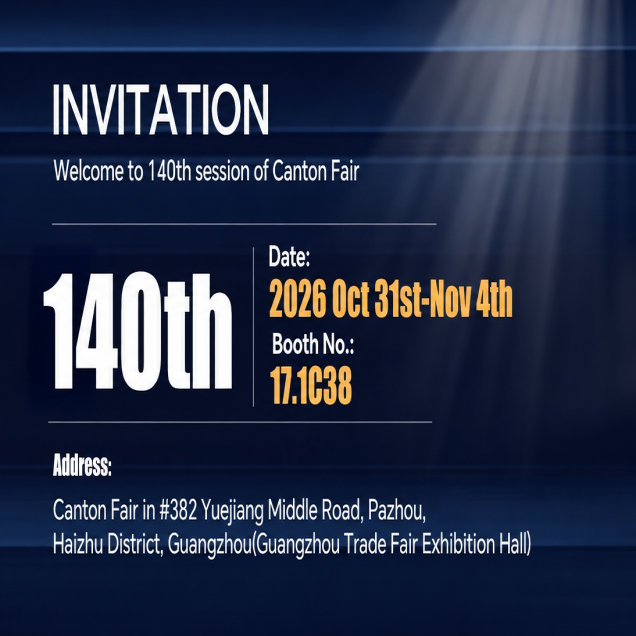
Discover the 2027 Texture Magnetic Collection & Exclusive Exhibition Promotions Dear Global Partners and Valued Clients, We are thrilled to announce that Shenzhen U&U Magnetic Technology Co., Ltd. (Brand: UCMD) will be officially exhibiting...
2026/08/19
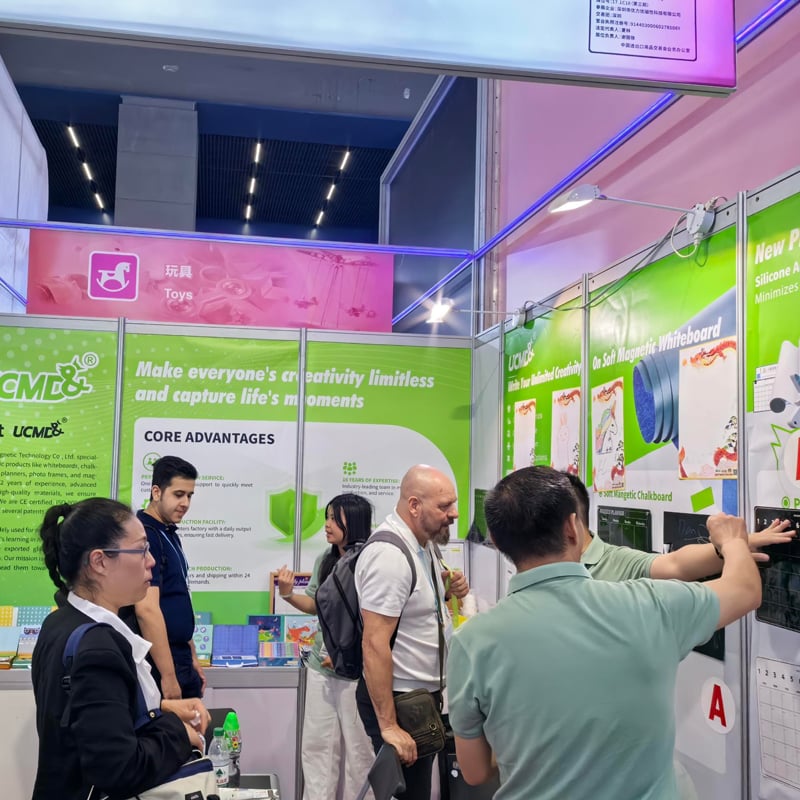
Discover how UCMD® leverages the Canton Fair to showcase magnetic educational & lifestyle products, build global buyer trust, and drive OEM/ODM partnerships. Explore our certified, customizable solutions today.

2026/08/28
Our Commitment to People, Planet & IntegrityAt ShenZhen U&U Magnetic Technology Co., Ltd. (UCMD®), we believe that how we make our products matters as much as what we make. From our factory floor in Shenzhen's Bao An District to the hands...

Please tell us about your company's advantages and characteristics.

Please tell us about your company's advantages and characteristics.

Please tell us about your company's advantages and characteristics.

Please tell us about your company's advantages and characteristics.

Please tell us about your company's advantages and characteristics.

Please tell us about your company's advantages and characteristics.

