 EN

Magnetic Whiteboards for Offices
Please tell us about your company's advantages and characteristics.
2026/09/04

A primary school hung a magnetic whiteboard on plasterboard with plastic anchors, and within a term the board sagged and the lower edge pulled free. The annual safety walk caught it before anyone was hurt, but the classroom lost the board for two weeks while the wall was repaired and a proper stud mount was fitted. The school now treats a magnetic whiteboard like any wall-mounted load: matched to the wall, fixed to structure, and checked on a schedule. The magnetic whiteboard that replaced it sits on four studs and has not moved since. That shift in thinking is what a safe magnetic whiteboard install actually requires, and it costs nothing but a little planning before the drill comes out of the box.
Placement decides most of the install. A magnetic whiteboard in the wrong spot fails teachers daily, even when the fixings hold, so walk the room before drilling anything into the wall. A magnetic whiteboard placed well also gets used well, which is why placement comes before tools and why the facilities lead should be in the room for this part of the job.
Set the writing surface so the whole class sees it without glare and pupils can reach the top row of magnets. A magnetic whiteboard mounted too high hides the top third behind reflections; one too low sits behind desks and head height. Level it, check sight lines from the back row, and adjust before the magnetic whiteboard gets its final fixings so nobody has to redo the work during term time.
Studs or masonry carry the load; hollow plasterboard alone does not. Find the studs, mark them, and plan the magnetic whiteboard position so both mounting rails land on structure. Where studs miss the rail spacing, add a backing plate, because a magnetic whiteboard relies on its top anchors more than anywhere else on the frame once it hangs full of student work.
A poor mount creates hazards that surface quietly, then suddenly. A magnetic whiteboard that is mounted properly removes the risk before it exists, and the checks below cost minutes each on install day.
A large magnetic whiteboard is heavy, and a dropped edge can strike a pupil standing below it. OSHA general-industry practice on safe mounting applies to school facilities work, and the same logic holds in the classroom: rate the anchor for the load plus margin. A magnetic whiteboard fixed with adhesive or undersized plugs is the most common failure inspectors find on their walk through the building.
NFPA 101, the Life Safety Code, keeps exits, doors, and alarms clear. A magnetic whiteboard that swings across a door path or sits beside a fire extinguisher fails that test during inspection. Keep the magnetic whiteboard clear of the exit swing and leave access to safety equipment untouched so the room passes without a follow-up visit from the fire officer.
Schools answer to inspectors and parents, so the install should leave a paper trail as well as a level magnetic whiteboard on the classroom wall for the facilities file.
Walk the room with NFPA 101 in mind: door arcs, alarm points, and extinguisher access all need clear space around them. A magnetic whiteboard placed outside those arcs passes without argument. Mark the clearance on the wall before drilling so the magnetic whiteboard position is agreed with the facilities lead, not guessed by whoever holds the drill that morning.
Match the anchor type to the wall and the magnetic whiteboard weight, and keep the manufacturer load sheet with the facilities file after the job is done. A magnetic whiteboard installed to spec is defensible in an audit; one installed by habit is not, and the difference shows the first time someone asks when the board was last checked by the school. Manufacturers such as U&U Magnetic ship a load sheet with each board, so ask for it if the box arrives without one. One more habit helps: photograph the finished install and store the picture with the load sheet in the same facilities folder. A dated photo proves the magnetic whiteboard was mounted to spec on a known day, which settles any later question about when the work was done, by whom, and against which anchor rating, without anyone digging through old emails or maintenance logs.
Install and upkeep then follow from the rules above.
A disciplined install takes an afternoon, and a small routine keeps the magnetic whiteboard sound for years of daily class use without a service call or an early replacement order.
Take a stud finder, level, drill, and the rated anchors specified for the magnetic whiteboard. Two people should lift and hold the board while the rails are marked and fixed to the wall. A magnetic whiteboard installed by two people with the right fixings rarely needs revisiting; one installed alone often does, and usually at the worst possible moment in the term.
Once a term, check that the magnetic whiteboard rails are tight, the face is clean, and no loose magnets sit where small pupils can reach them. CPSIA guidance on small high-powered magnets applies to any loose magnet sets in a classroom, so keep the supplied light magnets only and store spares in a drawer. Wipe the magnetic whiteboard weekly with a dry cloth and the surface stays clear through the year of daily lessons, timetables, and student displays.
Answer: Studs, masonry, and block walls hold a magnetic whiteboard reliably; hollow plasterboard alone does not. Find the studs and land both mounting rails on structure, or add a backing plate where the spacing misses. A magnetic whiteboard on the right structure stays level and safe for years of class use.
Answer: Set the magnetic whiteboard so pupils can reach the top row of magnets and the back row can read the writing without glare. A level mounted at adult eye height works for most classrooms. Check sight lines from the back before final fixings, then lock the magnetic whiteboard in place.
Answer: NFPA 101 keeps exits, doors, and alarms clear, so place the magnetic whiteboard outside door swings and away from fire equipment. OSHA safe-mounting practice guides the anchor choice for the load. Keep the load sheet in the facilities file so the magnetic whiteboard install stays defensible at audit every time.
Answer: The fixed steel in a magnetic whiteboard is safe; loose high-powered magnet sets are the hazard, per CPSIA guidance. Keep only the light magnets supplied for the magnetic whiteboard, store spares away, and check termly that nothing small has been left within reach of younger pupils after class ends.
Answer: Use the anchors rated for the magnetic whiteboard weight plus margin, matched to the wall type, and never adhesive alone above head height. Two people should lift the magnetic whiteboard while rails are marked and fixed. Keep the manufacturer sheet with the job record for the facilities file later.
Answer: Check the magnetic whiteboard once a term: rails tight, face clean, and no loose magnets left out. Wipe weekly with a dry cloth and avoid solvents that dull the surface. A magnetic whiteboard on that routine stays readable and secure through years of daily classroom use by staff and pupils.

2026/08/20
Unlock flexible, repositionable whiteboarding for education, agile offices, retail, healthcare & more. Cuttable, magnetic, certified — request your free B2B sample today.

2026/10/10
Discover the 2027 Texture Magnetic Collection & Exclusive Exhibition Promotions Dear Global Partners and Valued Clients, We are thrilled to announce that Shenzhen U&U Magnetic Technology Co., Ltd. (Brand: UCMD) will be officially exhibiting...
2026/08/19
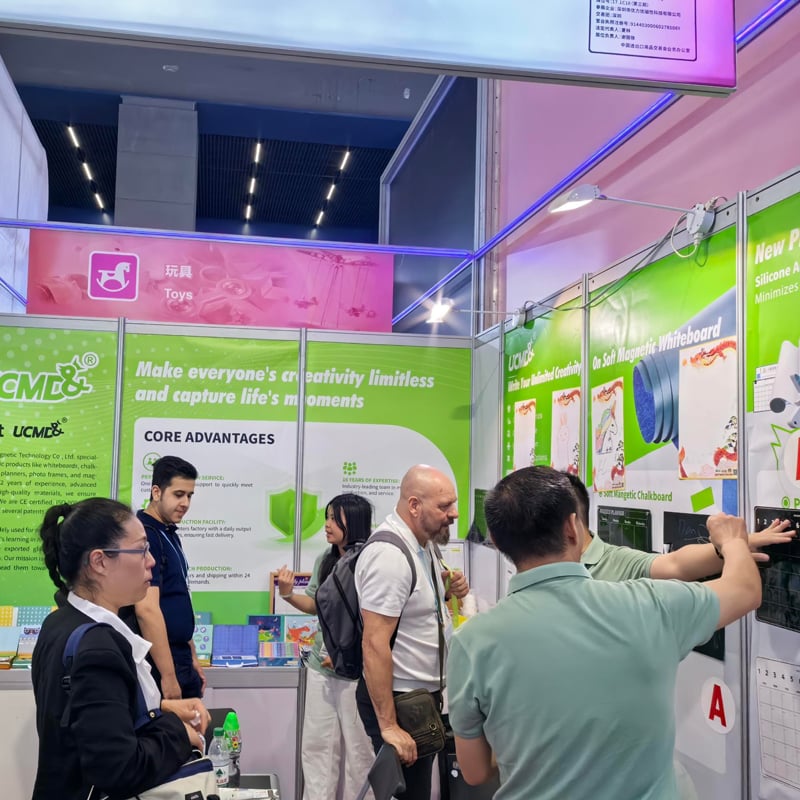
Discover how UCMD® leverages the Canton Fair to showcase magnetic educational & lifestyle products, build global buyer trust, and drive OEM/ODM partnerships. Explore our certified, customizable solutions today.

2026/08/28
Our Commitment to People, Planet & IntegrityAt ShenZhen U&U Magnetic Technology Co., Ltd. (UCMD®), we believe that how we make our products matters as much as what we make. From our factory floor in Shenzhen's Bao An District to the hands...

Please tell us about your company's advantages and characteristics.

Please tell us about your company's advantages and characteristics.

Please tell us about your company's advantages and characteristics.

Please tell us about your company's advantages and characteristics.

Please tell us about your company's advantages and characteristics.

Please tell us about your company's advantages and characteristics.

