 EN

Magnetic Whiteboards for Offices
Please tell us about your company's advantages and characteristics.
2026/09/07
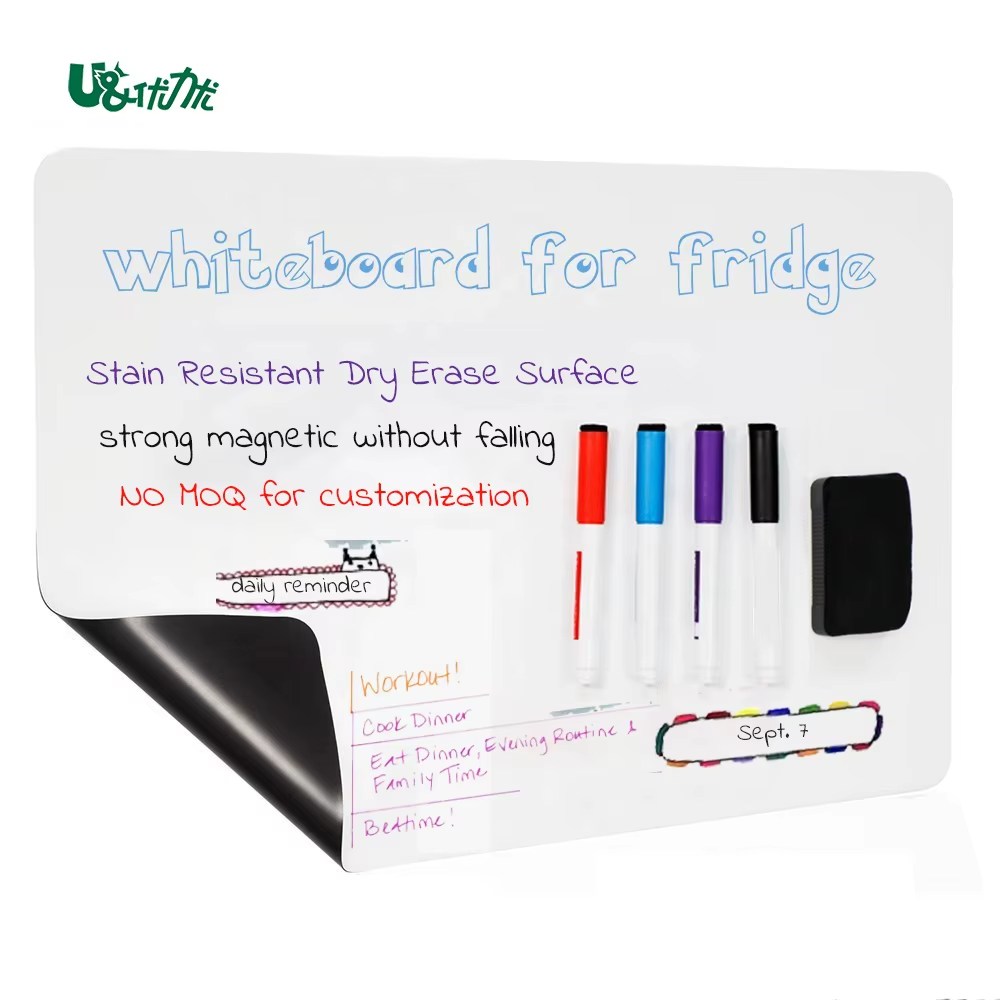
An office in Leeds tracked its fit-out waste for a year and found that scratched hard whiteboard panels made up a surprising share of the skip. The facilities lead replaced the failed panels with a Soft Whiteboard film applied to the existing wall, and the next audit showed less board waste and a lower reorder cost. A Soft Whiteboard proved greener not by a marketing claim but by the numbers on the waste log that the team reviewed each quarter with their manager.
The Leeds office is a useful case because it measured before and after the swap. A Soft Whiteboard cut the replacement cycle because the film peels and reapplies without binning a rigid panel. The team also liked that the Soft Whiteboard weighed almost nothing compared with the glass board it replaced on the meeting room wall near the window.
Hard panels scratch and then get tossed whole. A Soft Whiteboard avoids that fate because a tired film peels off and a fresh roll goes on the same wall. The Leeds team calculated that one Soft Whiteboard film replaced three hard panels over the same period, which is the heart of the green argument for the flexible option in a busy office that rewrites daily.
The maths changed because film is thin and light, so transport and disposal cost less per square metre. A Soft Whiteboard ships in a roll, not a crate, which cuts the carbon per unit delivered to the site. A Soft Whiteboard also leaves the substrate in place, so the wall behind it is reused rather than demolished when the surface eventually wears out after years of use by the team.
Two costs dominate the comparison: the coating chemistry and the end-of-life path. A Soft Whiteboard and a hard board score differently on both axes, and the difference matters to a buyer with a sustainability target to report to head office at year end.
Wet-coat hard boards can emit solvent during cure, governed in California by SCAQMD Rule 1113. A Soft Whiteboard with a low-VOC laminate meets stricter limits and smells cleaner on install day. Green Seal GS-11 and ISO 14001 at the maker signal a managed environmental footprint, which a procurement team can cite in a tender without guessing at the supplier's real practice or audit result.
Hard glass and aluminium panels recycle, but only if a scheme exists locally to take them. A Soft Whiteboard film is lighter to send to a flexible-plastics stream where one is available in the city. REACH compliance on the film means fewer restricted substances in the waste, which simplifies disposal paperwork for the facilities manager who signs off on the skip each month.
The footprint comes down to substrate mass and the coating chemistry. A Soft Whiteboard wins on mass, and the certs confirm the chemistry is within the limits that matter for indoor air and waste handling at the building.
A rigid panel carries kilograms of glass or steel per square metre of surface. A Soft Whiteboard carries grams of film on a wall that already exists, so the embedded energy is far lower per use. A Soft Whiteboard also avoids the foam or MDF backing that hard boards use, which is the part most likely to fail a low-emission specification at an office audit. A Soft Whiteboard therefore scores well on a weight-per-use basis that green procurement teams actually measure when they compare options on the tender shortlist for a fit-out.
Ask for ISO 14001 from the maker, Green Seal or an equivalent low-VOC mark, and a REACH declaration. A Soft Whiteboard with those papers survives a sustainability review that a cheap uncertified film would fail on the first check. U&U Magnetic provides the compliance set with its Soft Whiteboard rolls so the buyer can file the documentation with the project's green checklist without a follow-up request.
Buying greener means specifying the film and the care, then disposing with intent. A Soft Whiteboard bought well stays green through its whole life, from the roll on the dock to the peel at end of service in the room.
Specify low-VOC laminate, a recyclable face, and a backing that leaves the wall intact. A Soft Whiteboard specified this way beats a hard board on every measured axis the Leeds office tracked with care. A Soft Whiteboard also lets the buyer keep the existing substrate, which is the greenest move of all because nothing is demolished or sent to landfill during the refit. A Soft Whiteboard specified with a recyclable face also satisfies a circular-economy clause that some public tenders now require from every supplier on the approved list.
Wipe with a mild cleaner and avoid solvent that breaks the laminate early in the product life. A Soft Whiteboard that lasts longer ships less often, which lowers the running carbon of the account. When the film finally tires, peel it and send it to a flexible-plastics stream; a Soft Whiteboard leaves the wall ready for the next roll without a contractor or a skip on site at the weekend.
Yes, a Soft Whiteboard is generally greener because the film is light, low-waste, and reapplies without binning a rigid panel. The Leeds office replaced three hard panels with one Soft Whiteboard film over the same period, which cut both reorder cost and skip volume. The green edge comes from reusing the wall and avoiding the foam or MDF backing that hard boards carry in the specification.
A low-VOC Soft Whiteboard laminate meets stricter limits than many wet-coat hard panels and smells cleaner on install. California's SCAQMD Rule 1113 governs the solvent release that cheap coatings can exceed. Ask for Green Seal GS-11 or an equivalent mark and an ISO 14001 statement from the maker, so the indoor air claim is backed by a certificate rather than a slogan on the box.
A Soft Whiteboard film is lighter to send to a flexible-plastics stream where the local facility accepts it, which is simpler than recycling a glass and aluminium panel. REACH compliance on the film means fewer restricted substances in the waste stream at disposal. Peel the film cleanly at end of life and keep it separate from general rubbish so the handler can route it correctly to the right bin.
A Soft Whiteboard lasts one to three years of daily use before the film dulls, depending on marker care and sun exposure near the window. A hard panel can last longer but is tossed whole when scratched, while a Soft Whiteboard just gets a fresh roll on the same wall. The lower replacement mass is why the flexible option often wins on lifetime environmental impact for a busy office.
Look for ISO 14001 at the maker, a low-VOC or Green Seal mark on the laminate, and a REACH declaration on the film. A Soft Whiteboard with that paperwork passes a sustainability review that an uncertified board fails. Request the certificates with the quote, not after delivery, so the buyer can file them with the project's green checklist before the install date arrives.
Yes, a Soft Whiteboard suits a meeting room when applied to a flat, clean wall and wiped with a mild cleaner after use. It is lighter than glass and safer where a panel could be knocked in a crowded room. A Soft Whiteboard also lets the team keep the existing substrate, which avoids the dust and waste of removing a screwed-in hard board during the refit of the space.

2026/08/20
Unlock flexible, repositionable whiteboarding for education, agile offices, retail, healthcare & more. Cuttable, magnetic, certified — request your free B2B sample today.

2026/10/10
Discover the 2027 Texture Magnetic Collection & Exclusive Exhibition Promotions Dear Global Partners and Valued Clients, We are thrilled to announce that Shenzhen U&U Magnetic Technology Co., Ltd. (Brand: UCMD) will be officially exhibiting...

2026/08/19
Discover how UCMD® leverages the Canton Fair to showcase magnetic educational & lifestyle products, build global buyer trust, and drive OEM/ODM partnerships. Explore our certified, customizable solutions today.

2026/08/28
Our Commitment to People, Planet & IntegrityAt ShenZhen U&U Magnetic Technology Co., Ltd. (UCMD®), we believe that how we make our products matters as much as what we make. From our factory floor in Shenzhen's Bao An District to the hands...

Please tell us about your company's advantages and characteristics.

Please tell us about your company's advantages and characteristics.

Please tell us about your company's advantages and characteristics.

Please tell us about your company's advantages and characteristics.

Please tell us about your company's advantages and characteristics.

Please tell us about your company's advantages and characteristics.

